Continue reading








The Power of Small Acts
The Power of Small Acts
Glimmers of hope from 2025






In a year marked by despair, it was small, human acts that broke through the noise, reminding us that hope doesn’t vanish. It’s passed hand to hand, one person to another.
By Siti Syafania Kose
The year 2025 will be remembered by many as one of heartbreak.
When I asked people how they felt about it, I didn’t get reflection. I got flinches, grimaces and shrugs.
“Horrible,” they said.
We lived through a storm of suffering, war, disaster, injustice and violence, in a loop that at times felt endless. And beneath it all, I saw something even more dangerous than outrage: numbness. People giving up, moving mechanically through their days just to endure.
And I get it. When the world is burning beyond your control, fighting seems pointless. But that’s the lie hopelessness tells.
Because 2025 wasn’t all grief.
Scattered across the noise were small moments when someone decided to stand up, stay kind or simply show up. They didn’t make headlines or solve everything, but they mattered. Not as grand gestures, but as sparks of hope that comfort and mobilize.

Strangers protected one another on a tense ride home. Students fundraised with pocket change. Donations found ways to cross borders. A movie ticket was paid for so a child wouldn’t feel left out. Food became a bridge between cultures.
Taken together, these stories reveal just how many ways there are to show up.
Martyrdom isn’t the only kind of help. Sometimes, it’s a ride home, a bowl of seblak (crackers cooked with vegetables, eggs and spicy sauce), a few thousand rupiah from a student’s pocket. It all matters.
This article is inspired by Arundhati Roy’s The God of Small Things, and the lesson I’ve carried from it: that small acts ripple outward. While we can’t control everything, the things we do, no matter how minor, can take on a life of their own.
In the face of vast suffering, it’s easy to feel powerless. But we aren’t. A little, done by many, becomes a lot. And this mindset can be a self-fulfilling, powerful prophecy.
So before 2026 sweeps us into the next cycle, let’s pause and remember what we often forget: that small acts, especially when done by many, can shift the ground beneath us.













The power of gotong royong
In August and September, Indonesia erupted. What began as outrage over legislators’ perks spiraled into a nationwide protest movement marked by seas of demonstrators waving One Piece pirate flags, the symbol of rebellion and resistance co-opted by a generation that had had enough.
The protests were some of the largest in recent memory, touching nearly every layer of Indonesian society. Even those who didn’t march felt the tremors. Commuters were rerouted, offices were shuttered and families were glued to screens, worried for loved ones on the streets.
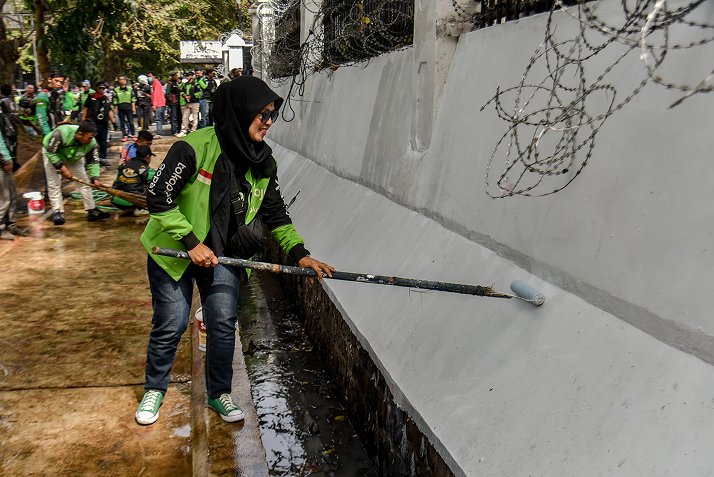 A motorcycle taxi driver repaints a wall outside the West Java Regional House of Representatives (DRPD) building in Bandung on Sept. 3, 2025, following violent protests that left the area vandalized. (Zuma / Dimas Rachmatsyah)
But in the midst of this tension, something small but powerful stirred. Gotong royong (mutual assistance) transformed from a slogan to a lived reality.
Across the country, the call of “warga jaga warga” (people protect people) echoed.
Online, it was more than a hashtag. It was a lifeline people used to circulate real-time protest maps, legal aid contacts, safety tips, donation links and urgent reminders to protect vulnerable communities like Chinese-Indonesians, who have historically been scapegoated in times of national crisis.
Offline, that spirit showed up among strangers. One early September afternoon, as I sat on a JakLingko bus on the way home after my office asked us to work remotely, the air felt heavy. A middle-aged man broke the silence and gently warned us of violent altercations nearby. Other passengers followed with their own updates, emboldened by the need to protect each other. We didn’t know each other’s names, but we were looking out for one another.
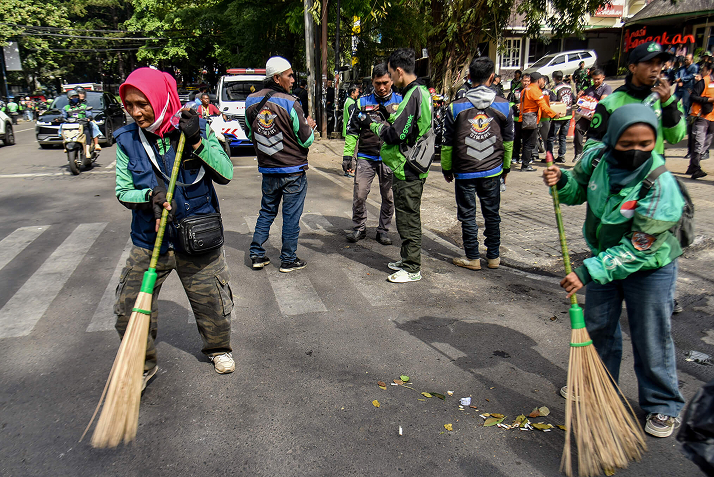 After violent protests in Bandung, a group of online motorcycle taxi drivers swept the street in front of the West Java DRPD building on Sept. 3, 3035. (Zuma / Dimas Rachmatsyah)
And when the dust settled, the same people who’d flooded the streets came back, not to protest, but to clean.
In West Java and West Sumatra, it was students and ojol (online motorcycle transportation drivers) who grabbed brooms and trash bags, scrubbing graffiti off regional legislative buildings and clearing away debris. These were some of the same buildings that had been stormed, their fences torn down, their walls scorched.
In Jakarta, the once-ransacked Senen Sentral Station was swept, mopped and repaired by everyday citizens. They renamed it Jaga Jakarta (Protect Jakarta) Station. More than a branding, it was a promise.
Some say today’s youth are too self-absorbed, their culture shaped by screens. But in 2025, in the face of violence and provocation, they showed up in solidarity, online and on the ground.
Gotong royong wasn’t lost. It was louder than ever.

The power of food reels
They say the quickest way to a man’s heart is through his stomach. But what if that “man” was the world?
It started with TikTok user @martabakforlyfe, aka Avrill Abigail, and her wildly relatable love affair with martabak (crispy pancakes). Her videos were playful and absurd, hiding martabak from her dad, sneaking bites in secret, equal parts comedy and culinary obsession.
The content caught fire. Soon, martabak was appearing on For You pages around the world. Viewers from Southeast Asia to the Western hemisphere were hooked, some trying to recreate the snack, others making a point to hunt it down when visiting Indonesia.
 Thick, buttery and unapologetically indulgent, martabak finds international fans through viral food content, proving comfort food can cross borders too. (JP/Okky Ardya)
What Avrill unwittingly sparked was gastrodiplomacy, building cultural bridges through food. She may not have set out to do it, but the effect was real: People with zero prior knowledge of martabak suddenly couldn’t get enough.
 Seblak, a Sundanese comfort food, reaches global audiences through viral food videos—proof that cross-cultural exchange can travel by appetite as much as ideology. (Shutterstock)
Something similar happened with seblak. The spicy Sundanese comfort food went viral among Thai netizens, who flooded TikTok with reaction videos trying it for the first time.
Compared with stories of protest or disaster relief, this might seem light. But in a world where eating with your hands can be twisted into xenophobic talking points, joyful cultural exchange through food is a quiet but powerful act of resistance.
And maybe that’s the point: Doing good doesn’t always require tragedy. Sometimes, doing what we love openly and joyfully can bring some good into the world and empower us when the news of the world paralyzes us.

The power of small donations
From relentless war headlines to climate disasters at home, 2025 offered no shortage of tragedy. And yet, amid all that, everyday people reached into their own pockets and hearts to help others, near and far.
Indonesia’s long-standing solidarity with Palestine held strong. In August, the National Alms Agency (Baznas) reported that Indonesians had donated over US$122,000, sending essentials like flour and rice by truck into Gaza.
But even more striking was what came from unexpected corners. At Sekolah Auliya, a private school in South Tangerang, Banten, students raised a staggering Rp 1 billion ($60,000) to fund a school in Gaza. Their efforts included art auctions and a student-led charity concert, showing that even children, when given the tools and trust, can make a global impact.
Closer to home, flooding ravaged communities across Indonesia. In March, after flash floods displaced over 100 families in Bogor, West Java, students from IPB University organized donation drives, delivered aid and helped clear debris. In Papua, students from Cenderawasih University did the same after floods hit Jayawijaya.
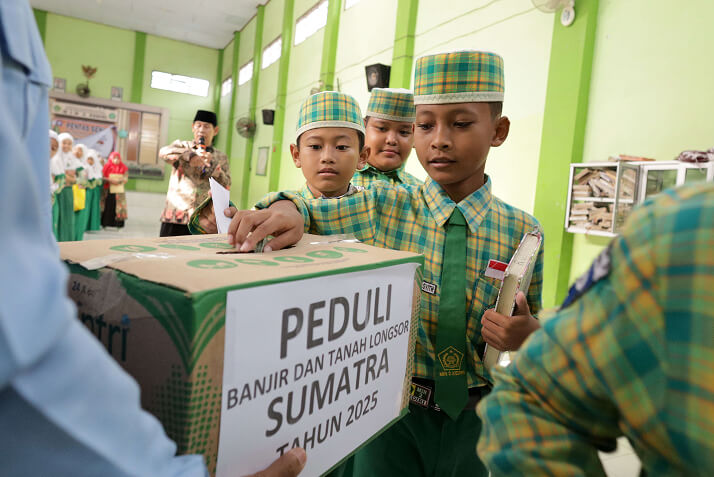 Elementary students in Kediri, East Java, contribute their pocket money to support flood and landslide victims during a school-led donation drive on Dec. 3, 2025. (Antara/Prasetia Fauzani)
And in Bali, high schoolers from SMA 2 Banjar state senior high school raised what they could from their pocket money to support victims of the September floods. Their funds may have been modest but their impulse to act came unprompted, powered by empathy alone.
As another flood hit Sumatra to close the year, the message is clear: You don’t have to be rich, old or powerful to make a difference. The most meaningful help in 2025 came not from institutions, but from the ground up.

The power of one movie ticket
For some of us, a movie night is routine. For others, it’s a dream.
In March, as Jumbo, the highest-grossing Indonesian film of all time, filled theaters, not every child could afford to join the hype.
 The impact of Jumbo extended beyond the box office, as strangers used social media to make sure children could take part in a collective moviegoing moment. (Courtesy of Visinema)
On X, user @pemudabatuapung shared his dilemma. He wanted to take his nephew to see Jumbo, but with ojol orders slowing down, he feared the film would leave theaters before he could save enough.
Casually and without fanfare, another user, @m_fadly1212, replied: “Alright, I’ll pay for it. Go watch it tomorrow, okay?”
That one act of generosity gave a child his first movie theater experience. Afterward, the boy rushed to tell his friends all about it. His uncle described the moment as “memorable”.
The exchange quickly went viral. Thousands liked the post, hundreds replied with encouragement and many were moved by the quiet beauty of such a small but thoughtful gesture.
On a larger scale, similar moments were unfolding. Hijau Bersama Indonesia organized watch parties for orphanages in 11 cities across the country, giving children a chance to laugh, cheer and be swept up in a story together.
A trip to the cinema may not seem like much. But for a child, sitting in the same red-cushioned seats as their peers, laughing at the same jokes and sharing in the same wonder, can mean everything. It tells them they belong and that they, too, deserve joy.

The power of one tweet
While the protests gripped Indonesia, global eyes watched. And some didn’t just watch, they acted.
After the death of young ojol driver Affan Kurniawan in late August, support for gig workers swelled across oceans.
A Thai X user, @sighyam, shared how people outside Indonesia, foreigners and diaspora alike, could order food or supplies through delivery apps and instruct drivers to share it with fellow ojol on the street.
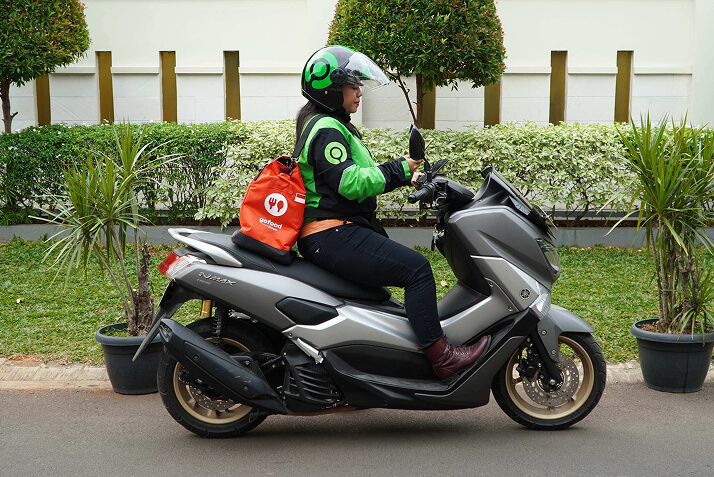 Meals ordered by supporters overseas are shared among online motorcycle drivers, after viral social media calls turned digital solidarity into food on the street. (JP/Arief Suhardiman)
“Before hitting that order button, you are going to want to give this instruction: ‘Tolong bagikan makanannya ke driver-driver di jalan’ [‘please share the food with the drivers on the street’],” he wrote.
The thread went viral, with 75 million views to date. Screenshots of orders, photos of ojol drivers smiling with shared meals, and messages of thanks flooded timelines. Large social media accounts amplified the message. Mainstream media quickly picked it up.
“Thank you for your kindness to ojol,” one driver commented.
“Since the demonstrations, work has become harder, especially for us women who fear the unexpected.”
As the protest momentum spread beyond Indonesia, spreading to the Philippines, Nepal and elsewhere, Indonesians online shared safety tips: “Always go in groups of three,” one X user warned, tagging friends in Nepal.
Social media has a long list of problems. But in 2025, it turned spectators into supporters, and movements into shared struggles. One act of generosity sparked a chain, turning strangers into allies and distant grief into shared resistance.

Back to Story
Main writer
- Siti Syafania Kose
Editorial Team
- Jet Damazo
- Ninda Daianti
Art Director
- Staven Andersen
Illustration
- Budhi Button
UI/UX Designer
- Kevin Setiawan
Technology
- Renaldi Adrian
- Dian Aldiansyah
- Mustopa