

If
spending and spectacle
are stripped away from
Ramadan and Eid,
is Hari Raya
still
Hari Raya?











Idul Fitri without the excess:
Finding the real meaning of Hari Raya
We're scaling back the festivities and finding more meaning this Idul Fitri.
Adelia Anjani Putri
Sahur (pre-dawn meal) on the road. Buka bersama (breaking the fast together). This year's Lebaran outfit trends, from burgundy and shimmer-shimmer to vest abayas. Kaastengels and lapis legit. Pocket money for the little ones. Parcels. Plane-ticket wars. Traffic clogging Java's toll roads.
Ramadan in Indonesia has always felt like a season of daily festivities building up to one grand moment: Idul Fitri. But something has been shifting, and I don't think it's just because we're getting older.
For two years now, mudik (the annual homecoming exodus) has shown a decline. The latest data from the Transportation Ministry shows a 1.7 percent drop this year compared to 2025. Between 2020 and 2024, real spending data also indicates a slowdown in Lebaran consumption. Growth is softer, reflecting weakened purchasing power.
"In this economy?" has become both the question and the answer.
What does the celebration look like when the excess fades? If the spending and the spectacle are stripped away, is hari raya still hari raya?
But the closer I look, the more I think this isn't just an economics story. Maybe we're not celebrating less because we can't afford to. Maybe we're finally choosing to celebrate differently.
Social Recalibrations
Every Ramadan, your calendar fills up before you can say no. Buka bersama with family in the first week, then friends, colleagues, former classmates, people from that job you left three years ago. It's reunion season, compressed into thirty days.
For years, most of us said yes to all of it. That's starting to change.
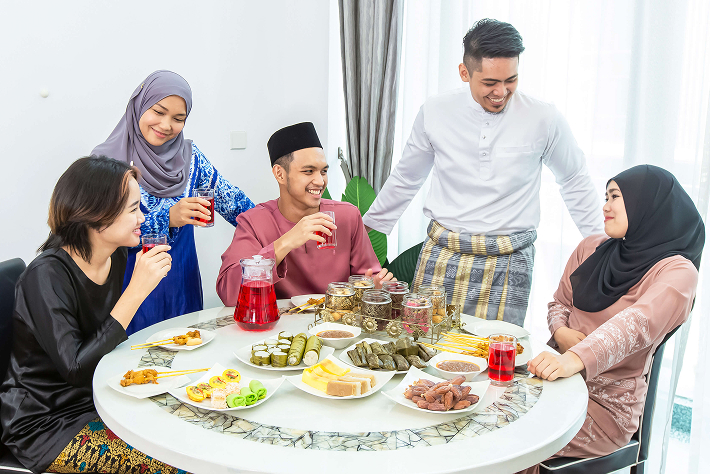
Falah, 33, used to attend everything: elementary school reunions, high school gatherings, all of it. But not this year, not after leaving her full-time job and settling into life as a wife and mother.
"Now that I have my own family, it's harder to accommodate everything, and I want to spend that time with them instead. This isn't primarily about money. It's about prioritizing," she says.
For Farhan, 31, it's about quality over quantity. "Two or three years ago, we were breaking ourselves. Work in the morning, forced socializing at night," he says. "But then I figured out, especially after the pandemic, that we don't need to go that far. Sometimes, sending cookies is enough."
It's not money he's trying to save. It's time.
Both of them are close to my age, and I've been doing exactly the same. And the more I think about it, the more I realize we're not really withdrawing from Ramadan. We're editing it. Cutting the obligations that were never really ours to carry, so there's more left for the people who actually matter. Less bukber with the colleague you haven't spoken to since 2019. More time at the table with the ones you'd show up for any other month of the year too.
Hera Rachmahani, a consumer behavior researcher at Binus University, says the shifts largely come down to changing priorities, accelerated by the years we spent locked down at home.
"There's a shift in our culture. We used to be very communal. Now that level of communality is declining and we focus more on ourselves," she says.
"COVID strengthened bonds within primary circles and weakened distant ones. That restructuring hasn't fully reversed."
But here's what the data doesn't quite capture: For most of us, this isn't really about focusing on ourselves. It's about focusing on the right people.
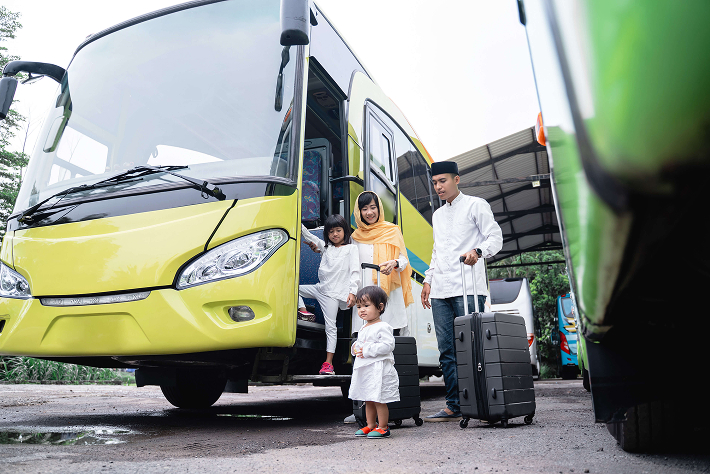
Which is why, when it comes to mudik, the calculus changes entirely.
We'll skip the reunion we never wanted to attend. We'll send cookies instead of showing up. We'll trade the school gathering for a quiet night at home. Most of the cutbacks feel like relief. Mudik doesn't.
Farhan represents the many whose ties to their hometowns are something closer to obligation in the most sacred sense of the word.
"There's pride in going back, like, I'm Javanese and this is where we all come from," he says.
"For me, it's the one moment to be dutiful to our parents. While they're still around, I want to hold onto that urgency."
That word: urgency. It carries something the rest of this conversation doesn't. Mudik isn't about tradition for its own sake, but about the people the tradition is tethered to, the ones who won't always be there.
For many families, Lebaran is the one guaranteed moment everyone is in the same room. You don't scale that back. You protect it.
This year, Farhan's family is finding a workaround. "Now that my father is the eldest, we're getting the extended family to come to us in Jakarta instead. It's still cheaper than having the whole Jakarta side travel back to Central Java."
The logistics have shifted, but the intention hasn't. Everyone still gets to be in the same room.
That's the distinction this season is teaching us: not everything is up for recalibration. The bukber invitations we dread, the parcels sent out of obligation, the outfits bought at marked-up prices—those we can let go. But the things that are really about love, about the people we're afraid of losing, about showing up while we still can? Those, we keep.
Setting Financial Boundaries
Here's the strange thing about Ramadan spending this year: almost everyone is spending more, across all income levels. But the buffers going in are thinner. Savings are down. For a lot of households, this festive season is being built on a shakier foundation than it looks.
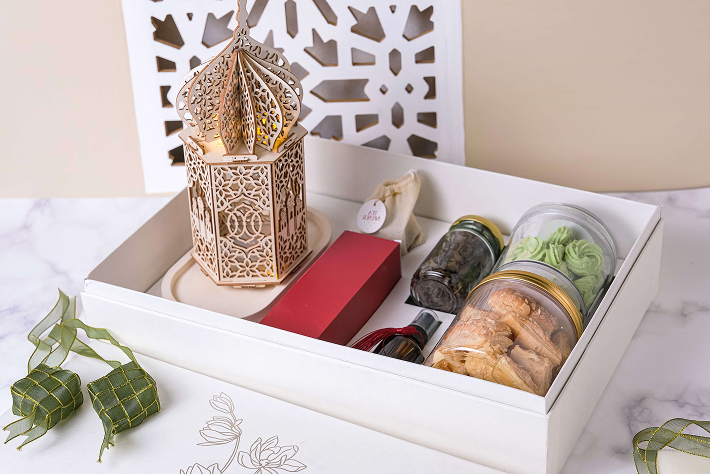
That gap between what we spend and what we actually have isn't new. It's baked into Lebaran.
"It's about reciprocity," says Hera Rachmahani, a consumer behavior researcher at Binus University.
"When we receive, we feel obliged to give back. When we were young, our parents carried that role. Now that we earn our own income, we pick up the mantle."
And the mantle is heavy. Lebaran has long been a moment to demonstrate wellbeing: the jewelry, the new clothes, the new car, the visible proof that you're doing okay. Some people take out loans before heading home for mudik just to project stability. The spending isn't always rational. Sometimes it's armor.
"There is prestige involved," Hera says. "When you return home, you want to serve the ones you're coming back to. You want to demonstrate capability, even if your finances are tight."
Admittedly, I didn’t notice how expensive Lebaran can get until I started working. The season brings THR (the customary holiday bonus, typically given as cash), an extra stream of income, yet the outflow always seems to outpace the inflow. Apparently, it has always been this way. We were just never old enough to be the ones paying.
This may be why my generation is looking at all this pressure and consciously pushing back.
Falah has cut back on hampers: no more widespread distribution, only for her closest relationships, only when reciprocal. She's also drawn a firm line on pocket money.
"THR is now limited to core family only. In this economy, I focus on my nuclear family," she laughs. "Efficiency mode. And it's not just me."
Farhan sees his spending not reduced but redistributed. "Retail spending may not be much, but my social costs are higher now, for nieces and nephews, for marriage responsibilities. I still keep some traditions, like matching family outfits. It's once a year. But where I can cut, I do."
Alma stopped buying clothes close to Lebaran years ago. "Prices are marked up. I buy during year-end sales instead," she says.
Small decisions, made deliberately, that add up to something larger: a refusal to perform prosperity she doesn't have.
Hera sees this generational shift too.
Younger, better-educated households are increasingly managing their money more deliberately, pulling back from the expensive performance of having made it.
And if you do spend, she adds, spend local. Buy from small businesses. At least that way, the money finds its way back.
The point isn't to celebrate less. It's to stop spending on things that were never really about celebration in the first place.
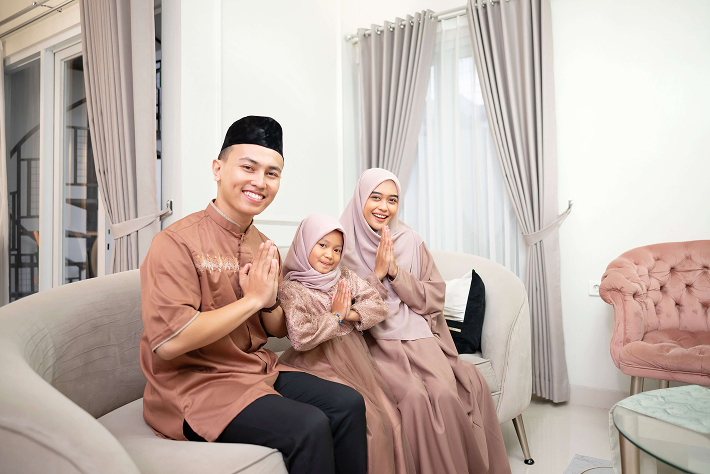
Finding the Real Meaning
When you remove the excess, something else has space to return.
If the spectacle of Ramadan and Idul Fitri is thinning, perhaps what remains is the spiritual core. It is, after all, a holy season. It's not just about how we celebrate it, but how we experience it: a moment to pause, to reflect, to do a little more good.
For Alma, Ramadan in the city has become less about childhood magic and more about managing her calendar.
"When I was younger, it felt very different. Now it feels like normal days," she says.
The city is still festive: over-the-top mall decorations, takjil (Ramadan street snacks and treats) from all over the country, fully booked weekends.
But internally, something has shifted.
"Tarawih (the nightly Ramadan prayers) feels different now. I tried praying at a mosque in Setiabudi once, but it felt strange. I usually end up praying at home because I finish work late," she says.
But since last year, she's been trying to find her way back. "My friends and I sometimes stay for tarawih together after bukber, or go for itikaf (a period of spiritual retreat at the mosque). I like that."
Falah's shift is more deliberate. "I focus more on worship now. The festive part isn't the priority anymore. I'd rather prioritize zakat (obligatory charity) and giving than social obligations."
"Ramadan is supposed to be about restraint," Hera says. "But over time, the ritual accumulated commercial layers. Now some segments are returning to more authentic interpretations, and that may also shift how people celebrate."
I know this feeling personally. Four years ago, I was in a bad place, and I started attending more tarawih, partly as an excuse to step away from social obligations I didn't have the energy for.
But something unexpected happened: it clicked. The stillness of it. The repetition. The way a crowded prayer hall can somehow feel like the loneliest, most honest place you've been all month.
I wasn't performing anything. I wasn't showing up for anyone but myself and, I suppose, for something larger than myself.
Ramadan and Idul Fitri feel special because we make them special. It takes a deliberate choice: saying no to the unnecessary and carving out more time for spirituality. For me, that rerouting changed everything. This holy season became a personal milestone, a moment to take stock of how much has changed and feel something like hope for what's next.
I don't know if that's a spiritual calling or just what happens when you get a little older. Either way, I'm grateful for it.

Idul Fitri is still Idul Fitri, even without the shiny things
For decades, Lebaran thrived on spectacle: the traffic, the matching outfits, the last-minute bookings, the visible proof that we were doing well. But spectacle is expensive, and, if we're honest, exhausting.
After everything we've been through, the pandemic, the economic pressure, the reordering of what we value, we are choosing differently. Smaller circles. Clearer limits. More presence, less performance.
I'd like to think this is a return to fitrah (our original, uncorrupted nature): the reminder that hari raya was never meant to be measured by how crowded the restaurants are, how flashy the outfits look, or how many parcels get exchanged.
It was meant to be felt. And maybe, stripped of the excess, we finally can.
Main writer
- Adelia Anjani Putri
Editorial Team
- Jet Damazo
- Ninda Daianti
Art Director
- Staven Andersen
Illustration
- Budhi Button (B/NDL Studios)
UI/UX Designer
- Kevin Setiawan
Technology
- Renaldi Adrian
- Dian Aldiansyah
- Mustopa