(JP/Aqraa Sagir)
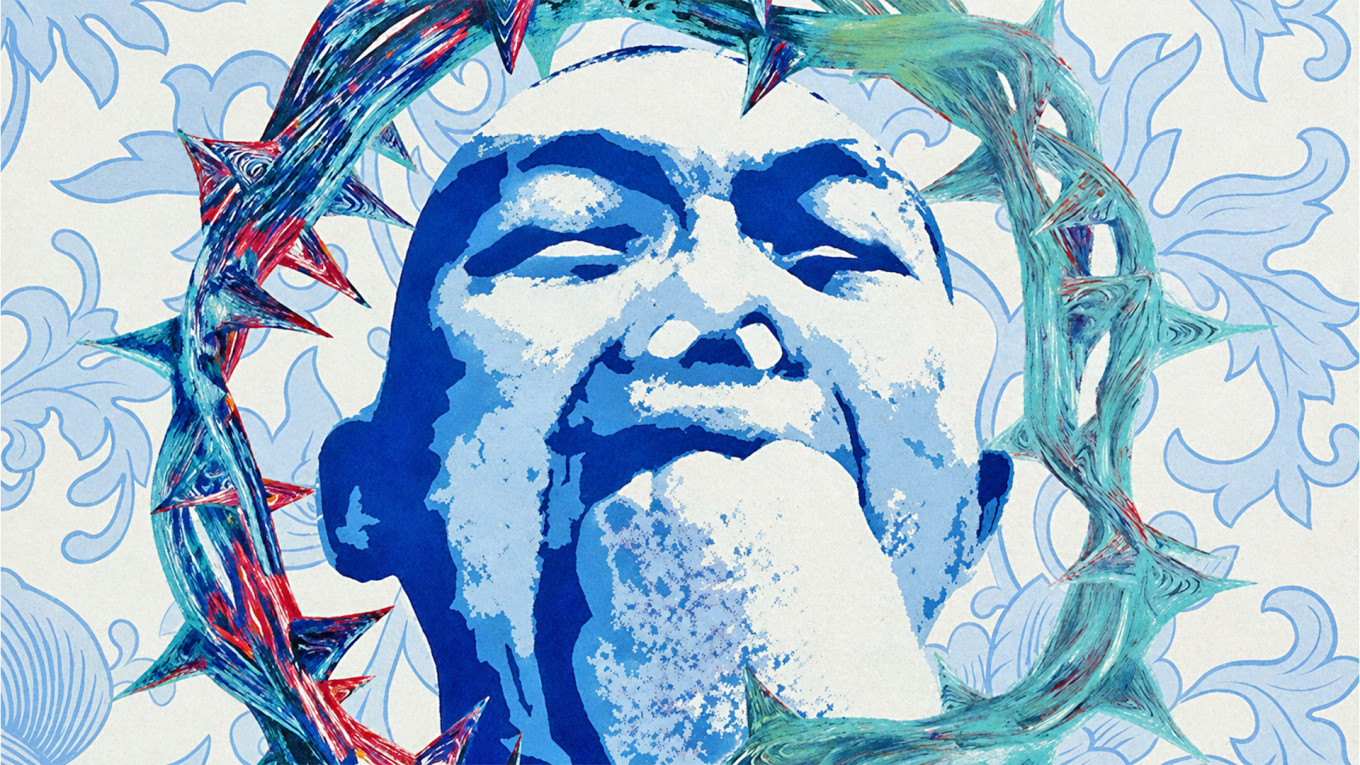
A gun, a crown of thorns, images of Chinese-Indonesians from the past.
In FX Harsono’s latest solo exhibition Ambang/Threshold, these recurring motifs are more than artistic signatures. They are reminders of a history that, in his view, Indonesia has yet to reckon with.
 (JP/Aqraa Sagir)
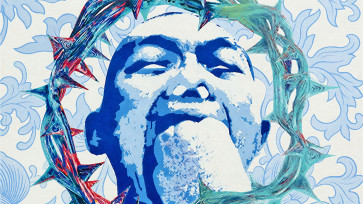
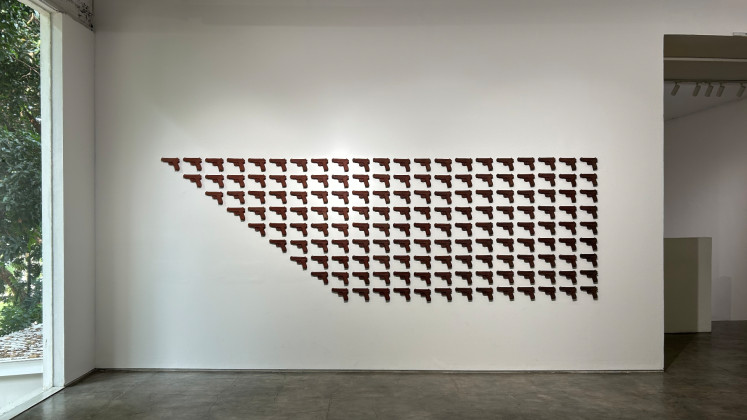
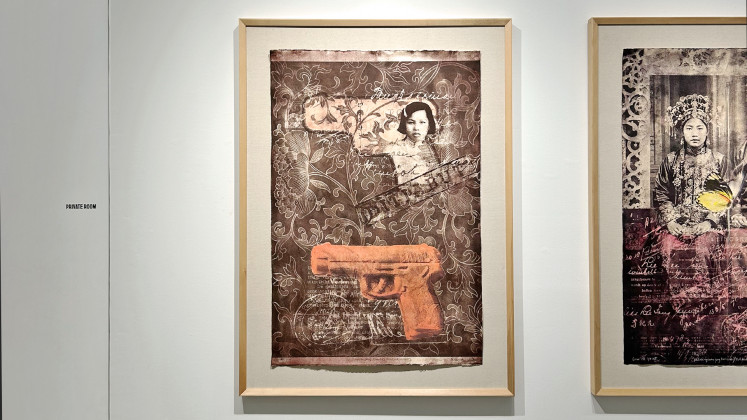
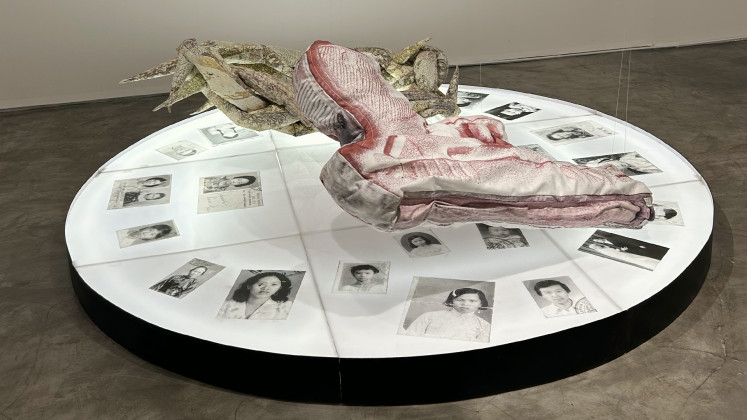
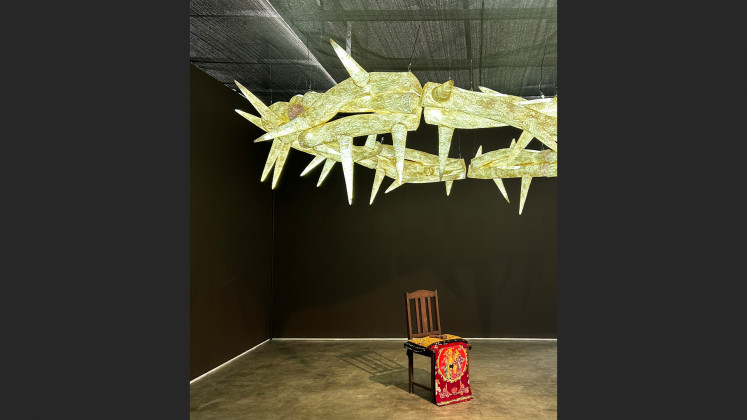
Ceramic guns are arranged in neat rows across a wall while a single gun rests on a chair beneath an illuminated ivory crown of thorns. Elsewhere, the crown reappears over historical photographs of Chinese-Indonesians, and a bright pink gun is superimposed on a painting of a couple in traditional dress and a collection of administrative documents.
 (JP/Aqraa Sagir)
The imagery is both familiar and unsettling. Harsono has returned to these symbols throughout his career, but their reappearance carries renewed urgency amid what he sees as the persistence of old patterns of discrimination and the country's increasingly fraught relationship with its own history.

Thank you!
For signing up to our newsletter.
Please check your email for your newsletter subscription.
“This work is an expression of my soul and thoughts, situated within a social, political and cultural context,” Harsono says, “because what happened in the past has not truly passed.”
Long, winding road
Harsono has spent more than five decades creating art that confronts social and political issues in the country. His career took shape in 1975, when he began exploring contemporary art as a means of questioning the world around him as well as a way to invite his audience to think critically about what was happening.
“In 1977 my work carried the theme of anti-militarism, because that's what I saw growing back then,” he recalls.
“I made guns out of kerupuk [deep-fried crackers] and asked people what they would do if these guns were real.”
Over time, his focus also turned inward, examining his identity as a Chinese-Indonesian and the trauma associated with it. Growing up, he constantly grappled with his identity, caught between being pribumi (native) and being a foreigner, discriminated against in his homeland for being himself.
“My work has always been like this because things shouldn't be this way, and we should be acutely aware so that we don't repeat these mistakes.”
For him, contemporary art isn't just a medium for presenting a pretty object to enjoy but a platform for encouraging critical thinking. Instead of prioritizing the aesthetic aspects of his work, Harsono aims to nudge his audience toward this mindset by creating art rooted in research and collaboration.
“I’ve been making art this way since the days of the New Order. I have to seek out a network of historians, social scientists and political analysts so that my work is rooted in truth.”
In working with experts, Harsono builds the foundation for airtight commentary on the social and political climate around him. In his eyes, an artist is not a singular genius who exists in a vacuum.
“None of what I present is based on fantasy. I need to have a complete understanding of these issues so that when I create, it's based on reality.”
Today, he sees this approach to art as even more important, particularly as social media has helped broaden access to and appreciation of contemporary art in Indonesia.
“There's a larger wave of appreciation toward contemporary art nowadays. And maybe the youth initially just does selfies and whatnot. But that's OK. Slowly from there they ask questions, they discuss, and their curiosity leads them to learn about what's behind the art.”
Harsono hopes more artists of the new generation will adopt a similar approach, grounding their subjective expression in objective research. He underlines that the artist's voice remains key to the final work, but their art should also have a concrete, verifiable basis.
“History isn’t owned by those in power who write it. History belongs to all of us. The truth belongs to all of us. So, create with your soul but have your mind rooted in the context of the truth.”
 (JP/Aqraa Sagir)
Looking back
Harsono’s Ambang/Threshold exhibition, in many ways, is the culmination of his body of work. It reconfigures the imagery and subject matter he has relied on throughout his career in a contemporary context. This is not simply an artistic choice, but a response to the state of the nation today.
“I feel that memories that should have been forgotten or become part of the past have appeared again today,” he says, alluding to the growing presence of the military in the current government as well as attempts to revise history to portray past events in a more positive light, including for those who were oppressed.
“Erasing things that have a discriminative nature doesn't mean the trauma disappears. What I feel is that the process of healing isn’t there. We’re not given the cure, so to say.”
Harsono highlights these current issues by reworking familiar motifs from his body of work. The guns reappear, no longer made with kerupuk but forged in ceramic. Instead of being arranged in a messy pile, they are systematically lined up on the wall, making them appear increasingly real and pervasive.
 (JP/Aqraa Sagir)
Meanwhile, the crown of thorns looks pristine in a shade of pearl white, seemingly rejuvenated when it should have decayed into nothing.
“It turns out that the feelings alluded to through my work are felt by so many of the people who visited already. And I hope that this exhibition can make people reflect to look for a solution so that we don’t wallow in sadness, [or] drown in anger,” he says.
“I hope people will leave and think: What can we do now?”
Aqraa Sagir is a writer for The Jakarta Post's Creative Desk. He’s chronically online in the hope it would be a useful asset for the job.