(Courtesy of Fill The Blank Space)
In just about a year and a half, Rainy Days & You, a three-person team based in Jakarta, has sold roughly 6,000 copies of its guided journals, digital and physical combined. Orders have come in from eastern and central Indonesia and from the Indonesian diaspora in New Zealand, Hong Kong and Australia.
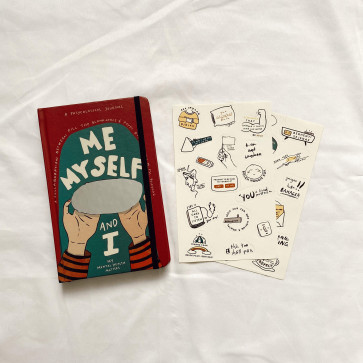
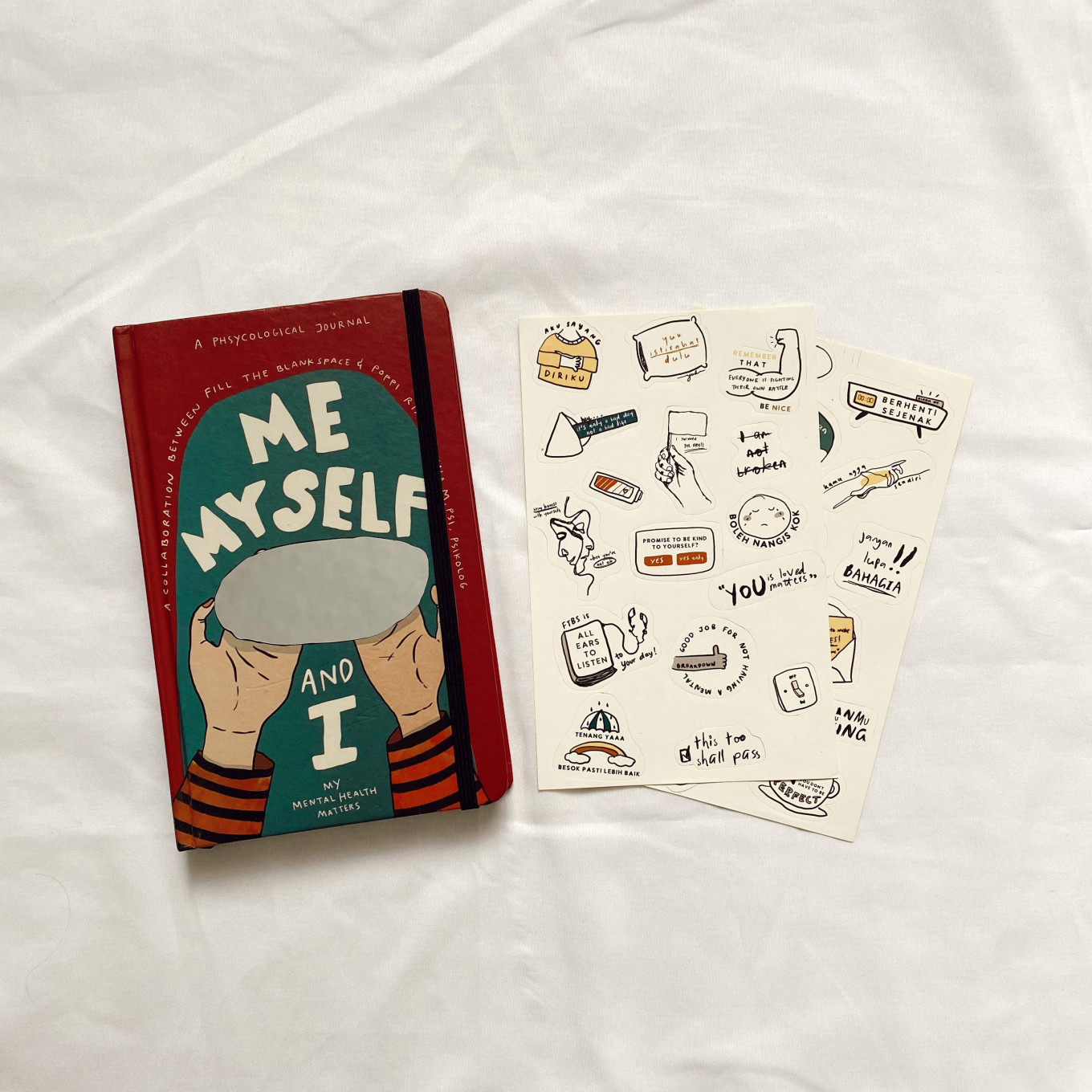
Fill The Blank Space, which has been running since 2015, has shipped over 10,000 copies across its roster of guided journals through Shopee, Tokopedia, TikTok and its own website, including to buyers in Papua, Malaysia and China. It has also cultivated a community of 126,000 on Instagram.
Well-Being Journey, which runs guided journaling programs online rather than selling physical books, has logged 1,600 session participations since 2024, drawn from 700 unique individuals across cities from Aceh to Makassar, with diaspora participants joining from Dubai, Brunei and Hong Kong.
These are not large numbers by most publishing standards. But for a category that didn’t meaningfully exist in Indonesia a decade ago, built by small, independent local teams with no significant marketing budgets, the reach signals something.
The question is what, and why now.
A wave they didn’t create

Thank you!
For signing up to our newsletter.
Please check your email for your newsletter subscription.
Most of the real growth in Indonesia’s guided journal market has come in the last two to three years, and the founders have a clear read on why.
“When we started 10 years ago, mental health almost seemed taboo,” Febby Pohan, content and social media director at Fill The Blank Space, tells me. “But now it’s become widespread, yes, this is important, you do need to prioritize your headspace. What we make is being pushed by that wave.”
Rexy Jonathan, founder of Rainy Days & You, frames it as an intake problem. Social media exposes people to an enormous volume of emotionally charged content, every scroll triggers something, accumulating without release.
“The amount of content triggering emotions is far greater than what people can externalize,” he tells me. Guided journaling, in this reading, is one of the few structured ways to process the surplus: output in a culture of relentless input.
There’s a communal dimension too, one that cuts against the assumption that journaling is inherently solitary. Well-Being Journey’s WhatsApp groups are designed around the idea that reflection doesn’t have to be a lonely act. Knowing that others in the group are working through the same prompts, the same struggles, is part of what makes people come back, of the 700 unique participants since 2024, a meaningful proportion are repeat attendees returning for different topics.
“We’re social creatures,” Nadya Saib, content and learning strategist at Well-Being Journey, tells me. “Even though the journaling experience is done individually, the journey is shared. That’s why people are gravitating toward guided journals, it reminds us we’re not alone in whatever we’re struggling with.”
Started from scratch
The founders building this market are, almost without exception, people who needed the product before they thought to make it.
Rexy started Rainy Days & You after his therapist kept sending him home with written homework, reflections to write, things to process on paper, with no template to work from. “I like to optimize everything I do, so I started making templates to sort of automate my journaling,” he tells me. “Seeing how much it helped me, I figured this can help others too. That’s why we started publishing journals.”
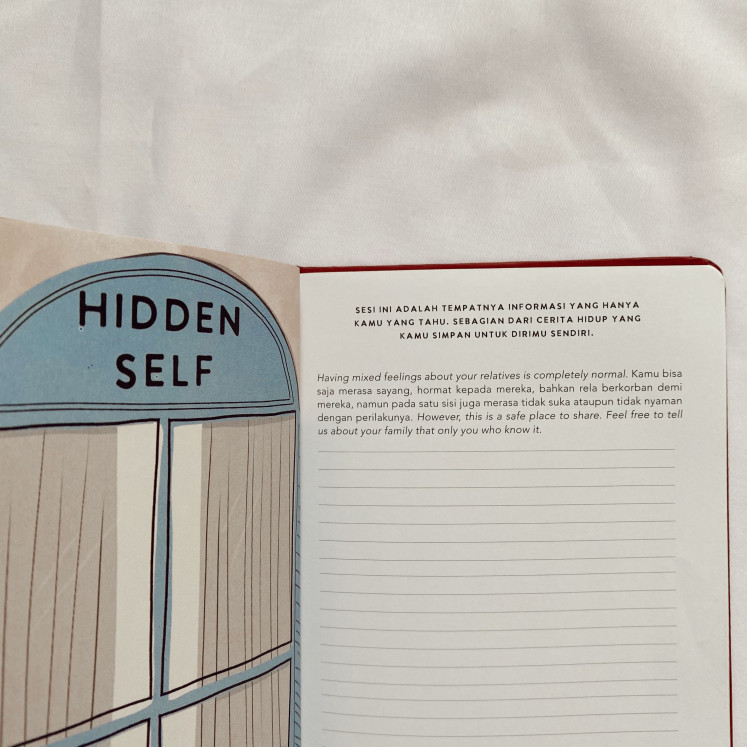
Fill The Blank Space began as a final college project for cofounder and creative lead Eka Wulandari, who’d spotted a gap nobody had filled. “I loved doing Keri Smith’s series of books like Wreck This Journal, and I noticed there weren’t any local products that merged interactive experiences with planners back then,” Eka tells me.
 (Courtesy of Fill The Blank Space)
Well-Being Journey grew from something more communal: a group of friends documenting their self-improvement alongside each other, until it became something worth offering to everyone. “Journaling is a process of documentation, but sometimes it’s tough to figure out what exactly it is that we want to remember,” Nadya tells me. “That shared struggle is why we started Well-Being Journey, to offer a guided experience for everyone.”
What they’re all responding to is the same simple problem: journaling is widely recommended, by therapists, by wellness culture, by every productivity influencer on the internet, but the blank page is genuinely paralyzing for most people. “Journaling can be as abstract as painting,” Rexy tells me. “A guided journal gives you a template, a structure, so you’re not just staring at an empty page wondering what to write.”
Pick your problem
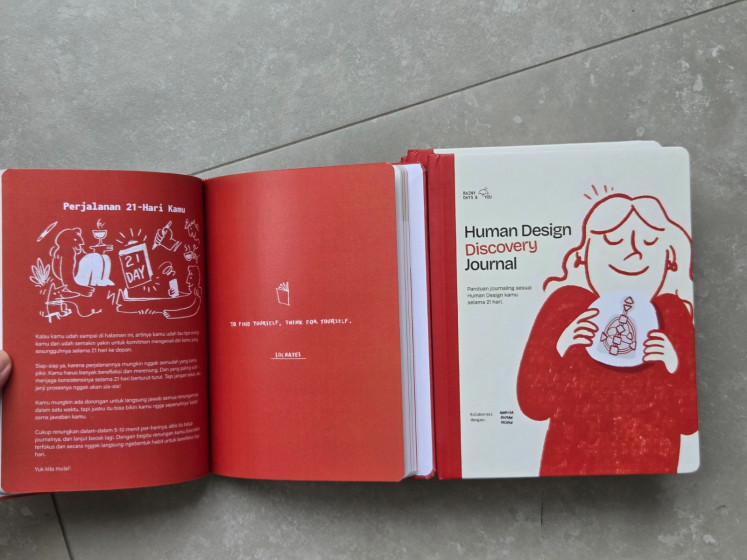
The products themselves map the range of need. Rainy Days & You’s daily guided journal walks you through an entire year via over 1,800 prompts and questions. The digital version is priced at Rp 98,000 (US$6) and the printed version at Rp 229,000 ($14), both available through their website.
 (Courtesy of Rainy Days & You)
Fill The Blank Space’s roster runs wider: Money Bestie, a finance journal cowritten with financial planner and educator Aliyah Natasya; This Book Belongs to Us, a couples’ journal for revisiting shared memories and working through the relationship; a time management journal built from the founder’s own experience with burnout. Titles range from Rp 170,000 to Rp 225,000 ($10–14) across their website and major e-commerce platforms.
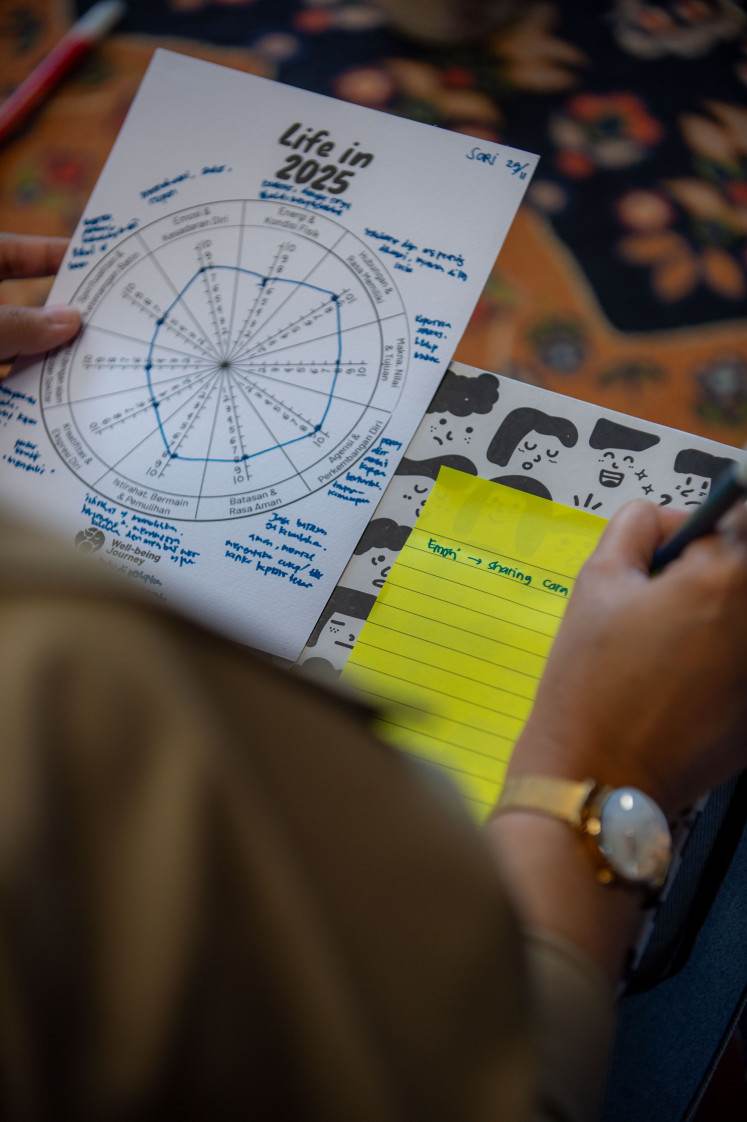
Well-Being Journey takes a different approach entirely. Their 14 Hari Menulis Jurnal (14-Day Journaling) program places participants in a WhatsApp group for two weeks, guided daily through prompts on a rotating topic, burnout, romantic relationships, setting boundaries, among others, with a facilitator moderating discussion. Each session costs Rp 150,000 ($9) regardless of topic, runs monthly and is capped at 30 participants per group.
That range of subjects, financial literacy, romantic relationships, emotional detox, burnout recovery, self-discovery, is itself a signal. These aren’t niche products for people deep in therapy culture. They’re addressing problems that look a lot like ordinary Indonesian urban life.
The work behind the prompts
The production behind these journals is more rigorous than the cheerful covers might suggest. None of the three teams simply writes prompts and publishes. All involve mental health professionals, psychologists, therapists, sometimes hypnotherapists, either as cocreators or as quality checks on framing and clinical accuracy.
“From ideating to developing we always involve expert collaborators,” Rexy tells me. “We don’t necessarily have the capacity to talk about mental health theories, so we brainstorm with psychologists and therapists and find a balance between technical depth and accessibility.” His R&D process takes two to three months per journal, the largest single chunk of production time.
“It’s a long iterative process because ultimately this is to help people,” Eka tells me. “So we go back and forth with professionals constantly to make sure we can have a truly beneficial experience for users.” Fill The Blank Space runs six months to a year per title, longer when a professional collaborator is involved.
The care matters because the line between journaling and therapy is one these makers are deliberate about not crossing. “These journals should be seen as supplements,” Nadya tells me. “Talking to a therapist, getting professional help, that’s the medicine.”
In practice, though, the two inform each other. A number of therapists now actively prescribe Rainy Days & You’s tools to clients as structured homework between sessions, essentially the same dynamic that led Rexy to build them in the first place. Well-Being Journey has fielded enough cases of participants realizing mid-program that they need professional support that they now maintain a curated database of psychologists for referrals.
Beyond the page
All three are building toward something larger. Rainy Days & You is working on an omni-channel experience that makes digital and physical formats seamless, the journal meets you wherever you are, rather than asking you to choose. Fill The Blank Space is developing an app that would let users photograph completed journal pages and receive psychologist-curated responses, turning a one-way experience into an ongoing dialogue. Well-Being Journey is planning a second offline community gathering after an overwhelmingly positive first event in 2025, with ambitions to eventually bring it to cities beyond Jakarta.
 (Courtesy of Well-Being Journey)
All three are also looking at schools, bringing journaling, and the mental health literacy that comes with it, to younger audiences before the blank page has a chance to become a barrier.
The demographic picture already suggests the market is wider than anyone planned for. Rainy Days & You’s core buyer is urban women between 27 and 30, but since launching its physical product a second group has quietly emerged: women between 45 and 50, drawn specifically to the printed format. Fill The Blank Space reports a growing portion of purchases made as gifts. Well-Being Journey’s sessions draw everyone from high school students to people in their fifties.
Nobody targeted most of these people. They showed up anyway.
Aqraa Sagir is a writer for The Jakarta Post's Creative Desk. He’s chronically online in the hope it would be a useful asset for the job.