(Courtesy of Lioness)
Not too long ago, I came across a little piece of trivia highlighting Indonesia’s soccer obsession: approximately 69 percent of the country are fans of the sport, backed by research from Nielsen.
With World Cup fever in full swing, this was how I found myself spending a warm Saturday afternoon at Erasmus Huis to catch a screening of Leeuwin, despite identifying as part of the remaining 31 percent.
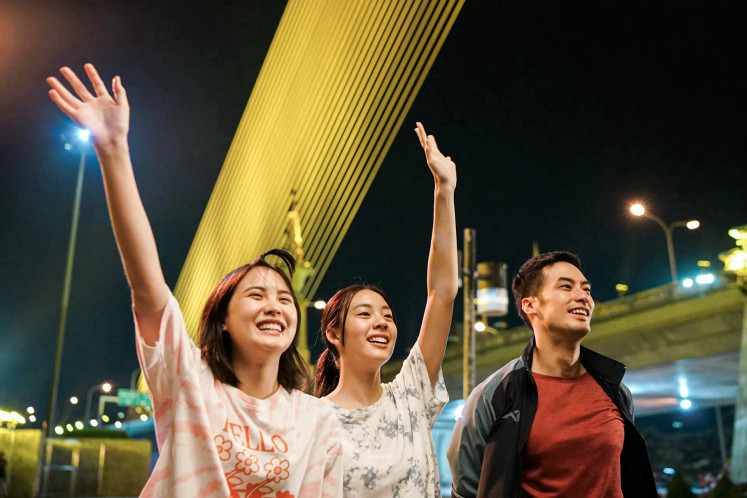
Leeuwin (Lioness) is a Dutch family film about a young girl from Suriname who moves to the Netherlands with her family and starts playing with the local club after a new friend suggests she join. Though it is a soccer flick, the movie is ultimately a story of identity, friendship and belonging, all universal themes that most people can relate to.
Nassim Abba, the Embassy of the Netherlands’ acting head of cultural affairs and Erasmus Huis, told me that Dutch film screenings are a regular part of the cultural center’s program calendar, as one of their goals is to introduce Indonesian audiences to Dutch cinema and the diversity of stories coming out of the Netherlands.
“What makes the movie Leeuwin special was that it created a natural link between two things we were already celebrating: Dutch cinema and football. With the World Cup creating so much excitement, it felt like the perfect moment to complement this with a Dutch film about football,” he said.
Erasmus Huis, Abba continues, aims to present the diversity of Dutch arts and culture, while always looking for opportunities to connect with Indonesia.

Thank you!
For signing up to our newsletter.
Please check your email for your newsletter subscription.
“We don’t just bring Dutch artists or exhibitions here; we want to create exchanges and collaborations between Dutch and Indonesian artists, institutions and audiences. For this reason, our program is quite diverse; it includes visual arts, photography, film, music, literature, design, gaming, talks and workshops. We try to strike a balance between larger exhibitions that attract a broad audience and smaller events that allow for deeper conversations and exchanges.”
That mix is par for the course for Erasmus Huis. I still remember marveling at the newly renovated space back when I was a young cub reporter in 2018, pondering questions about culture and identity during the Kopi Susu (milk coffee) photography exhibition in 2019, and eagerly awaiting screenings from the 2020 lineup of Europe on Screen that were ultimately canceled due to COVID-19 restrictions.
For this year’s lineup, Abba says the coming months will be quite diverse. Erasmus Huis will once again host the World Press Photo Exhibition in September, along with several exhibitions that explore shared histories and contemporary perspectives. These include an exhibition on the link between Cape Town’s Indonesian diaspora and the VOC (the Dutch East India Company) later in October, and an exhibition in collaboration with the Eye Filmmuseum in November that looks at colonial film archives and how these can be viewed in a contemporary context.
Its performing arts program will also welcome Dutch artists including Amsterdam-based bubble grunge band Tape Toy in August, Rotterdam-based trio Texoprint in October, performance arts company Zwermers in September and classical music group Trio 258 in December, with performances at Erasmus Huis and in other cities across Indonesia.
At the end of the day, Abba says Erasmus Huis is envisioned as an open and welcoming place where people can discover something new, whether through art, music, film or dialogue.
“If visitors leave inspired, having made a new connection or discovered a different perspective, then we've achieved our goal,” he concludes.
Josa Lukman is an editor and head of the Creative Desk at The Jakarta Post. He is also a margarita enthusiast who chases Panadol with Tolak Angin, a hoarder of former "it" bags and an iced latte slurper.