(Shutterstock)
The more you travel, the more you realize that nations rarely have copyright for the things they claim for themselves. There is in effect a little bit of everywhere, everywhere else. And yet the culture wars persist, often centered on the very product that is most globalized of all: food.
Are French fries Belgian or French? Is Ramen Japanese or Chinese? Armenians have been known to come to blows with Azerbaijanians about who can legitimately claim the flatbread “lavash.” Does China’s pao cai predate Korea’s kimchi?
When traveling in Turkey I remember asking a group of locals at a restaurant to recommend a typical dessert to try. They unanimously suggested “halwa,” a confection that for me conjured up the taste of home in India.
Stories like these are far more common than we tend to imagine; and if we look closely at some of the world’s best known culinary traditions, you’ll find that many are the product of journeys spanning continents, empires and centuries. Here are a few of my favorites:
Afternoon tea
Afternoon tea in England, which is ostensibly as British as the Queen, could not have existed without the tea grown in India, which in turn wouldn’t have been grown had it not been for cultivation methods learned from China. Read into the tea leaves far back enough and an astonishing history reveals itself: one that crisscrosses continents and features gunboats and botanical espionage.

Thank you!
For signing up to our newsletter.
Please check your email for your newsletter subscription.
Fancy a cup of tea?
First however, we must travel even further back to a cave near the hallowed grounds of the Shaolin temple in central China in the 5th century CE.
Bodhidharma, shaolin kung fu and the legend of tea
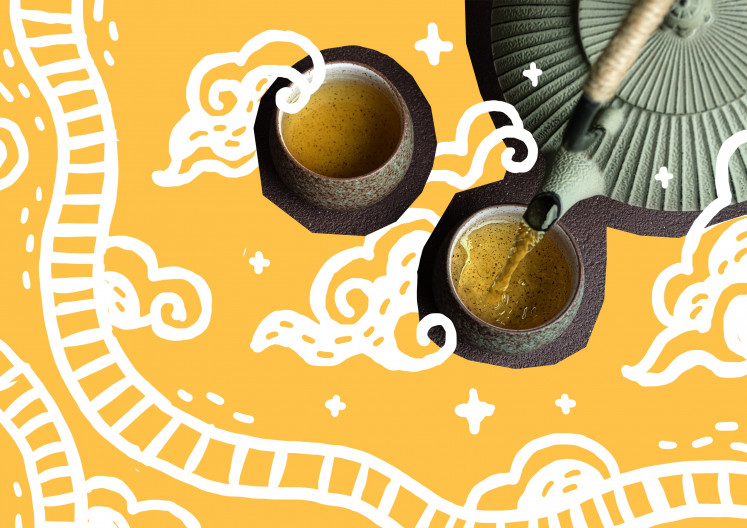
An Indian monk called Bodhidharma sat meditating there for nine years gazing silently at a wall. At some point he fell asleep, seven years into his vigil. According to legend he became so enraged with himself once he woke up that he cut off his eyelids to prevent any future napping. As his leaf-like lids hit the floor they sprouted miraculously into tea plants. Instinctively, Bodhidharma reached over and plucked a few leaves from the bushes to chew and suddenly felt refreshed. His mind clear and focused, he resumed his meditation and thereafter tea would provide a stimulant to help keep monks alert during their meditation sessions.
 (Shutterstock)
The Brits
But while mythology may have an Indian monk credited with “creating” the leaf in China, for the centuries that followed tea was associated with China, not India. The leaf was one of the first new goods that Dutch merchants brought back from their trips to the Far East at the beginning of the 17th century.
But as more and more people in Europe began to develop a taste for the drink, the problem of the Chinese monopoly on tea became more pressing. By the 18th century tea was a top import for England from China, alongside other exotic goods like silk and porcelain. But while the British had a seemingly insatiable appetite for Chinese goods, the opposite did not hold true; there was little that Britain could offer China in exchange for its tea.
The solution that the East India Company (which had a monopoly on trade with the Far East at the time) developed was two pronged. One was to find a product that the Chinese would desire, resulting in the nefarious history of opium cultivation in India and its gunpoint-sale in China.
The other was to diversify the market by introducing tea cultivation to India. The first tea estates were set up in the east Indian state of Assam in the 1830s. But cultivation truly took off only after a Scottish horticulturalist, Robert Fortune, undertook a large-scale tea heist on behalf of the East India Company, in 1848. Fortune stole and smuggled out about 13,000 plant samples and 10,000 seeds from China, via Hong Kong and on to Calcutta, enabling tea farming to become firmly established in India.
The rest is history and abomination, as chai tea latte has become ensconced in Starbucks’ global menus. But tea is far from the only Indian staple to have crossed borders to surprising ends.
 (Shutterstock)
Curry Fridays
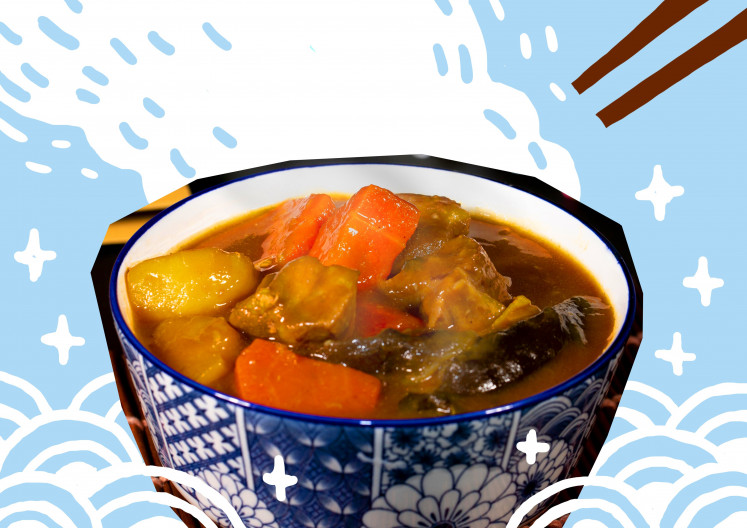
A contender for Japan’s national dish is curry, so much so that the Japanese navy even has a “Curry Friday” tradition, where all navy canteens offer curry and rice as Friday lunch. But Japanese curry bears only a superficial resemblance to its Indian ancestor. It is more glutinous in texture, usually mixed in with wheat flour. It is also sweeter and includes interloping ingredients like apple and honey.
The dish in Japan, in fact, dates to the 1870s, when naval officers of the British Royal Navy who had picked up the curry habit in India, passed it on to colleagues in Japan’s imperial maritime forces. The earliest recipes for raisu karei (literally, rice curry) in Japanese cookbooks were lifted from the 1861 Mrs. Beeton’s Book of Household Management, whose curry ingredient lists invariably included curry powder, flour and chopped sour apples.
Since the novelty dish came from England as far as the Japanese were concerned, curry rice was—and remains—classified as “Western.” It is, therefore, a regular item at yoshuku or Western food restaurants, where it is served in a sauceboat.
Portuguese tempura
Another surprising Japanese food fact is the Portuguese origins of tempura. Portuguese-sponsored Jesuits were active in Japan from the mid-16th century for about 50 years. These priests brought with them not only promises for salvation but something more useful in the here and now: batter-frying cooking techniques.
There is some debate as to the origins of the term “tempura.” One theory links it to the Latin phrase quatuor anni tempora, which refers to the Ember Days, or days in the Catholic calendar when meat is forgone, as for example, during Lent. Delicious batter-fried veggies made it easier for priests to abjure meat during the Ember Days. Another theory claims that the etymology is linked to the Portuguese word tempêro, meaning “seasoning.”
Fishy ketchup
When it comes to seasonings, among the more popular contemporary condiments is ketchup — the blood-red sauce that brings to mind McDonald’s and all things American. In the United States, 97 per cent of households report having a bottle at the table. Yet, the sweet sauce originated far from the Americas, in Southeast Asia.
The word ketchup derives from the Hokkien Chinese word, kê-tsiap, which is the name of a fermented fish sauce. The British, once again, are key players in this story of global gastronomy. They likely encountered ketchup (in its original form) in Sumatra and upon returning home, attempted to recreate it.
A recipe published in 1732 for Ketchup in Paste, by Richard Bradley, referred to “Bencoulin in the East-Indies” as its origin. British Bencoolin was a possession of the East Indian Company that extended over south Sumatra.
But today’s star ingredient, the tomato, remained absent from early versions of the sauce, which featured ingredients like mushrooms and anchovies instead. According to a piece in the National Geographic (’How was ketchup invented?’), the first known published tomato ketchup recipe appeared only in 1812. It was written by horticulturalist James Mease, who referred to tomatoes as “love apples.”
“Eating” the croissant
Then there is the story of the croissant. So very French, you might well imagine. But you would be mistaken. Its origin story takes us back to a 13th century Viennese pastry called the kipferl and on to 1683 when the city of Vienna was being laid siege to by the forces of Ottoman emperor Mehmed IV.
According to legend, local bakers heard invading Turks tunneling beneath the city and were able to alert the guards in time to save the day. To celebrate this victory, the bakers reshaped the kipferl into something that clearly resembled a crescent moon – the symbol of Islam. Eating it was basically Christians symbolically devouring Muslims. Yikes!
Chicken Crimea
The culinary cipher du jour is Chicken Kiev. The name smells of “continental” dining in the pre-liberalized India of the 1970s and ‘80s; a veritable synonym for the starched-white-table-clothed environs of establishments like Kwality and Volga in Delhi’s Connaught Place.
The menu at these restaurants was heavy on Russian allusions: mushroom stroganoff was a star and Russian salad always had a role.
But the stroganoff sauce, in fact, debuted at the table of a scion of an ennobled Russian clan called the Stroganovs in Odessa — which is in Ukraine — thanks to a French chef, who added mustard, a favorite condiment of his country.
To roil the nomenclatural pot further, some claim that Chicken Kiev originated not in Ukraine at all, but in the heart of the former empire: the Muscovy region. And still, others say it is French. The cookbook of the iconic New York restaurant, the Russian Tea Room, for example, notes that the dish was most likely a creation of the celebrity French chef Marie-Antoine Carême, who spent several months of the year 1818 in St. Petersburg at the court of Alexander I.
Foods, as much as the nations that claim them, have geopolitical fortunes. Chicken Kiev is a prime example. Soon after Russia annexed Crimea from Ukraine in 2014, government canteens in Moscow cheekily rebranded the dish, “Chicken Crimea.”
If there is one takeaway from this whirlwind tour of the culinary tug-of-war that the patriotic and the foolhardy insist on performing, it is this: eat well and healthily, but keep in mind that food is truly global. Let each mouthful we take remind us that borders are but collective hallucinations. Keep your passports safe in your hands but hold the entire world (and its food) close in your hearts.
And in the words of Orson Welles: “Ask not what you can do for your country. Ask what’s for lunch.”
Pallavi Aiyar is a territorially polygamous correspondent, columnist, and author. She has reported from — and raised a family in — China, Belgium, Japan, Indonesia and Spain. She writes about the world with indiscriminate delight and a weakness for the surprising connections between people and places.