(Courtesy of Maggie Tiojakin)
Jakarta is the city we’d love to hate. It is intense in all the ways that are hard to romanticize: overly crowded, perpetually gridlocked, ecologically broken. Last year, it became official: With a population of 41.9 million people, Jakarta was designated the largest city in the world, replacing Tokyo and surging ahead of contenders like Dhaka, Mumbai and Delhi. Yet the world is only beginning to reckon with what those of us who live here have always known: Few other cities in the world carry the political, economic, and social weight that Jakarta does.
In many ways, Jakarta sits at the center of Indonesia’s imagination. It symbolizes power, control, and influence, drawing into its orbit millions of people who share not only its ambitions, but also its anxieties and expectations for a better life. And for those who call this city home, Jakarta represents more than just a place to live: it is a competitive landscape that continues to test one’s mettle and courage to wager everything on one’s own potential. That is, provided one can withstand the inconsistent way the city rewards their effort.
As somebody who was born and raised here, then spent a good decade living abroad, Jakarta represents the kind of complexity I rarely come across anywhere else. It constantly demands from us the kind of patience and compromise that often feels unearned, and forces us to prove our grit and tenacity simply to move through it with some semblance of dignity. Yet in its quieter hours, the city surprises with a kind of tenderness that leaves us breathless. Here and there, the city softens just enough for us to notice the glow of its skyline against the evening haze; the stillness that gently settles over empty streets before dawn; or the quiet vulnerability hidden beneath the daily grind of people making ends meet.
To understand Jakarta, one must experience it. There is little, if any, mythology surrounding the city: no carefully preserved illusion of grandeur to mask its contradictions. What you see is, more often than not, exactly what you get, and therein lies the root of our uneasy relationship with the nation’s capital.
Jakarta is a lot of things to a lot of people; and many will tell you all the things that are wrong with it, and they will likely be right. On any given day, the city will provide you with a million reasons to leave or, at the very least, to curse at the powers that be. Nothing works the way they’re supposed to here. Fairness is deeply subjective. Social trust is fragile. Eventually, with time, these frustrations harden into a peculiar contempt for the city itself.
Sure, it is easy to reduce Jakarta (or any city, really) to little more than a chaotic hubbub shaped by aspirations and disillusionments. Easier still is to dismiss a city as a failed attempt at greatness based on how poorly it scores on global rankings measuring livability, cleanliness, safety or quality of life.

Thank you!
For signing up to our newsletter.
Please check your email for your newsletter subscription.
In recent decades, we have been made to carry a number of dishonorable badges: some of the worst traffic congestion in the world, air quality that regularly breaches hazardous levels, a population density that strains every public system, and, perhaps most urgently, a city that is sinking faster than almost any other on earth. Yet we wear each badge with some form of twisted pride, as if surviving them is proof of something, an inner bravado or resilience, a strange ability to continue building a life in a city that doesn’t seem to deserve our loyalty, let alone our devotion.
Personally, I treat these badges as wake-up calls. They are meant to keep us on our toes. However, when it comes to Jakarta, my own sentiment is a mixed bag: Some days, I love it. Other days, I am indifferent toward it. But, and this is a big but: I do not resent it.
What I have come to realize is how the narrative that has been built about and around Jakarta is not the same as the ones built for other global cities. The narratives surrounding these other cities are somehow kinder, more forgiving. Better yet, they are driven by an almost stubborn conviction that, however imperfect they are, these cities remain worthy of love and investment. Can we say the same about Jakarta?
I remember how my friends reacted toward my decision to return to Jakarta after spending a decade abroad. Nearly all of them thought I had been forced to return home, and when they figured out I had returned voluntarily, they were quick to voice concerns.
“You have everything going for you out there,” said one friend. “Why would you ever come back here to this hellhole?”
The question didn’t land well at the time (it still doesn’t) because the logic felt absurd. It had assumed that wherever there is, it is always going to be better than here. That cognitive gap alone is bound to transform a place, an otherness, into fantasy, smoothing over fractures and inconveniences for no other reason than to reinforce the belief that Jakarta is never going to be good enough. Not for us, not for the country, not for anyone.
For all its miserable failings and inadequacies, Jakarta represents the very humanity and frailty in all of us. It is the real deal. Similar to other global cities, Jakarta has its fair share of bold ambitions; yet unlike them, it doesn’t go the extra mile to conceal its weaknesses. It is what it is. Perhaps this is why many consider Jakarta as a cold and unrelenting city.
I’d like to think that Jakarta is never cruel in its intention, though it can be unforgiving in its failure to meet its own ambitions. Public transportation exists, but within a system that still cannot fully guarantee safety or dependability. Opportunities are abundant, yet often filtered through networks, access and, in certain circumstances, who and what you are. The city offers no shortage of luxury, but only in fragments: small tokens of indulgence suspended above the exhaustion, inequality and improvisation that have come to define everyday life for the general population. Even so, we push on, believing that, despite its contradictions, the city might still have room for us to grow and make something of ourselves.
There are moments during my daily commute to and from work when I find myself looking out the car window at the maze of tall buildings around me, each an ambitious pillar of progress rising above a city that remains unfinished, and I ponder about how this city is unlike any other I’ve been to. It does not possess Paris’ poetic charm, Hong Kong’s boundless energy, or Amsterdam’s quiet beauty. Instead, it is messy, sometimes petty and, in the clear light of day, unpretty. Then I am reminded how much of that narrative is also mine.
There are multiple times in a single day when I catch my own train of thoughts while navigating through the city’s gridlock and the word ‘surrender’ keeps popping into my head.
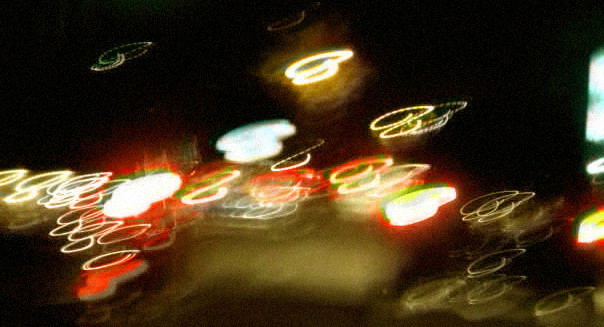
Moving across the city during peak rush hour is a spectacle that I never look forward to, but it is nonetheless a captivating event. At the beginning, you’re affronted by the amount of time you actually have to sit through a traffic jam, an hour, sometimes two whole hours before you’ve even had your first cup of coffee. A meeting time and point has to be orchestrated in such a way that either tolerates delays, or demands a level of strategic foresight that borders on military planning. Most of the time, feelings of anger and helplessness will quickly overwhelm you. Then comes acceptance, which leads to an unusual awareness of the city and its mechanics: the excessive glow of shopping malls standing meters away from collapsing sidewalks, and the awkward choreography of workers trying to survive in an environment that adamantly refuses to extend comfort, ease or mercy to anyone.
A friend once told me how he resorted to meditation to calm himself down while facing Jakarta’s traffic.
“It’s great, you know,” he said over a glass of wine in a dimly-lit bar tucked somewhere in the center of the city. “You just breathe slowly and be grateful for the fact that you’ve got a job, a healthy family, and wonderful friends. The traffic isn’t going to disappear no matter what you do. You can’t control that. But you can control your thoughts.”
To be fair, Jakarta has tried to be all the things we need it to be throughout its almost 500-year history, and it has not stopped trying. Not even once. It is a city in constant motion, always attempting to outdo itself, often with meager success, or rewrite its own story. It doesn’t pay attention to what others think (sometimes to its own detriment) and, like clockwork, every morning when the sun comes up, it purrs back to life with the kind of lethargic energy that frustrates you, but also somehow sobers you.
Just like us, the city is still trying to figure itself out. Jakarta’s narrative, of course, is inseparable from that of the nation and the leaders who have come to shape its destiny. Since the country claimed its independence in 1945, the city has admittedly seen both better and darker days, though we seem more inclined to remember the terrible ones. In fact, there is a running punchline: whenever Jakarta appears in the headlines of international news outlets, it is rarely for anything good. Not new inventions. Not globally recognized achievements. But disasters, civic unrest, and political and economic instability. It’s bad news after bad news. Yet, believe it or not, many of us actually find pleasure in these bad tidings, contributing to their social media virality, screen capturing these headlines with some perverse sense of celebration, as if to say: “See, Jakarta? You’ll never amount to anything.”
Yes, some of this anger can be justified. The resentment, disappointment and frustration, they’re not without precedents. I get that. I just think maybe part of the reason some of us detest the city so much is because, without knowing why or how, we have co-opted its failures as our own. Maybe deep down we understand where things truly stand: Jakarta represents each and every one of us in all its ironic ambitions and contradictory expectations. And maybe living in a city that constantly reminds us how it fails to measure up is the reason we feel less seen.
Here’s the thing, though: This story, our story, is nowhere near done. The city is still trying to put together a narrative that it can live with not just for today, but for decades and centuries to come. It continues to show us all the things it aspires to be, and all the things it cannot be. Jakarta is not New York, or Los Angeles, or London, or Hong Kong, or even Singapore. It is not the city of dreams. It is not the city of great expectations. It is the city of possibilities, where adversity is a friend and not an enemy. Many of us come and live and build families here to try our luck at life, and many more will follow in our footsteps.
I’m going to be honest with you: I too would love to hate Jakarta. I really would. It’s just that when I look closer at all the things I’d love to hate about this city… I can’t seem to turn myself away from it. There is an unmistakable sense of groundedness in this narrative of becoming where crazy meets beautiful; and where the future is both exciting and dreadful at the same time.
Maggie Tiojakin dabbles in a little bit of everything — one of which is writing. Her work has been described as 'better than nothing?' by an editor who is very reluctant to be named, and it's often produced while ignoring her day job. In writing this bio, she wanted to be sure she is not naming names and that she would also one day like to thank the Academy for... something.