(Shutterstock)
When I was invited to an event at Salira, I was immediately intrigued. Despite being open for only a few months, Salira is still one of Senopati’s most talked-about spots. People still line up for what Salira calls an “elevated warteg” (warteg being a humble Indonesian eatery), and reservations are often needed, though the queue has become more manageable.
In my excitement, I did not read the details carefully. All I knew was that I was registered for a dinner with strangers, Madura-themed and timed to mark Independence Day.
I did not think much of the theme. After all, it is hard not to have a complicated relationship with Indonesia these days. The news, the politics, the economy, the nonsense: sometimes it feels like there is always something new to be annoyed about. So you would understand if I was not even slightly interested in joining this year’s Independence Day festivities.
But it is Salira, so I made an exception. Little did I know the night ahead of me was something I had never experienced before.
It was already packed when I arrived, late, courtesy of the legendary Jakarta traffic we all love to hate. The 11 strangers I had been told I would share the table with were already gathered around a man who seemed to be role-playing a street vendor. As I sat down, he began telling stories, and I found myself struggling to understand what was happening. The other guests seemed to know one another.
I, apparently, was the only stranger.

Thank you!
For signing up to our newsletter.
Please check your email for your newsletter subscription.
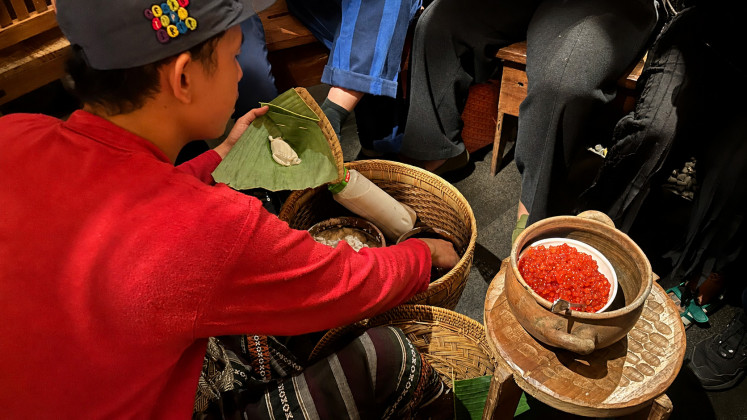
The man talked about trips he had taken, while I tried to catch up. Someone offered me a shot of jamu (herbal tonic), which was lovely. I was also served bubur tajin (rice porridge), which he said came from Sobih village in Bangkalan regency. It reminded me of bubur sumsum (silky rice-flour pudding), but with more going on.
Then a woman appeared, the bubur seller called her Nyai (honorific for an older woman), loudly and with an unmistakable Madurese accent, complaining about how long it had taken her to arrive from Bangkalan. She then launched into a conversation with the vendor about overly TMI (to-much-information) topics we Indonesians know all too well: where his wife was from, how many children they had, why they did not have any yet and whether a certain jamu might help with that. It was a scene familiar to any Indonesian, nosy questions and all, just with a different accent.
That was when it clicked: participatory performance art!
 (Courtesy of Adelia Anjani Putri)
Not just a meal
The dinner marked the opening of Pasar Salira, Salira’s Independence Day celebration that highlights a different Indonesian region each week throughout August. For its first edition, Salira did not just prepare Madurese dishes; it brought in the Madura experience.
They invited Omah Jangan Diam Terus, “a creative house for slow food, drinks & travel culture with community programs” from Depok, to host the dinner. The team did not only craft the food; they also brought the stories, origins and performance elements that helped simulate the atmosphere of life in Madura.
“This is what happens when you come to a Madura house: we will keep feeding you,” one of the hosts told us as he led us upstairs to a dining table arranged like one in my elders’ home: a water pot, small glasses and, oddly, a set of sesajen (ritual offerings), though more on that later.
 (Courtesy of Adelia Anjani Putri)
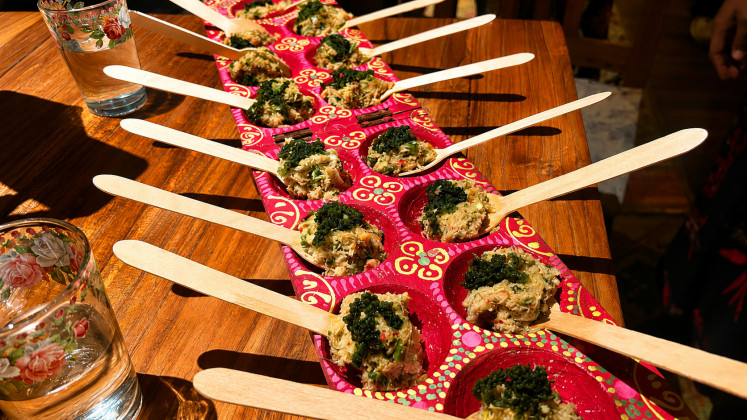
The next appetizer was a spoonful of urap latoh: urap (salad of steamed or boiled vegetables mixed with seasoned grated coconut) topped with latoh (sea grapes harvested from the Pantura coastline). It tasted salty, like the sea, with galangal coming through clearly. It brought me back to Madura’s salty air, and, oddly enough, to the movie Pangku. If you have seen it, you will understand.
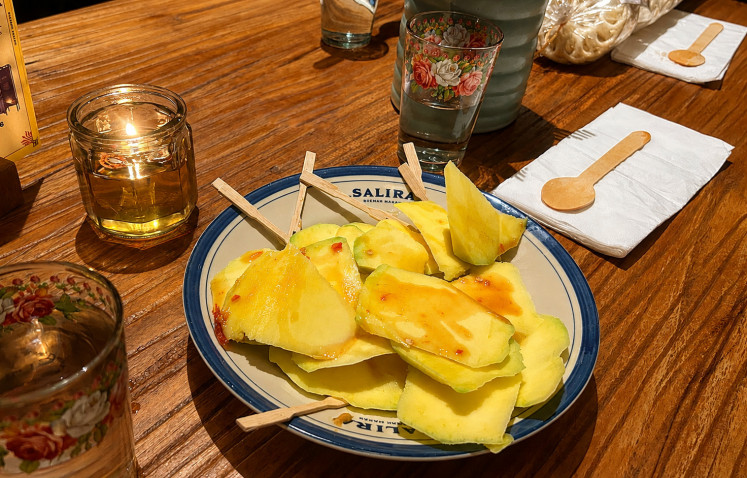
Then Nyai and her entourage brought us the next piece: mango rujak (traditional fruit and vegetable salad). The hosts let me watch as they pounded the rujak in the mortar and pestle, and they honored my request to skip the chili, though not without a few questioning looks.
In Madura, I learned, rujak is not typically served with the sweet palm sugar sauce many of us associate with it. “We call rujak with sauce made from palm sugar rujak Jawa,” one host told me. Madurese rujak usually features mango, ambarella or kedondong (Indonesian hog plum), and belingka or timun suri (local Madurese cucumber varieties), mixed with petis (a seafood sauce made from fish or prawns) and chilies. It is simple, sharp and often enjoyed as an afternoon snack.
I also learned that, despite its size, Madura has many varieties of rujak: rujak kelang, a Pamekasan favorite served with steamed local mangla (a local reef fish); rujak curek from Sumenep; rujak soto, which is somehow served alongside soto; and rujak petis, perhaps the most popular of them all.
The petis I tasted, my first time trying it, was made with tuna and brought directly from Madura, according to the hosts. I had expected something as strong as terasi (fermented shrimp paste), but the flavor was surprisingly mild, with the fishiness appearing only at the end.
 (Courtesy of Adelia Anjani Putri)
Lost in translation
Throughout dinner, I often found myself lost in translation. The accent was strong, the dish names were unfamiliar and even taking notes on what I was eating took effort.
When I accepted the invite, I expected to be fed well. I did not expect to be educated. The experience reminded me how little I know about our own local food, and how much there is still to discover. Even a small island can hold so many stories, ingredients and traditions. In turbulent times like this, it is comforting to be reminded that there are still things to love about this country.
I also did not expect the dinner to remind me how kind people can be. My fellow “strangers” turned out to include foodies and chefs, so they understood much more than I did. Through them, I learned more about Madurese food, which, I admit, I had previously associated only with satay and fried duck, and about our local spices. They, along with the hosts, helped me with my notes and patiently repeated words whenever I got lost. One of them even found my Instagram account and followed me. It was a small thing, but a nice reminder of how easily strangers can become friends.
All this was before we came to the main dishes.
 (Courtesy of Adelia Anjani Putri)
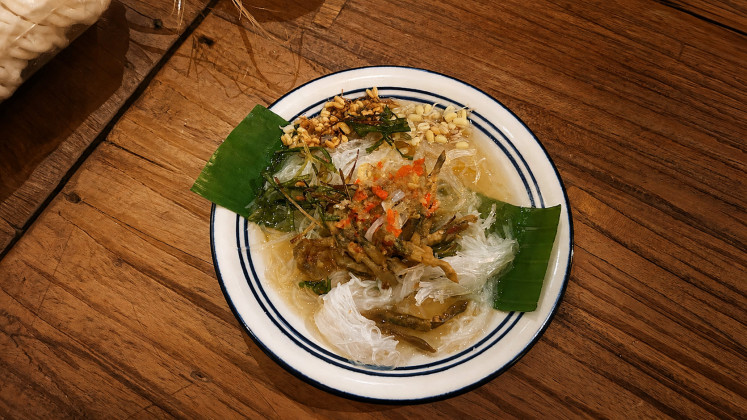
Campor Lorjuk is a soto-like dish built around lorjuk (razor clams). The clams are fried until crisp, giving them a pleasant chew, then served in a sweet-savory broth with vermicelli and both fried and boiled bean sprouts.
 (Courtesy of Adelia Anjani Putri)
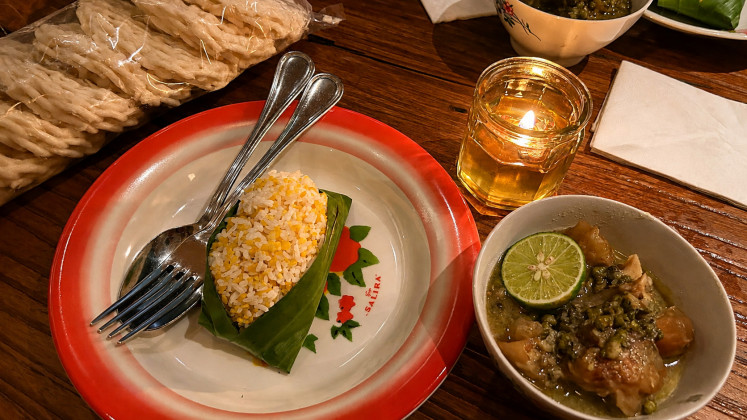
Kaldu Kokot is a savory soup made with beef tendon, or kokot, and mung beans. This dish was originally served in the keraton (royal palace) for important guests, but home cooks now make it for special occasions. The broth is earthy, fatty and deeply savory. For someone used to mung beans as a sweet porridge, the green mung beans here feel almost like a trick. The dish is served with a side of mixed corn rice, which the host said is preferred in Madura, as it keeps you full longer.
 (Courtesy of Adelia Anjani Putri)
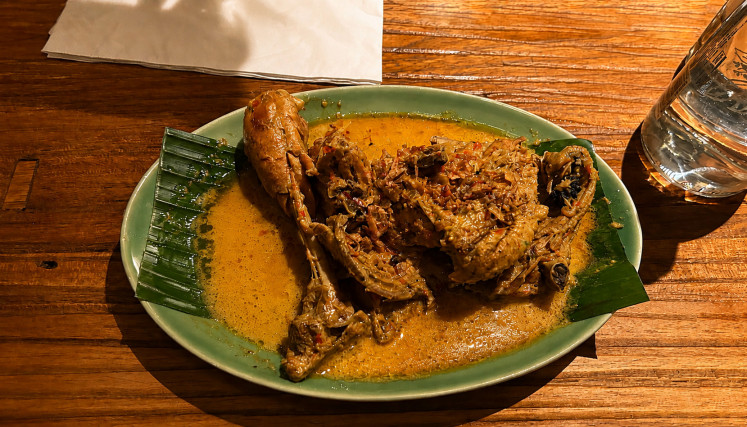
Ayam Adun is Madura’s version of opor ayam (coconut chicken stew), though it tasted unlike any opor I had tried before. It carries the aroma of cloves, cardamom, star anise and mesoyi, a wood usually smoked and served alongside a Negroni, according to the chef sitting next to me. This dish is commonly served in the western part of Madura, especially around Bangkalan, during Eid. I cannot quite explain the flavor; you would need to go to Madura and taste it yourself.
We ended the dinner with a kecombrang (torch ginger) mocktail and lontar, or palmyra palm, juice as a palate cleanser. Only then did the hosts explain why a sesajen set had been placed on the table.
The dinner was titled Rokat Bhaliune. Rokat, also known as ruwatan, is a spiritual ceremony or ritual performed to ward off misfortune, cleanse negative energy and seek protection. Bhaliune means “for earth and nature.”
To close the event, we were given a prayer in the form of kejung, musicalized words and prayers. It was not something I expected to experience in the middle of Senopati. It was one more pleasant surprise in a night full of them.
Finding more to love
The Madura dishes were only available at Salira on Aug. 5–6, but I hope this story makes you curious enough to learn more about Madurese food, or maybe even take a trip there on your next holiday. It is not that far from Jakarta, after all.
Throughout August, Salira is also serving specialties from other regions. From Aug. 15–18, the restaurant will introduce more than 25 new menu items inspired by a typical Minang restaurant. On Aug. 26–27, Bandung’s beloved Imah Babaturan will bring dishes such as Brongkos Iga Sapi, Cumi Cabe Ijo, Oseng Sapi Asap, Nasi Goreng Ayam Kampung and Bala-Bala Sambal Kacang. There will also be Jogja’s fusion Bakpao Gudeg from Butter Hour. I imagine Salira will continue hosting more one-off festivities, so it may be worth staying tuned.
If an experiential dinner like this appeals to you, though the format may differ, Omah Jangan Diam Terus also shares upcoming sessions on its Instagram account.
In the end, the dinner reminded me that people and culture may be the most fascinating parts of Indonesia, and of being Indonesian. People can be difficult to love sometimes, but conversations with strangers have a way of reminding us that most people are, at their core, good. And so is this country.
If this was what Salira wanted us to feel during the Independence Day season, then perhaps they got it right. Like many people, I may be in a complicated love-hate, or even hate-hate, relationship with this country right now. But my goodness, do we have good food.
Adelia Anjani Putri, a communications consultant and former reporter, has found herself writing again. She’s also exploring a career shift that would let her pursue her passions for cooking and catsitting—ideally with a paycheck.