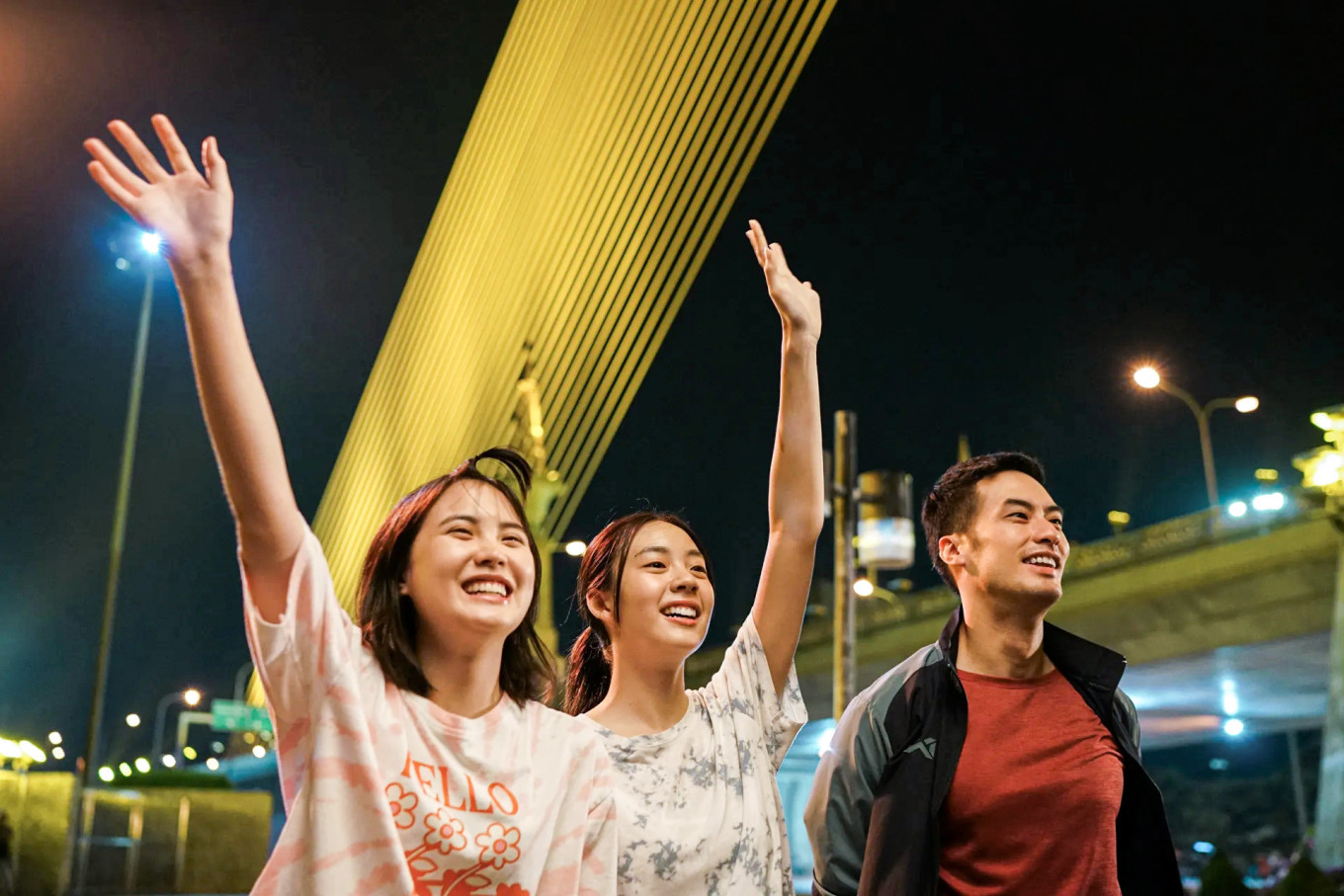
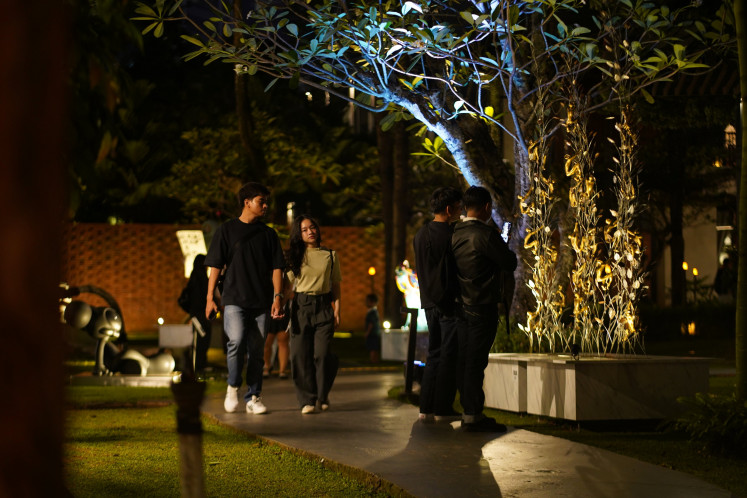
(Courtesy of Klikfilm)
Every June the world celebrates Pride Month. For those who are out, proud, and live in countries where queer culture is openly embraced, it can be empowering and quite festive. Parades and public celebrations often transform streets into spaces of visibility, joy, and community. Yet for many queer people living in Jakarta and elsewhere in Asia, Pride Month may appear less like a move toward inclusion and more like a corporate social responsibility campaign, where companies temporarily change their logos and fill their social media feeds with rainbow-themed content.
For Asians living in Asia, celebrating Pride can present its own complexities. While the language of pride may be global, yet in reality the experience of queerness is typically shaped by local realities: family expectations, social norms, religious beliefs and the endless negotiations for acceptance within one’s own community.
Earlier this month, a video of two young men kissing openly at a university in broad daylight went viral. Later that day, more videos emerged showing the two students being publicly harassed by fellow students and members of the campus community well into the night.
Perhaps the most heartbreaking was the sight of the father of one of the young men apologizing before the campus community and bowing his head in shame.
For many queer Asians, the scene felt painfully familiar. Shame often lingers as an invisible companion, or a quiet inheritance embedded in the social structure through which they must learn how to navigate family, community, and belonging.
So then what does it mean to celebrate Pride Month in Asia? Sometimes it means accessing artwork that resonates deeply with the complexity of queer narratives: stories that insist on not only affirming the existence of queer identity, but also help make sense of the contradictions, compromises, joys, and heartbreaks.

Thank you!
For signing up to our newsletter.
Please check your email for your newsletter subscription.
Here are five cinematic experiences that brilliantly capture what it means to be queer and Asian in these modern times.
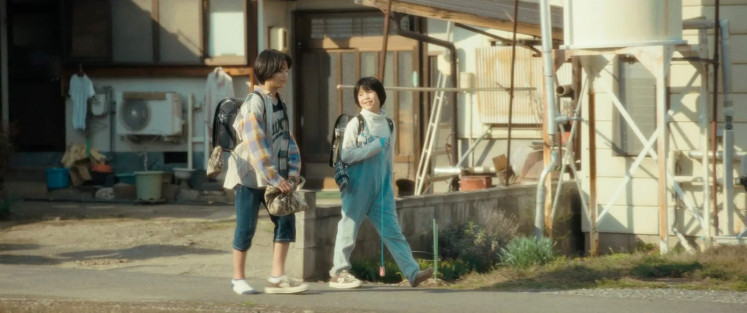 (Courtesy of Klikfilm)
Japan: Monster (2023)
Growing up is hard. Growing up queer is even harder. Winner of the 2023 Queer Palm, Monster (2023) tells the story of two young boys navigating childhood, one of whom appears to be gay while the other is exploring his feelings. Yet we only fully understand their relationship as the story comes to an end, when we have had a full view of the different perspectives offered by the narrative.
Director Hirokazu Kore-eda opens with a single mother who suspects her son is being bullied. As the narrative shifts between perspectives, more information gradually comes to light. Kore-eda’s work is often celebrated for examining the meaning of family, both the family we are born into and the family we choose for ourselves.
In Monster, Kore-eda does not suggest that families with queer children are incapable of loving or raising them. Instead, he shows that it often takes time for heterosexual parents to understand and empathize with experiences that differ from their own.
Unlike many Hollywood productions, queer Asian cinema often depicts queerness through silence, confusion and the inability to fully articulate one’s feelings. That portrayal may hit a little too close to home for many queer Indonesians who grew up navigating similar uncertainties.
One of the film’s most compelling perspectives belongs to the parents, whose confusion feels just as profound as the other leading characters. By revealing new information through multiple points of view, the film encourages audiences to empathize with each character and understand their experiences by stepping into someone else’s shoes.
You can watch Monsters on Klikfilm.
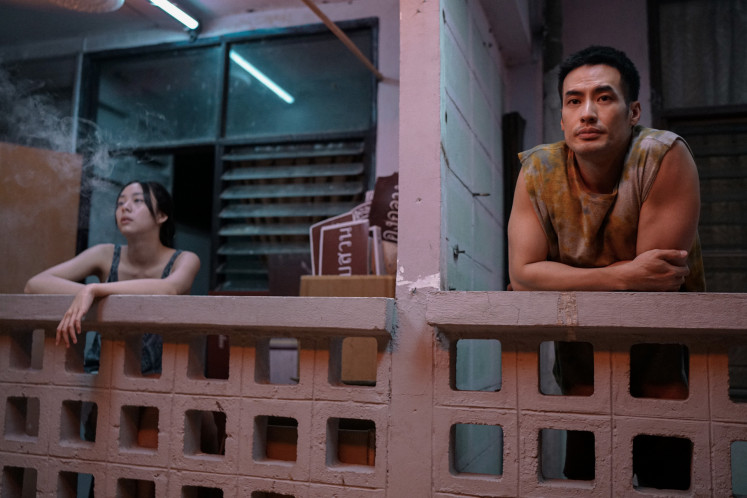 (Courtesy of Klikfilm)
Thailand: Flat Girls (2025)
If there’s any country in the world with an extensive catalogue of queer cinema, it would be Thailand. From crowd-pleasing romantic comedies like The Red Envelope to art house melodramas that premiere at major international festivals, such as The Paradise of Thorns, Thailand has it all. Flat Girls is one of them.
The story centers on Ann (Fatima Dechawaleekul) and Jane (Kirana Pipityakorn), two girls living in the same government housing complex alongside dozens of other families. Both of the girls’ fathers are police officers, and the flat complex is shot in such a way that shows its delicate circumstances, often intimate, but mostly claustrophobic. The two girls, though inseparable since birth, have differing views on the complex. Ann views the flats as cages, while Jane sees them as lifelines.
Director Jirassaya Wongsutin captures the flats as both suffocating and liberating, depending on whose perspective occupies the frame. As they come of age, Flat Girls also allows both Ann and Jane to explore their identities and sexuality.
Although the film ultimately does not focus explicitly on a romantic relationship between the two girls, it portrays a sapphic bond that proves just as powerful: friendship.
It’s not uncommon for young queer people to befriend their crush. We know the toll of coming out to our best friend; and even worse, we know the risk of ruining the friendship once romantic intention enters the conversation, which is all the reason we often box ourselves inside the friend zone.
The film is available on Netflix and Klikfilm.
Vietnam: Viet & Nam (2024)
Though the film is set in the year 2001, Viet & Nam tells an intricate story about two young coal miners, Viet and Nam, in rural Vietnam, one of whom dreams of leaving the place they call home.
The story feels more distant than the filmmaker’s previous two works, but young queer people may find themselves relating to its tone. Inside the coal mine, a dark and hidden world, two men find love against all odds.
In many Asian countries, including Indonesia, most young queer people experience their first crush and/or love in the shadows. This may happen while they are still in the closet, or even after coming out, when the fear of social stigma, discrimination, or other consequences continue to compel them to conceal parts of themselves.
The film screened at the 2024 Cannes Film Festival and the 2024 Toronto International Film Festival before making its Indonesian premiere at the 2024 Jogja-NETPAC Asian Film Festival.
It is currently available on MUBI in select regions, including Indonesia.
Taiwan: Dear Ex (2018)
Growing up queer is one thing; discovering your father was queer only after he passed away is another. That’s the premise of Dear Ex, a Taiwanese comedy-drama that begins when a teenage boy learns that his late father left his entire life insurance payout to his male lover instead of his wife and son.
While the film is packaged as an offbeat and bittersweet comedy revolving around the conflict between a widow and her husband’s former lover, it also offers a moving portrait of what it means to live as a closeted older gay man.
It is not uncommon for queer people to suppress their feelings and follow society’s expectations: getting married, raising a family, and performing the life others expect of them. But what happens when love arrives unexpectedly? How do you respond? And is it ever too late to embrace who you truly are?
Rather than offering easy answers, Dear Ex explores what it means to live authentically as a queer Asian person. At the same time, it examines the emotional fallout experienced by the family left behind, forcing them to come face to face with whether the father and husband they knew had ever loved them, at all.
The result is a film that is both deeply funny and surprisingly compassionate, recognizing that love, grief, resentment, and acceptance can coexist.
You can stream the film on Netflix.
 (Courtesy of Ruang Basbeth Bercerita)
Indonesia: Sara (2023)
The “T” in LGBT is often left behind, including on screen. For decades, transgender women in Indonesian cinema have largely been relegated to supporting roles, comic relief, or stereotypes. While films such as Lovely Man and Emak dari Jambi have helped broaden representation and push the conversation forward, contemporary Indonesian feature films centered on transgender lives remain few and far between.
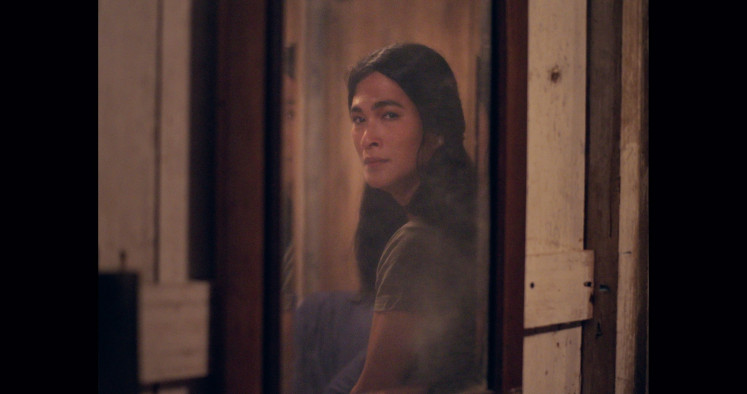
Sara, directed by Ismail Basbeth, is one of them. Starring transgender actress Asha Smara Darra (formerly known as Oscar Lawalata) as the titular character and Christine Hakim as her mother, the film follows a young transgender woman who returns home to care for her mother, who has dementia and mistakes her for her late husband.
Through intimate conversations, the film gradually reveals Sara’s past and the circumstances that led to her self-exile from her hometown. Basbeth also captures a value deeply rooted in many Asian societies: the enduring responsibility to care for one’s elders, even when one’s personal beliefs and identities may be at odds with those of the surrounding community.
The film premiered at the 2023 Busan International Film Festival and later received two nominations at the Citra Awards: Christine Hakim for Best Supporting Actress and Asha Smarra Dara for Best Leading Actress. Asha’s nomination was particularly historic: the first transgender woman ever to be nominated in the category.
Although Sara has yet to receive a theatrical release, one of its producers, whose film My Own Last Supper, also directed by Ismail Basbeth, recently had its world premiere at the Shanghai International Film Festival, said the film is expected to reach Indonesian cinemas later this year. In a country where transgender stories remain relatively rare on the big screen, Sara marks an important step toward more diverse and nuanced representation.
Reza Mardian is a winner of the Best Film Critic award at the Festival Film Indonesia 2024 and a “pawrent” to two rescued cats. He writes screenplays every time he finishes rewatching La La Land or Lady Bird.