(Shutterstock)
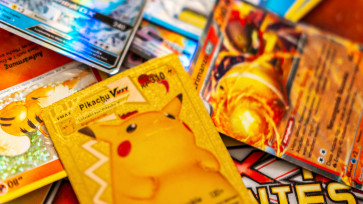
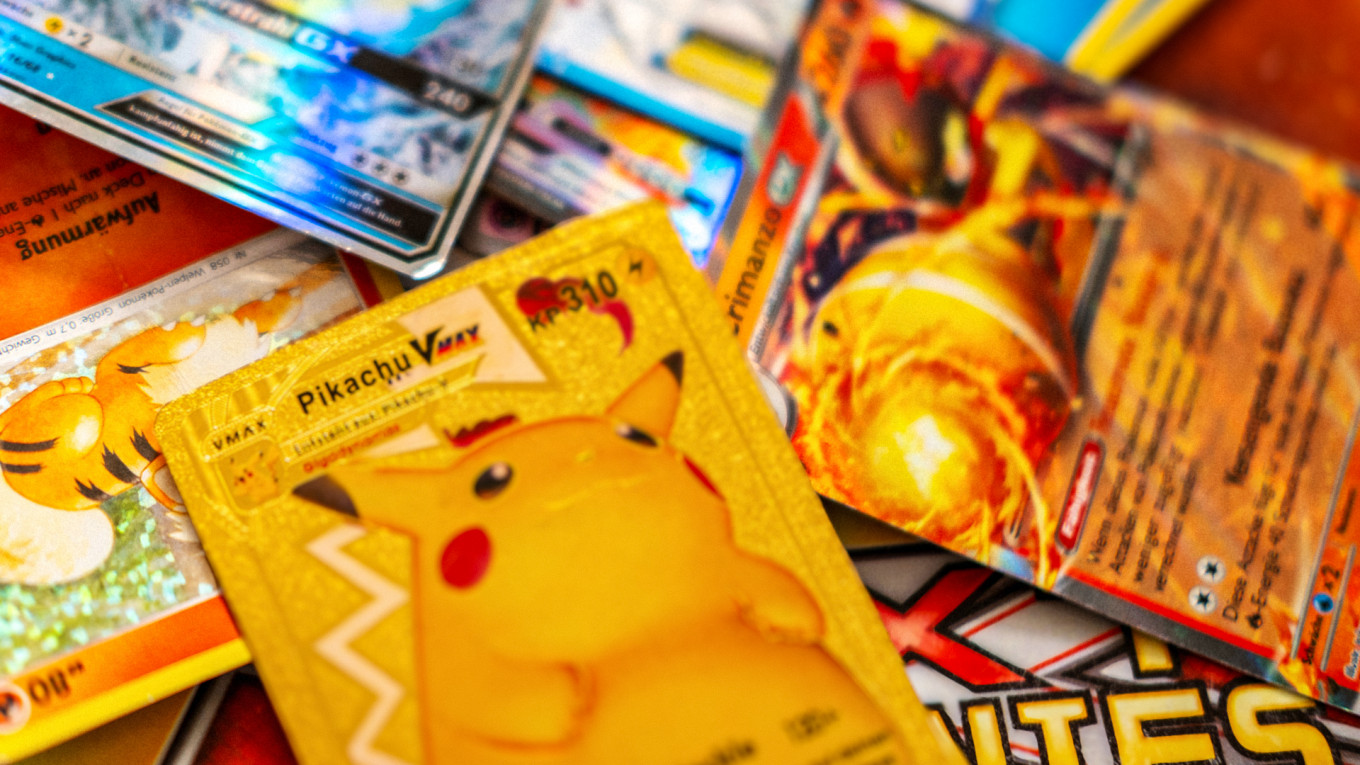
Earlier this February, American YouTuber Logan Paul sold his rare Pikachu Illustrator card for $16.5 million. Yes, you read that right: $16.5 million for a piece of cardboard with a picture of a Pokémon on it.
I find this fascinating not just because of how ludicrous it sounds, but also because this hype over collectible cards has already cemented a foothold here in Indonesia.
Just last May, as many as 2,678 Pokémon cards were confiscated by Customs and Excise at Soekarno-Hatta International Airport from a passenger flying from Manila to Jakarta. According to customs officials, the cards were worth more than Rp 1.2 billion ($67,700). That also meant they represented around Rp 333.4 million in potential state revenue from import duties and taxes.
If you’re just reading these headlines, the mind-boggling valuations attached to pieces of cardboard with pictures of Pokémon on them can be difficult to grasp. But for the people who collect, trade and play with them, it all makes perfect sense.
A growing community
Collectible cards, particularly those of the Pokémon variety, are now sought-after collector’s items that have entered the mainstream consciousness. And the numbers, in more ways than one, back it up.

Thank you!
For signing up to our newsletter.
Please check your email for your newsletter subscription.
Indonesia’s premier collectible card event, Indonesia Card Show, for example, grew to more than 300 collectible card vendors and drew around 12,000 visitors over two days last May, up from roughly 40 vendors and 2,000 attendees at its first event in December 2024.
“It’s growing from all sides. The community, the collectors and the industry itself have been growing crazily,” Indry Nugraha, co-creator of ICS, tells me.
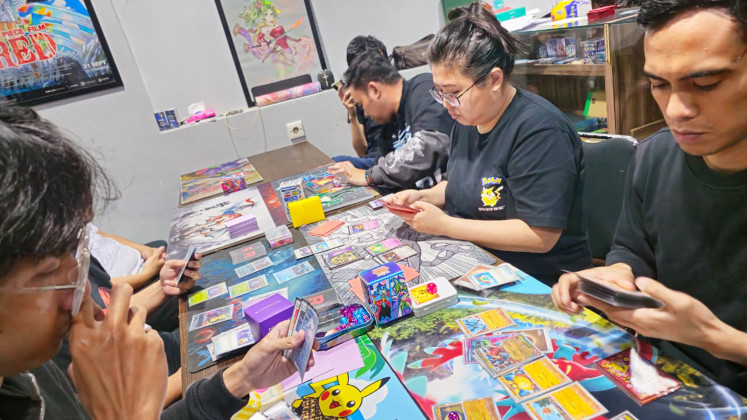
Community hubs are gathering larger crowds for their trading card game nights, too. Ogre Neverland, a trading card game store, tells me that its game nights now draw a full house, to the point of needing waiting lists.
“When we opened in 2023, you could count on one hand how many people showed up to play these trading card games. But now we see like 30 people in our store each night for a variety of games,” Katalio Krishna M. Adisurya, founder of Ogre Neverland, shares.
 (Courtesy of Ogre Neverland)
I personally stop by the toy store whenever I pass by one in a mall on the weekends, much to the amusement of my partner. And these days, I do see more and more packs of collectible card games getting prime shelf space, a colorful deck box featuring cute illustrations of Pokémon, a sleek and stylized pack of cards showcasing Marvel superheroes or even a pack highlighting a roster of the hottest names in soccer (I’m pretty sure that’s Messi).
With a growing community of collectors, it follows that competition for rare collectible cards becomes more intense.
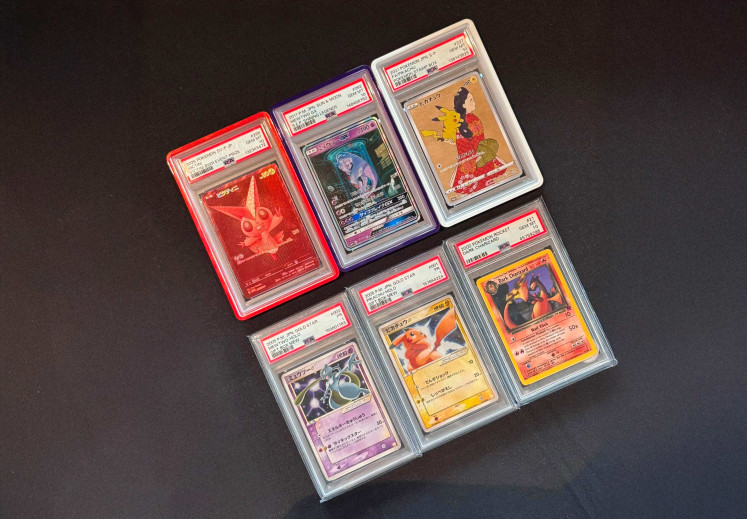
Raymond Sebastian, owner of the trading card game collectible store Pokeray, tells me that in the past year, his store has seen a tenfold increase in sales volume and that, at minimum, rare vintage cards have seen their prices surge threefold.
“I bought a Pikachu Gold Star around April 2025 in the range of Rp 10 million. That same card now circulates for approximately Rp 45 million.”
That still leaves the biggest question: Why? Why have collectible cards gained so much hype over the past couple of years? Why do prices surge to these insane levels? And does it all actually matter if all you want to do is just play the game?
 (Courtesy of Pokeray)
A rise 30 years in the making
This interest is ultimately fueled by the hype generated on social media and the excitement surrounding the 30th anniversary of the Pokémon franchise this year. Yes, it’s been three decades since Pokémon Red and Pokémon Green were released in Japan in 1996.
“Live card pack openings have made discovering rare cards a spectacle online. Card collecting itself has become entertainment that Indonesian influencers are showcasing to people who didn’t previously understand this subculture,” Indry says.
On top of the hype found online, there’s the fact that Pokémon is simply too big to ignore. Even if you’ve never played the game, chances are you know Pikachu. And if you grew up with Pokémon, you probably have at least one character, game or memory that brings you right back. The trading card game just happens to be an easy entry point into that world, attracting people from all kinds of backgrounds.
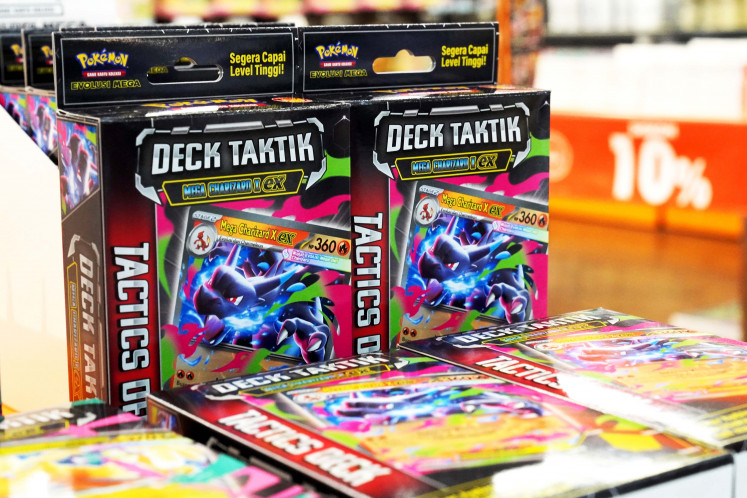
“When we started, our audience primarily consisted of passionate young adult players who are actively engaging in events. Today, the game reaches people who previously had little interaction with Pokémon at all,” says Fachrul Amrullah, head of marketing at AKG Entertainment, which has been the official distributor and master licensee of the Pokémon Trading Card Game in Indonesia since 2019.
Think grandmas getting their grandchild a pack of cards or the fun uncle opening a box of the latest Pokémon series with you. This is the level at which Pokémon now exists in the public consciousness.
He adds that, given the age of the franchise, there’s been a kind of generational renewal happening from both ends. On one side are the adults who grew up with Pokémon and now have grown-up money to spend on the hobbies they loved as kids. On the other is a new generation of children discovering the franchise, in part thanks to the enthusiasm of those adult fans. Together, they’re giving this decidedly not-new children’s franchise a fresh commercial wave.
 (Courtesy of AKG Entertainment)
A metric for rarity
Demand is surging, but that’s only half the story when it comes to why prices get this high.
Think of it in three simple terms: scarcity, condition and demand.
First, some cards are simply harder to find because there are fewer of them in circulation. But scarcity alone doesn’t make something valuable. Someone still has to want it.
And Pokémon has no shortage of people who want it.
Then there’s condition. A card that has survived for years without scratches, bent corners or other damage is worth more to collectors than one that has been through the washing machine, so to speak.
And that’s where grading comes in.
“In the world of card collecting, the most famous grading company is probably Professional Sports Authenticator [PSA]. And their perfect rating is a PSA 10,” Raymond shares.
Grading is essentially a professional assessment of a card’s condition and authenticity. PSA uses a 10-point scale, with a PSA 10 being a virtually perfect card, taking into account things such as sharp corners, focus, gloss, surface condition and centering.
In other words, a PSA 10 isn’t just the same card in a fancy plastic case. It’s the same card, but one that has been independently assessed to be in exceptional condition. And because cards in that condition are harder to come by, their value can rise significantly.
“I once sold a PSA 7 Gold Star Charizard in the range of Rp 220 million at a card event, and that figure pretty much goes along with the market price globally.”
The Pikachu Illustrator that Logan Paul sold offers the extreme version of this equation. Only a small number of the cards were ever distributed, and Paul’s copy was the only known Pikachu Illustrator to receive a PSA 10 grade. That combination of rarity, condition and demand helped push its final price to $16.492 million at auction.
That’s a price that sounds more like a Jakarta luxury apartment than a piece of cardboard.
You can still just play the game
Despite the buzz surrounding those towering price points, you can still enjoy trading card games without buying rare, expensive variants.
“Aesthetic rarity doesn’t impact how you play the game at all. A common basic card can actually be better competitively. You can absolutely have fun,” Fachrul tells me, dispelling the misconception that collectible value equates to actual mechanical value.
A Rp 20,000 card can be more useful to you in actually playing the game than a collectible one worth millions of rupiah.
At the core of it, the community engaging with these trading card games is what sustains the hobby. Events like Indonesia Card Show allow people to gather and share their passion for collecting, AKG facilitates coaching clinics that help the average person get into actually playing the Pokémon TCG and places like Ogre Neverland embrace being a third place for people to have fun through these cardboard cards.
Money may have amplified this fascinating world of collectible cards, but the sentimental attachment and passionate communities have existed long before this spotlight. For many, it’s all still about the character they loved as a kid, the thrill of pulling a card they’ve been hunting for or the people they met while playing the game.
So even if you don’t focus on the exorbitant price points, you can still just collect what you love.
Aqraa Sagir is a writer for The Jakarta Post's Creative Desk. He’s chronically online in the hope it would be a useful asset for the job.