(Shutterstock)
You hand over a Rp 5,000 note for a hot cup of instant coffee in the morning, pay the parking fee with a crumpled sheet of Rp 2,000, or break a Rp 100,000 bill on a random mix of items in a convenience store. We hardly give a second thought to the bills that pass our hands these days.
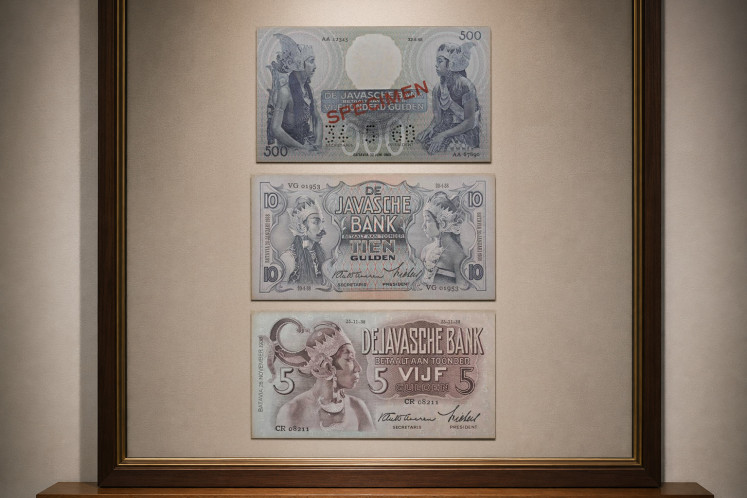
But turn the clock back almost a hundred years, before Indonesia’s independence, and those bills would have been intricately illustrated with images of gods, heroes and other wayang characters, like the goddess Nagagini, the hero Arjuna and the warrior Gatotkaca, a decision that came as the colony grappled with the economic depression of the 1930s.
That history is at the center of Museum Bank Indonesia’s In Lakon exhibition taking place until Aug. 30.
“A wayang story is typically called a lakon [tale]. So with In Lakon, we're hoping to invite visitors to enter the story behind wayang and how it was deeply intertwined with our currency,” curator Ide Nada Imandiharja tells me.
To understand why they became intertwined, we have to start from the beginning.
Entertainment for the masses

Thank you!
For signing up to our newsletter.
Please check your email for your newsletter subscription.
When you first walk into the exhibition, you're greeted by a massive projection of a wayang kulit (shadow puppet) figure, facing a row of motion-triggered displays that shift between wayang traditions from across the archipelago: kulit, golek, beber, potehi and orang, introduced one after another as you move through the space.
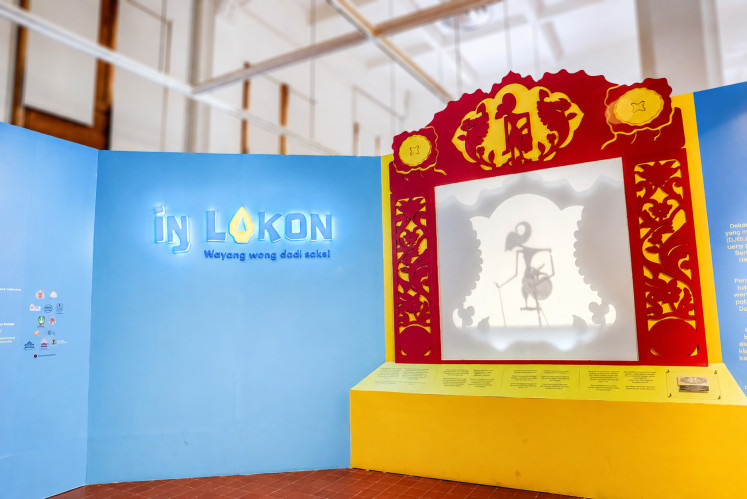 (Courtesy of Museum Bank Indonesia)
Further in, you peer through a cracked wall to catch an archival video of a wayang orang performance staged at a palace. The glimpse is intentional. Wayang recitals were once a luxury reserved for royalty, staged for occasions like coronations and weddings, something ordinary Indonesians never got to see.
This all changed in 1895, when a Chinese man named Gan Kam proposed the idea of commercializing wayang orang performances to Prince Mangkunegara V, bringing the coveted performances outside the tall walls of the palace for the first time. This became the catalyst for wayang to grow into a widely recognized aspect of Indonesian cultural identity for the general public.
“Before this, Wayang performances could last for days. Gan Kam looked at what was practical for audiences and shortened it to around three hours,” Ide says. “This inspired many to create their own wayang orang troupes, making performances accessible to all.”
The popularity of wayang orang performances spread across the country over the following decades, reaching its peak just as the unfortunate Malaise Crisis struck in the 1930s. The sugar industry, a key export at the time, took a massive economic hit, leading to factory closures and widespread layoffs. Indonesians were paid in rice or tea in lieu of money. Life in general was bleak.
“Because of the crisis, people desperately needed entertainment, and the entertainment already familiar to society was wayang orang, because many groups had already begun to appear,” Ide says.
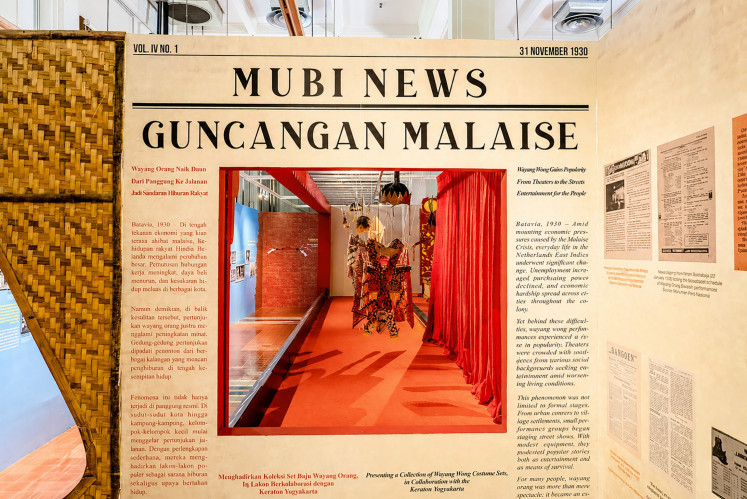 (Courtesy of Museum Bank Indonesia)
One section of the exhibition showcases newspaper clippings documenting the tumultuous period, with news of multiple sugar factories going bankrupt. Alongside these, however, you’ll see the persistent presence of wayang performances during this era.
The walls are equally adorned with clippings of advertisements detailing the schedules and locations of wayang shows. The performances weren't confined to ticketed shows in theaters either; performers took to the streets for impromptu shows.
Wayang orang solidified itself as the people’s entertainment, allowing the masses to gather around and, for a few hours, forget their troubles.
Printing culture into currency
Noticing how much sway the art form has over Indonesians, De Javasche Bank moved to use it. At a moment when public trust in the economy was fragile, the bank issued a new set of banknotes built around imagery people already loved, in the hope that the familiar characters would make its currency easier to accept.
“They were saying, we are on your side, and the proof is that your identity is included on our money,” Ide explains.
The first notes in the series were issued starting in 1933, with later signature varieties following through 1939. In total, De Javasche Bank produced eight denominations: 5, 10, 25, 50, 100, 200, 500 and 1,000 gulden.
Each denomination is displayed in a pillar case at the heart of the exhibition, allowing visitors to closely admire the intricate art, including engraved pictures of real-life people adorned in full wayang costumes. Each note featured a different wayang character: Samba appears on the 5 gulden note, Nagagini and Antasena share the 10 gulden bill, and Duryudana and Banowati front the 500 gulden denomination.
 (Courtesy of Museum Bank Indonesia)
It's difficult to gauge how successful the strategy was, but it’s worth noting that these bills remained in circulation until 1950, outlasting the non-wayang currency produced by De Javasche Bank.
“Both types of currency circulated at the same time, but the wayang ones disappeared a bit later. From that we can infer that the people did prefer the wayang notes more,” Ide says.
 (Courtesy of Museum Bank Indonesia)
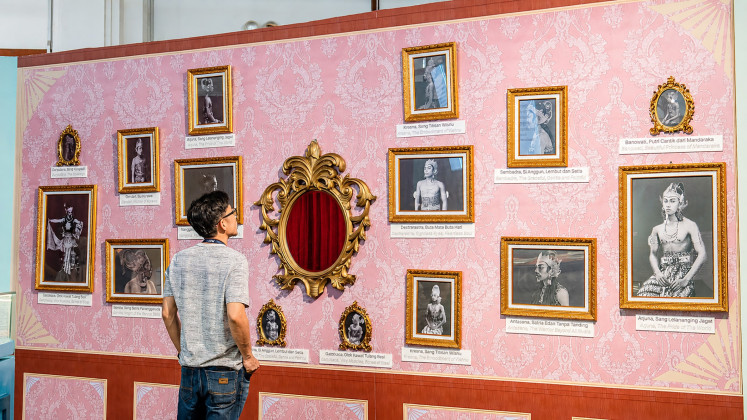
At the end of the exhibit I was met with a wall of pictures showcasing wayang orang performers from decades past, alongside present-day performers who are still proudly keeping this part of Indonesia’s cultural identity alive. It was a poignant reminder that we can still enjoy wayang performances today, just as our ancestors did a century ago.
In that sense, the In Lakon exhibition isn’t just a look back at a little-known part of our history. It’s a celebration of a rich aspect of Indonesian culture, and a showcase of how our culture is intertwined with our currency.
“If we take a look at today’s rupiah notes, one side features dancers from the wide range of Indonesian culture across the country. The same approach toward highlighting social-cultural aspects of Indonesia is what we embrace today, but on our own terms,” Rio Wardhanu, the head of Museum Bank Indonesia, tells me as I finish my visit.
I left the museum thinking about how much of Indonesia’s long and winding road to where it is today, faults and all, runs through the lens of the economy. As we spend this month celebrating our independence, it’s worth visiting the exhibit to be reminded of how our ancestors once faced and survived a period of economic turmoil. In today’s economy, that sounds like a good way to spend a couple of hours.
Aqraa Sagir is a writer for The Jakarta Post's Creative Desk. He’s chronically online in the hope it would be a useful asset for the job.