(Courtesy of Ushino Kura)
Once upon a time, or rather, 48 years ago in the Japanese countryside of Kagoshima, a cattle farmer named Toichi Kamimura shared a dream with his three sons.
He told the eldest to take over his cattle farm and become the finest farmer in the land. He turned to his second and told him to sell their cattle to the world. And the youngest was tasked with bringing all of them back together to open the finest yakiniku (grilled meat) restaurant to showcase the family’s pride.
That blueprint became a family legacy, and the foundation of a restaurant called Ushino Kura. Its second location outside of Japan has landed in Senopati, which is exactly where you’d expect to find it.
The promise: authentic Kagoshima Wagyu, a high-quality beef from Japan’s largest wagyu-producing region in the country’s south, handled with the craftsmanship the family has spent nearly five decades perfecting.
It is currently only open for dinner, though they made an exception for a lunchtime visit. I’m not a food critic, but I’ve had my fair share of wagyu and so I’m here to write an honest review.
What exclusivity looks like

Thank you!
For signing up to our newsletter.
Please check your email for your newsletter subscription.
The space itself sets the tone. Bonsai plants greet me at every corner, and booths designed as semi-private cocoons are laid out to mimic the marbling of wagyu when viewed from above. One wall is dedicated to the restaurant’s history and the 10 farmers who supply it.
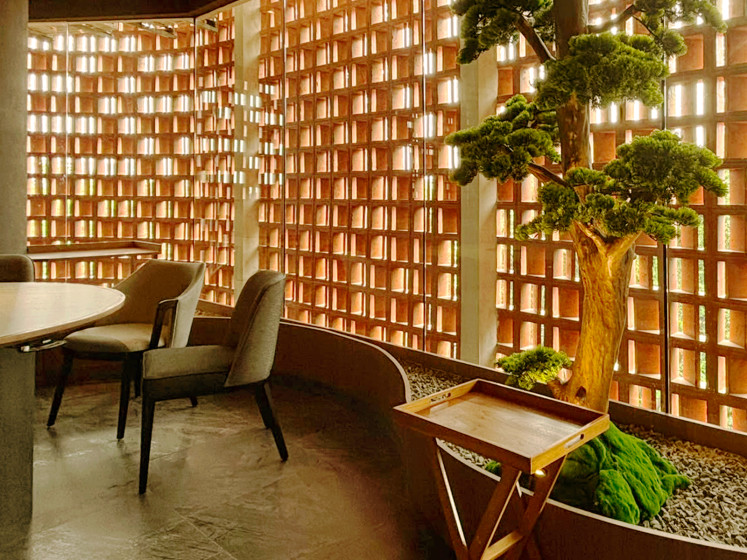 (Courtesy of Sheena Suparman)
Each of the 10 is an award-winning Kagoshima cattle farmer, all tasked with supplying the restaurant with A5 BMS12-grade wagyu. So rare is wagyu of that quality that only 4 percent of Kagoshima cattle qualify for the designation. I was simultaneously terrified that I’d like it too much and trying desperately not to let my expectations run away from me. I’ve been burned before by “affordable wagyu” that tasted metallic and inedible.
One frame stuck with me the most: Ichiro Kamimura, the eldest son of founder Toichi, and his wife Sayuri. It seems that the foretelling of his first son being one of the finest cattle farmers has come true.
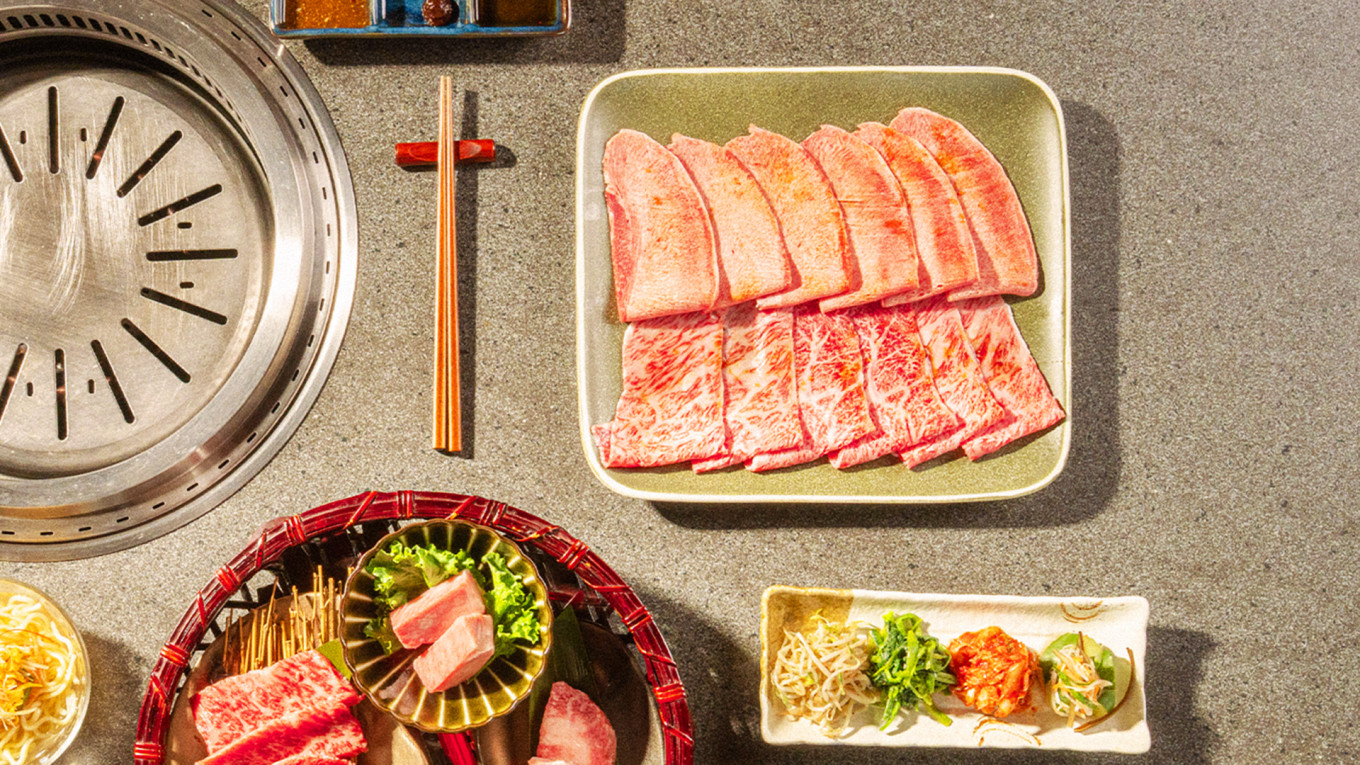
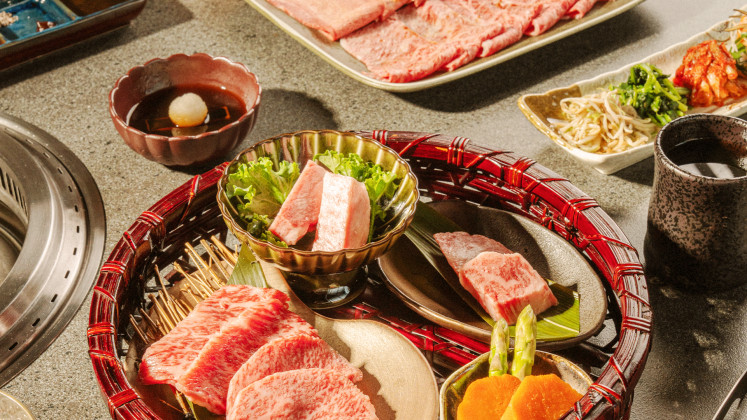
Today’s lunch featured cattle delivered by one of the 10 farmers, Minoru Omura, prepared as the restaurant’s Gensen course. Gensen loosely translates to “carefully chosen” or “handpicked” in Japanese, and the course lives up to the name: one salad, two types of yakishabu, four gensen yakiniku, a choice of reimen or garlic rice and dessert. It arrives with banchan (Korean-style side dishes), the restaurant’s in-house ponzu and both sweet and sour tares. Worth tasting the sauces before you begin.
Easing in
The course opens with a Choregi salad of lettuce, cucumber, onion and seaweed with sesame dressing. Nutty and sweet, it does its job as a palate opener. I took one polite bite and spent the rest of my energy saving room for what was coming.
The real beginning was the yakishabu, a Japanese preparation that combines yaki (grilled) and shabu-shabu (thinly sliced beef briefly cooked in broth), served here in two cuts. The beef tongue arrived perfectly cooked to medium rare, chewier than expected but thin and juicy and a dip in the sour tare was enough to convert even a tongue skeptic. The Jo cut, a prime grade, was very tender though more neutral in flavor, which made it the ideal vehicle for the sweet tare. By the third bite I was ready to move on.
 (Courtesy of Ushino Kura)
The main event
The Gensen Yakiniku arrived as a small, precise plate, four cuts that the waitress guided us through in order. Given that too much wagyu has put me in a food coma before, I’m not complaining.
The Rosu Yakiniku, from the Japanese word for loin, balanced tenderness and chew in a thin slice that benefited most from a pinch of salt rather than any of the sauces. The Karubi yakiniku, a short plate rib cut, was the personal highlight: thin, tender, rich and genuinely melting — this, to me, is what every cut of wagyu should taste like. The Nakaoci Yakiniku, another short rib preparation, was very tender but leaned on the sauces for its full expression.
The Gokujo Steak Yakiniku was the headline act. Cooked slightly longer than the others, it arrived with a subtle crust giving way to very soft beef on the inside. With two pieces available, I tested both sauces and found the sour tare the stronger pairing, though the waitress noted that most diners reach for the sweet one. Either way, it delivered exactly what wagyu promises: a food coma of the very best kind.
 (Courtesy of Sheena Suparman)
Winding down
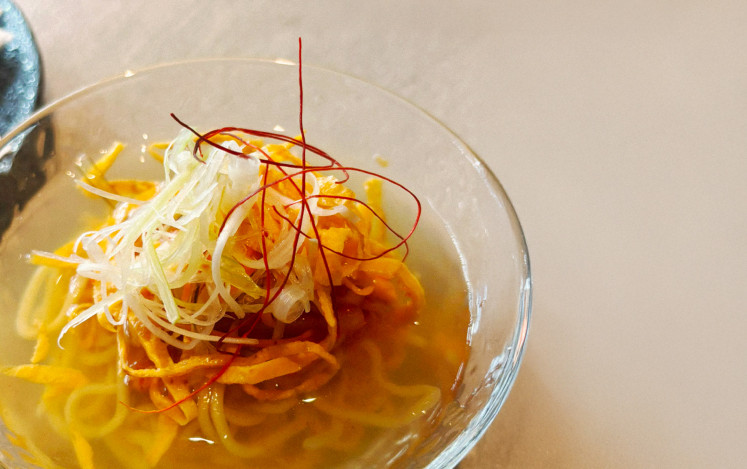
The restaurant’s attempt to revive me came in the form of reimen, a cold noodle soup, which I was very relieved to have chosen over the garlic rice given the state of my stomach.
The first slurp was a genuine reset: cold and refreshing against the heat of everything that came before. The noodles had just the right texture, and the shrimp broth carried a clean umami depth beneath the kimchi, egg and tongarashi (Japanese chili flakes) on top. The waiter brought a separate bottle of vinegar to add. I poured too much and lost the bowl entirely. Add it at your own risk.
Dessert came as a choice of gelato or sorbet in four flavors. Vanilla, as always, was the right call.
Ushino Kura is not trying to reinvent yakiniku. It is trying to bring the most rigorously sourced version of it to Jakarta, backed by a family story that spans 48 years and 10 of Kagoshima’s best farmers. The Gensen course alone makes a convincing case. The rest of the menu, still unexplored, gives me every reason to return.
Sheena Suparman is a writer for The Jakarta Post's Creative Desk. She is based in Jakarta but wishes she could be anywhere else. She’s usually powered by coffee, chips and cheeseburgers.