(Shutterstock)
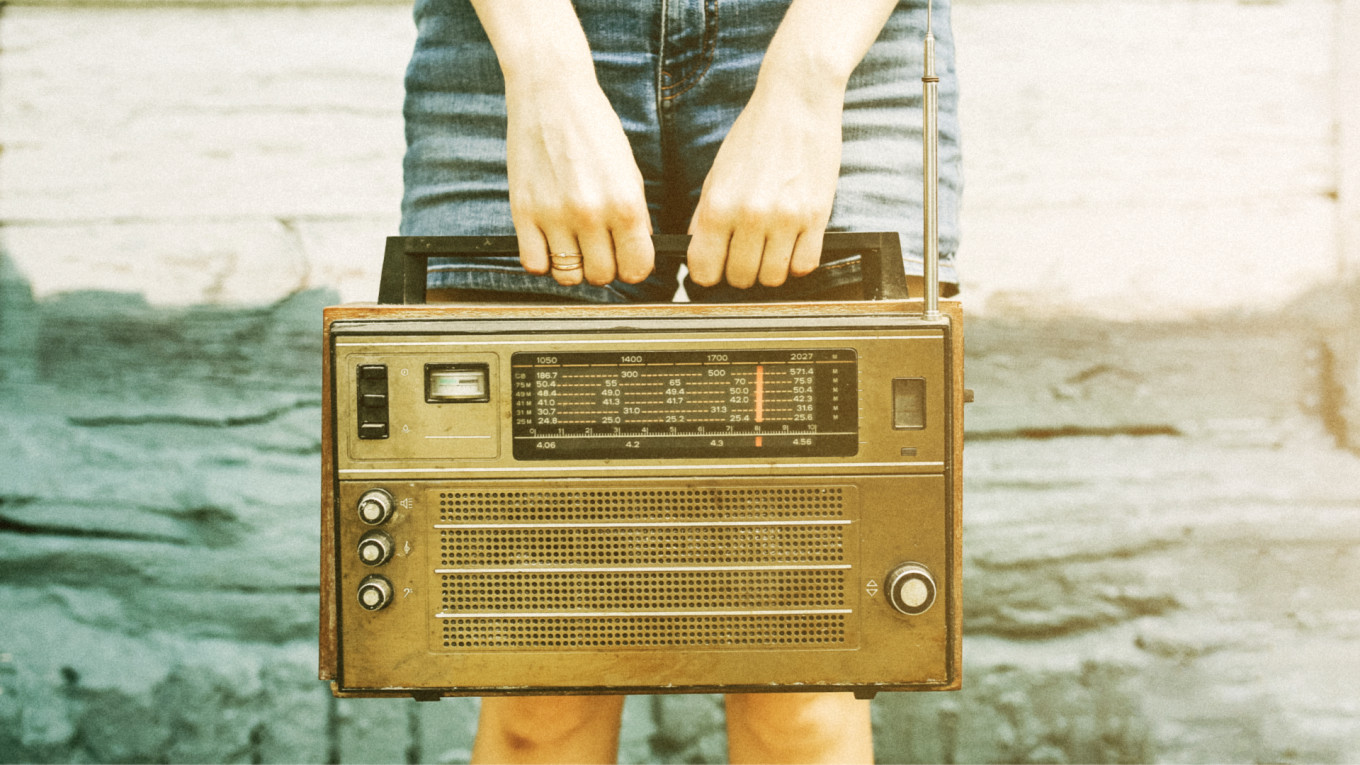
As we chat on the phone, Najwa, a 20-year-old college student, strikes me as a true radio enthusiast.
“I feel accompanied by the announcers,” she says.
A communications student at University of Indonesia, Najwa was introduced to radio by her parents as a young girl, listening to it in the car every time she was driven to school.
Listening to the radio, she says, makes her feel like she’s going on a long trip, creating a kind of “theater of the mind” for her imagination.
The assumption that radio has been “abandoned” by its listeners is not entirely correct. A 2024 survey by the National Statistics Agency (BPS) revealed that 12.63 percent of respondents in Jakarta aged 10 and above listened to radio broadcasts in the past week, while 23.64 percent in Bali did so.
A separate survey from data-driven digital media platform GoodStats in 2024 found that 52 percent of young Indonesian respondents, mostly aged 18-25, had listened to the radio at least once in the previous month, with 10.8 percent saying they listened daily.

Thank you!
For signing up to our newsletter.
Please check your email for your newsletter subscription.
When asked for their reasons, some 73.4 percent of the Gen Z respondents said it was to get rid of boredom or loneliness.
For Qey, 19, who is also a communication student at the University of Indonesia, the announcer is a key part of the experience.
“It is never about sad stories; they are always fun to listen to.”
“It gives a lively ambience to my room,” says Rahel, 20, who still has fond memories of playing the role of a radio announcer at KidZania when she was an elementary school student.
In an era when we can control exactly the kind of content we consume with our fingertips, these Gen Z listeners have found something different in radio, something less predictable, but perhaps more human.
“It gives me an element of surprise because I do not know what songs or topics will be aired next,” says Najwa, who recently completed a radio internship.
Like Najwa, Qey likes the unknown element radio provides.
“In Spotify we can easily choose the songs of our choice, but in radio, it feels like arranging a puzzle. We tend to guess whether our songs of choice will be played next or not,” she says.
But is that enough to sustain radio in the digital era?
Keeping up with Gen Z
For radio, the answer may lie in adapting to the same digital environment that was once seen as a threat.
Raditya Hardanto, director of radio units at PT Mahaka Radio Integra Tbk (MARI), says radio is increasingly reaching Gen Z through the content and platforms they already use.
“Gen Z is the age group that uses screen time highly and has a very close relationship with their mobile phones. We provide content also in all of our radio stations on three mandatory social media platforms, including TikTok, Instagram and YouTube,” Raditya says.
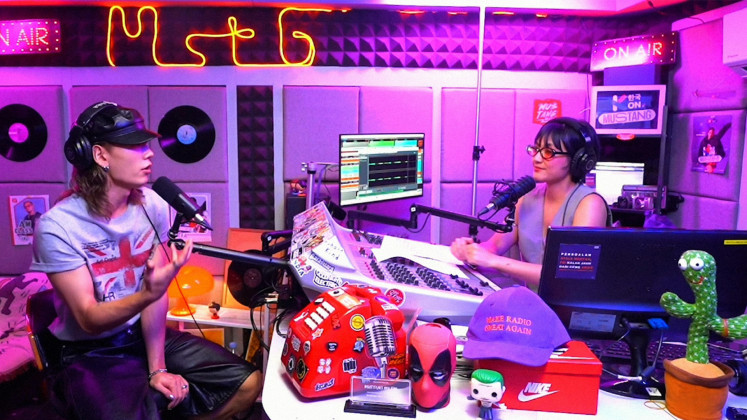
Radio broadcasting has therefore evolved beyond the traditional act of listening. One example is “Radio Watching,” which allows audiences to see the announcers they usually know only by voice, as well as what happens inside the studio.
For listeners, it offers a way to turn the “theater of the mind” into something more tangible.
“I enjoy that; I could find out what the studio format is like and what is behind the desk,” Najwa says.
But curiosity can work in the other direction, too.
Rahel does not watch radio broadcasts, but when an announcer catches her attention, she sometimes searches for them on Instagram.
“If the announcer sounds cool when aired, I search the profile on Instagram to find what that person looks like,” she says.
The relationship between radio and its audience is therefore no longer confined to the broadcast itself. The voice can lead listeners to social media, while social media can bring them back to the radio.
From the Victorious Era to the digital era
That curiosity is hardly new.
For older generations of listeners, the mystery surrounding radio personalities was part of the appeal. Before the internet and social media made it possible to find almost anything about anyone, listeners could only imagine what the voices behind their favorite programs looked like.
Yan Partawidjaya, 74, was one of the pioneering radio announcers of the late 1960s at his family's Suara Kejayaan radio station. He remembers what he calls the “Victorious Era of Radio”, a time when radio was a major source of entertainment and information.
He also remembers the curiosity among listeners about the people behind the voices.
“Especially the curiosity about whether or not the announcer is pretty or handsome,” Yan says, laughing.
Radio stations eventually found ways to turn that curiosity into real-world communities. Kopi Darat, or in-person meet-ups between listeners and announcers, became a way to strengthen relationships and build fan bases.
Today, that same idea can take place online.
MARI, for example, creates WhatsApp groups for fans of its radio stations. Rather than bringing listeners and announcers together for a single physical meeting, the groups allow them to interact more regularly.
“We believe that radio community is the strength of the radio itself,” Raditya says. “No media nor platform has such closeness as radio.”
 (Courtesy of Raditya Hardanto )
More than just listening
Radio's ability to involve its audience is not new. In fact, participation has long been part of the medium's appeal.
Qey experienced this firsthand when she sent a voice note to a radio station sharing her opinion about the World Cup. When the station played her recording and discussed her opinion on air, she was thrilled.
“It feels so good, and my parents went crazy. There was a feeling I cannot describe when my voice was aired and heard by many and my opinion was discussed on the radio,” she says.
That kind of interaction is something Dr. Ignatius Haryanto, a media observer and lecturer at Multimedia Nusantara University in Jakarta, sees as one of radio's strengths.
A listener stuck in traffic, for example, can call or message a radio station with an update, helping other drivers. Those listeners may then return the favor by sharing information of their own.
“This is a strong participatory action,” Ignatius says.
That participation is also part of MARI's strategy. Raditya says the company combines conventional on-air programming with social media activity and off-air events to maintain connections with its target audiences.
“Combining the force of conventional on-air programs with aggressive and sustainable social media activity plus structured off-air action, targeting the right market accordingly, is the main strategy for how MARI survives in the competitive media industry,” he says.
For radio, then, adaptation does not necessarily mean becoming something completely different. It can mean taking what has always made the medium distinctive, human voices, spontaneity, participation and community, and extending those qualities into new platforms.
What comes next?
Najwa, Rahel and Qey may represent only a small slice of today's radio audience. Three Gen Z listeners cannot establish whether an entire generation will keep the medium alive.
But their experiences point to something interesting about radio's appeal.
When almost every form of digital entertainment can be selected, skipped, replayed or personalized, radio still leaves some things to chance. You do not always know what song will play next, and you do not always know what the announcer will say. You might hear something you weren't looking for, or find yourself listening to a voice that gradually feels familiar.
And that voice can become more than background noise. An announcer can keep you company on a long drive, make a room feel less empty or turn a solitary commute into something shared. Listeners can respond, have their voices played on air, follow announcers on Instagram, join WhatsApp groups or meet other fans in person.
That may be the part of radio that is hardest to replicate. Streaming platforms can give us almost exactly what we ask for. Radio gives us a person on the other end, someone who chooses what to play, talks to us and, sometimes, gives us something we didn't know we wanted to hear.
The future of radio may therefore depend less on competing with digital media than on preserving those qualities while finding new ways to bring them to audiences.
For listeners like Najwa, Qey and Rahel, perhaps the appeal is simpler. They want to be accompanied, to participate and, sometimes, to wonder what comes next.
“Video Killed the Radio Star” may have captured a particular moment in media history. But radio has continued to evolve. And for now, at least, there are still people listening.
Handewi Pramesti is a freelance print and TV journalist based in Jakarta. She’s an avid traveler and outdoor enthusiast.