(Shutterstock)
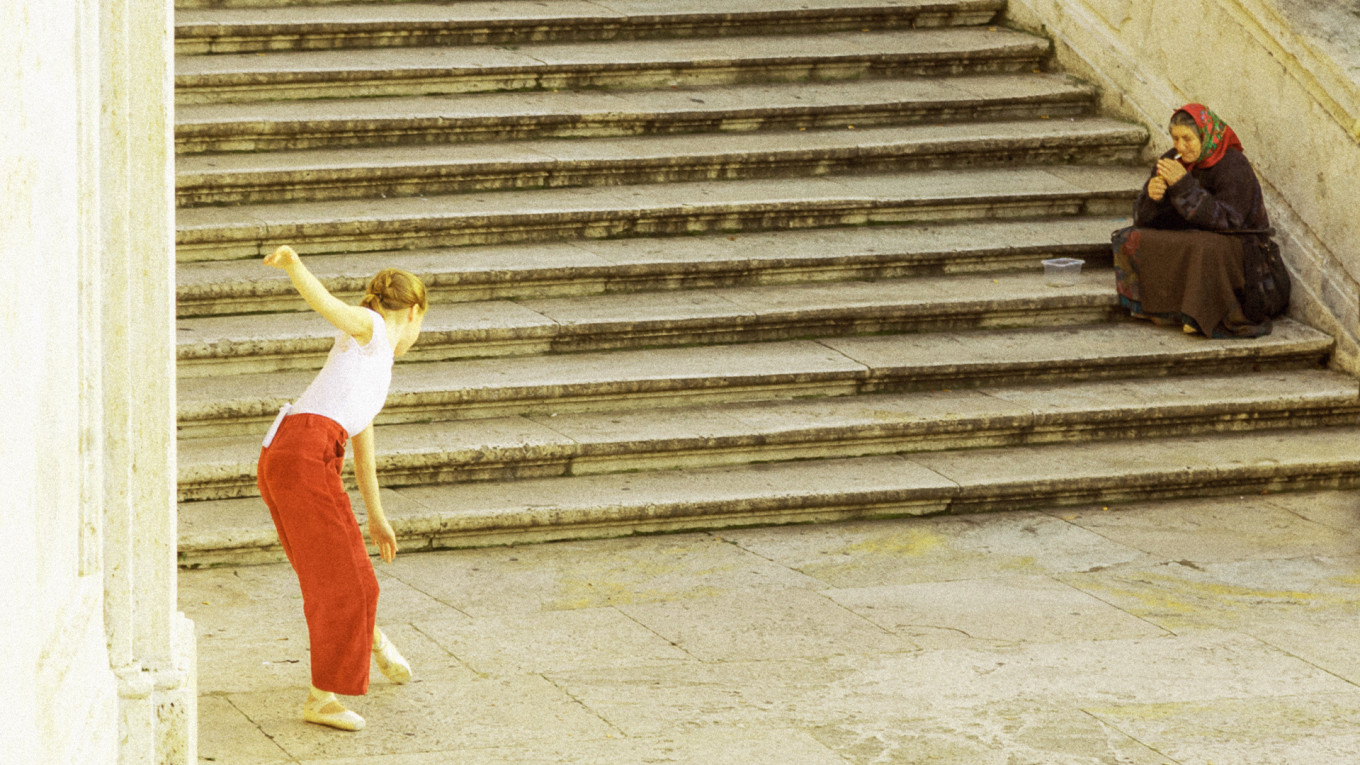
In my mid-forties I fell in love with ballet. It wasn’t so much a discovery than me finally having arrived at a point in life when I could pursue it in earnest. I was no stranger to dancing. Throughout my life I’d done different types of dances, from traditional and jazz to hip-hop. In high school, I belonged to a dance group that regularly performed on stage; and for a while in my 20s I would jive, swing and sway with ballroom and Latin dance partners. I love dancing in whatever forms. Back in my clubbing days, I was always the first of my possé to hit the dance floor – and the last to leave.
But ballet was never in the picture, because for the most part of my childhood our family moved every few years from one small town in eastern Indonesia to the next. There were no ballet schools at those places. By the time we returned to Jakarta, I was a teenager, and it was universally acknowledged then that if you hadn’t started ballet by the age of eight, you were too old to start.
More than a decade later when I found out there were actual ballet classes for grown-ups, the timing wasn’t right. Steeped in my journalism career, I was juggling long working hours with tennis practices and an alcohol-lubricated social life. Saturday morning ballet classes felt too heroic when you’re nursing a bad hangover. Plus, it was hard to commit when I was only a tsunami or a bomb blast away from being flown to the next hot spot on another journalistic assignment.
However, in my forties, I was self-employed. Doing consultancy work and running my own media company enabled me to manage a more flexible schedule. So, one day, having just edited an article on adult ballet, I decided to go to my first class.
Today at 54 years old, I am the oldest student in my thrice weekly class, with the youngest being literally half my age and most other students in their thirties or early forties. We all feel a kinship, sharing a passion for ballet at a not so tender age. We huff and puff after 45 minutes of intense barre section; we struggle to memorize a new combination at the center (and, just as we’ve become comfortable with it, having to do it in reverse); and we wobble while staying up on the toes of one foot, often while exchanging our “battle scars” from wearing not fully broken-in or wrong sized pointe shoes. We share masseuses and physiotherapies to tend to our sore muscles or treat minor injuries. Then there are the annual occasions of class evaluation and performances, which themselves bring collective excitement and anxiety – all the choreographies to memorize, the extra practices, the group and dress rehearsals.
I love ballet so much. It raises my endorphin level, feeds me with constant challenges, and gives me a rewarding sense of achievement. It kept me sane during the uncertainty-filled years of the COVID-19 pandemic lockdown, when all classes and performances were moved online.

Thank you!
For signing up to our newsletter.
Please check your email for your newsletter subscription.
Outside of the studio, ballet occupies my mind. I picked up Gyrotonic, do cross training and regularly stretch to condition my body. I take online classes from teachers overseas and save up for workshops or summer intensive sessions. When a class is canceled or somehow becomes unavailable during the holidays, or when I have to miss it, I feel a sense of withdrawal not unlike that of an addict.
I’m not alone in my obsession. In the past decade, ballet has grown as an art and recreational form among adults around the world. Having treated adult learners as an afterthought for the longest time, ballet schools now offer a variety of classes for grownups. On various social media platforms, many professional ballet dancers or teachers shift to focus on educating mature learners. A couple of years back, I even took part in several ballet competitions for adults, one of them aptly named “Golden Age”.
This shift reflects a general change in dance attitude over the past decade, the “democratization of dance”, if you will, that opens up ballet for all body types. Ballet is no longer just for children, teenagers or professional dancers. Those who left it as a child can pick it back up 20 years later. Those, like me, who had always wanted to learn it but never had a chance to, can now realize their childhood dreams. And those who just want to try something new, or who want to keep their aging brains stimulated, can just drop in on any open classes.
It’s not the tutu or the princess stuff that fascinates me about ballet — rather it’s the physical aspect that I so connect with. Whether it’s tennis, swimming, cycling, capoeira or yoga, I have always been drawn to physical movements. Ballet is probably one of the hardest of all the sports I’ve done. It’s a combination of athleticism and artistry, of strength and flexibility, of technical precision and creativity. Power and grace. Professional ballet dancers are some of the greatest athletes in the world performing what seem like otherworldly feats while managing to look ethereal, as if what they’re doing is the most natural and pleasurable thing to do.
There is a reason for this: ballet is a life-long journey. There are no instant hacks. You cannot learn it over the weekend from YouTube. Everything is a process; a dancer is built from her very first plié. That’s why most professionals started as soon as they were able to walk. Classes are designed in the same logic whatever style of ballet you do and in whichever part of the world you’re doing it. You start at the barre before moving on to center, executing techniques that have been codified for many generations.
This is why in my 10th year as an adult ballet learner, I am still captivated by it. There is so much room for growth, which, to be honest, has also heightened my perfectionism – the slightly darker side of myself that refuses to acknowledge I’m ever good enough. Nothing encapsulates this better than when I realized I had “bad feet” for ballet.
You see, to obtain the esthetics of high demipointe (or standing on tiptoes) and beautifully defined curve of the feet while en pointe, having a pair of feet with high arch and high instep is desirable. I have the opposite: my arches collapse, and my in-steps are flat.
Esthetics aside, ballet dancers demand their bodies to perform feats of balance, strength, endurance and flexibility that test the laws of physics. Ballet feet – together with strong ankles and legs – enable dancers to execute crazy movements while balancing on a surface smaller than a matchbox that lines the tip of a pointe shoe. The right anatomy can take your techniques further.
The anatomy of my hips and legs are all wrong. My hip sockets face forward and are quite deep, limiting turnout potential and sideways extension. I am also knock-kneed, a condition that makes my legs slightly turn in, making it impossible to achieve a perfect turnout of the hips.
And, to make matters worse, for the longest time, it was hard to feel my turnout muscles (the rotators and the inner thighs) underneath the layers of fat on my thighs. I started noticing that some basic movements which some people in my class take for granted was a struggle for me to achieve and, honestly, for some time it was demoralizing. Wallowing in self-pity I voiced the whiny sentiment what so many other ballet students/dancers have said: “I love ballet, but ballet doesn’t love me.”
This may sound silly. After all, I’m a recreational student, not a professional dancer, right? True, but ballet has become more than just something that I do for some sweat and fun. It has become a journey and so the stakes seem higher now.
If my non-ballet body could make me feel frustrated sometimes, imagine what it’s like to be aspiring and professional dancers for whom body esthetics are non-negotiable. The balletic body puts emphasis on precise line placement. Many choreographers in the past century favored straight lines over curving ones, giving rise to the ubiquitous lithe and willowy physiques of the modern-day ballet. This is a major factor that makes eating disorders so common among ballet dancers. Recent United States national data show an overall prevalence of eating disorders among ballet dancers at 16.4 percent, 10 times higher than among other types of dancers.
No one is more associated with this body image issue than the legendary choreographer and founder of the New York City Ballet, (NYCB), the late George Balanchine. In recent years, the Russian-born Balanchine’s legacy as a visionary who changed the face of ballet in the US, has come under critical light, not just for his preference for extremely thin dancers, but also for his problematic approach to running the company, the alleged sexual grooming and manipulation, and discrimination.
He’s not the only one to blame. Dancers and critics are coming out with books and podcast series that call out ballet toxic cultures. Among the books were dance critic Jennifer Homans’ Mr. B: George Balanchine’s 20th Century, Alice Robb’s memoir Don’t Think, Dear: On Loving and Leaving Ballet and Meg Howrey’s novel They’re Going to Love You. Then there are the hilarious and moving tell-all memoir Swan Dive: The Making of a Rogue Ballerina by recently retired NYCB dancer Georgina Pazcoguin, and the podcast series The Turning. In their intention to “fix” ballet, issues that had been normalized for generations such as body image and racial stereotyping; as well as those that had been swept under the rug like sexual abuse have come up to the surface like scum in a pot of simmering broth.
I follow this movement with more than passing interest, even as I’m continued to be enchanted by the smooth lines of another ballet sylph. As a feminist, I am well aware that every time I feel wistful when seeing myself in a body-hugging leotard and tights in the studio mirror — wondering how light I’d feel if my breasts were the size they were 18 years ago (32A), and how high my legs could extend to the side if they were a third of their current size — is a product of social construction of what a ballet dancer should look like. I am always aware of these inner conflicts.
But at the same time, being a pragmatic person who loves challenges, I know that some things are achievable. Those challenges can be overcome, difficulties navigated, provided you work hard for it. For me, this means continuing what I’m doing already, including those feet strengthening exercises, core, glutes and inner thighs workout, and lots of pirouette practices.
Because even the best of relationships needs a lot of work. And I intend to stay in this relationship for the long run.
This piece originally appeared in Magdalene.co in 2023. It has been updated and republished with minor edits.
Devi Asmarani is the cofounder and editor-in-chief of feminist media company Magdalene. She is as passionate about fighting the patriarchy as she is about pointe shoes and pirouettes.