(Shutterstock)
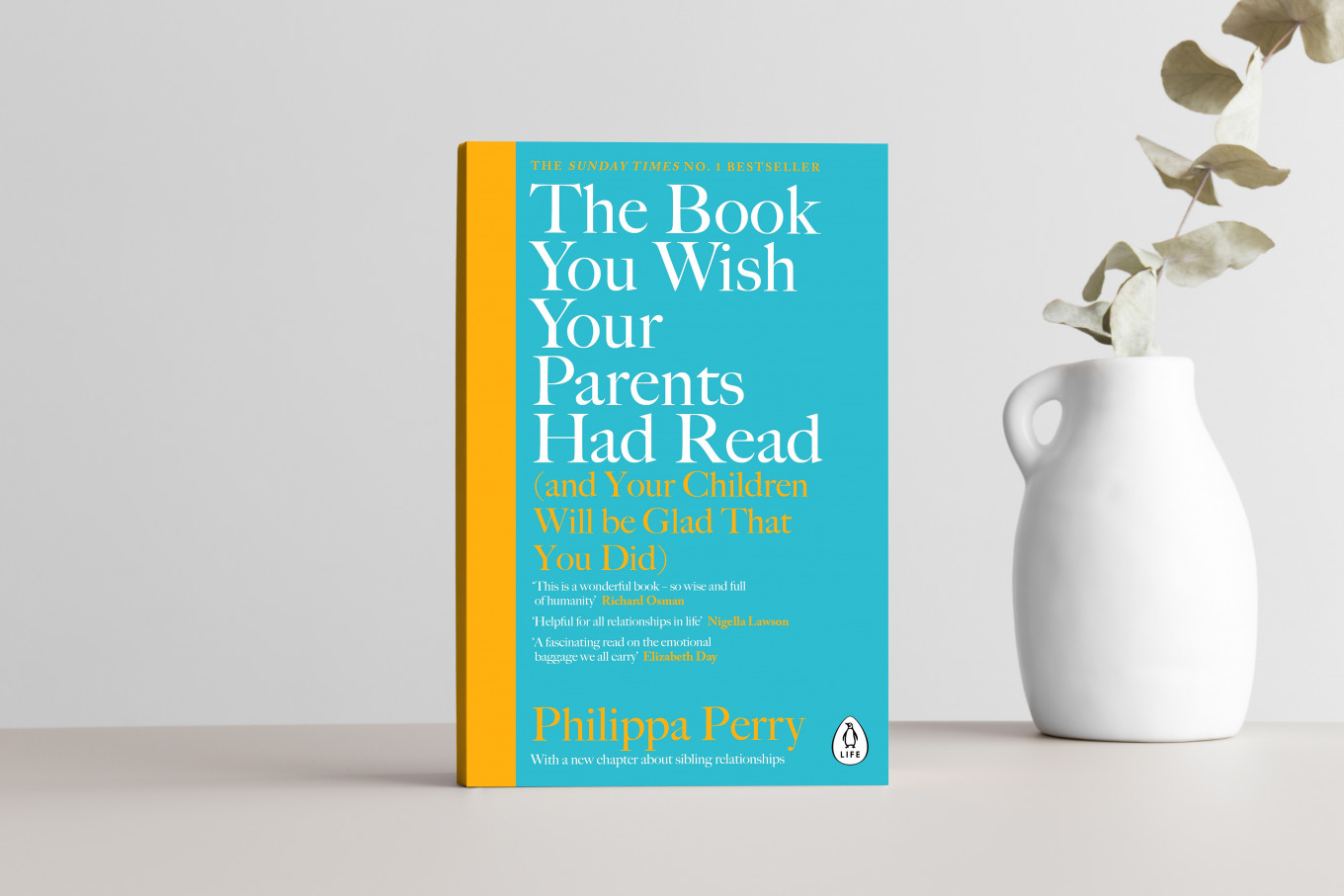
I didn’t expect a book about parenting to make me rethink my own childhood, let alone my understanding of myself as someone who has already decided to be childfree. But The Book You Wish Your Parents Had Read by Philippa Perry did exactly that.
It pushed open a door I didn’t even realize was slightly shut. I found myself revisiting old moments and quiet patterns that shaped me, habits I carried into adulthood without ever noticing.
The surprising part wasn’t the memories themselves. It was realizing how much of who we are today comes from early years we barely remember. The way we respond to conflict, the way we apologize or avoid apologizing, how we regulate emotions, the way we love, even the way we get angry. All of these reactions have roots in patterns formed long before we had the language to describe them.
And the more I read, the more I understood how easily those same patterns can be passed down. If we grew up with warmth, we tend to give warmth. If we grew up with fear or confusion or pressure, we might repeat that too, even when we try not to.
Even though I am childfree, I realized I still need to understand parenting.
Without that understanding, I would struggle to make sense of how I became who I am today. Healing starts with identifying what went wrong, what could have been different and what healthier patterns might look like. The more I understand how parenting shapes a child, the more I understand how my own childhood shaped me. And if I want to heal the parts of myself that still carry old patterns, I need to know where they came from.
Thank you!
For signing up to our newsletter.
Please check your email for your newsletter subscription.
Being part of the village
Learning about parenting, for me, has become a way to grow into an adult who meets other people’s children with more gentleness.
As I move into my late twenties, I’ve started noticing kids everywhere. Most of my school friends have become parents. So have my coworkers. Even my cousins now have children. Growing older somehow means being surrounded by more kids, whether we like it or not.
Learning about parenting made me realize that opting out of parenthood doesn’t let me opt out of society. That saying, “It takes a village to raise a child,” finally makes sense to me. Parents are the first ring, yes, but they are not the whole circle. The rest of us stand in that village, too.
And the more I learn, the more I see that interactions outside that first ring can shape a child’s development in powerful ways. Parenting is not held entirely by the parents. It belongs to communities, and even to the state, at least in the way law understands responsibility.
Maybe that’s why small moments feel different now. The other day on a plane, a baby was screaming and the mother looked overwhelmed. She kept apologizing with shaky hands. Before, I might have looked away, annoyed. But this time, I really watched. I saw a tiny body struggling with a feeling that was too big. I saw a mother trying to manage her child’s emotions, her own fear, and the silent judgment of the entire cabin.
Something shifted in me. The crying baby wasn’t trying to disturb anyone. They were just being human in the only way they knew how.
So instead of giving the struggling mom the usual irritated glance, I made an effort to look calm. I softened my shoulders. I kept my face relaxed. I hoped she could see that I wasn’t annoyed, that she wasn’t alone. It wasn’t much, but it felt like a small way to ease her embarrassment. Maybe that’s what being part of the village looks like, a series of small choices that help someone breathe a little easier.
I’ve also started seeing public tantrums differently.
We’re so quick to label a child as naughty or spoiled, and the parent as incompetent. But tantrums are not always a sign of bad parenting. They’re a sign that a child is still learning how to live in their body, how to handle emotions that feel too big. And parents feel pressure too. Sometimes, it’s not that they’re worried their child is hurt. They’re worried about being judged. That constant fear must be exhausting.
Parents are expected to nurture, teach, love, be patient and never complain. If I can’t help in those moments, the least I can do is practice empathy. Raising a child is overwhelming on its own, and I don’t want to be another silent critic in the background.
A new perspective
Being childfree gives me a clearer angle. Love and care are not limited to biological motherhood. There are many children who need kindness from adults who are not their parents. And there are many mothers who quietly wish the world would help them just a little more. Even if I am in ring three or four or five, what I do still counts.
I can offer warmth, patience and understanding. I can help make the world a little softer for the children who pass by me, even if only for a moment.
 (Shutterstock)
A good world for children, in my view, is a world where they’re allowed to have emotions without being treated as problems. A world where adults don’t rush to blame, but instead ask whether we’ve done our part to make the environment safe.
If a child cries, do we give them space to calm down, or do we glare until the mother wants to disappear? If a child makes a mistake, do we judge the parent, or do we reflect on how the village can be more supportive?
And the more I heal, the more I notice how differently I show up. I become softer, steadier and more patient with the children who cross my path. It reminds me that when adults heal, the world becomes a little safer for children.
In the end, every adult carries wounds from their own childhood, and every child around us is just beginning to form theirs. If we want the future to be gentler than the past, maybe the first step is simple: Be kinder to the children who are still learning how to be human, and kinder to the parents who are trying their best to guide them. Because when children grow well, they grow into adults who make the world better for all of us.
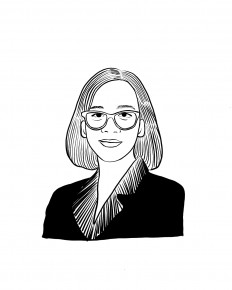
Tia Monica Sihotang works in the law field and often finds herself drawn to questions about gender, children and everything that sits quietly in between.