(JP/Andersen)
Trying to be an ethical consumer in this city can be discouraging.
What begins as a straightforward shift—swapping plastic cups for tumblers, choosing products labeled “eco-friendly”, avoiding impulse buys—quickly unravels into contradictions and minor impracticalities.
Like the time I brought my tumbler to a coffee shop in Jakarta.
The barista quietly refused: “We can’t be seen pouring drinks into tumblers,” he said, glancing at the CCTV. Management might assume he was stealing. I gave in, annoyed. Profit over principles, I thought.
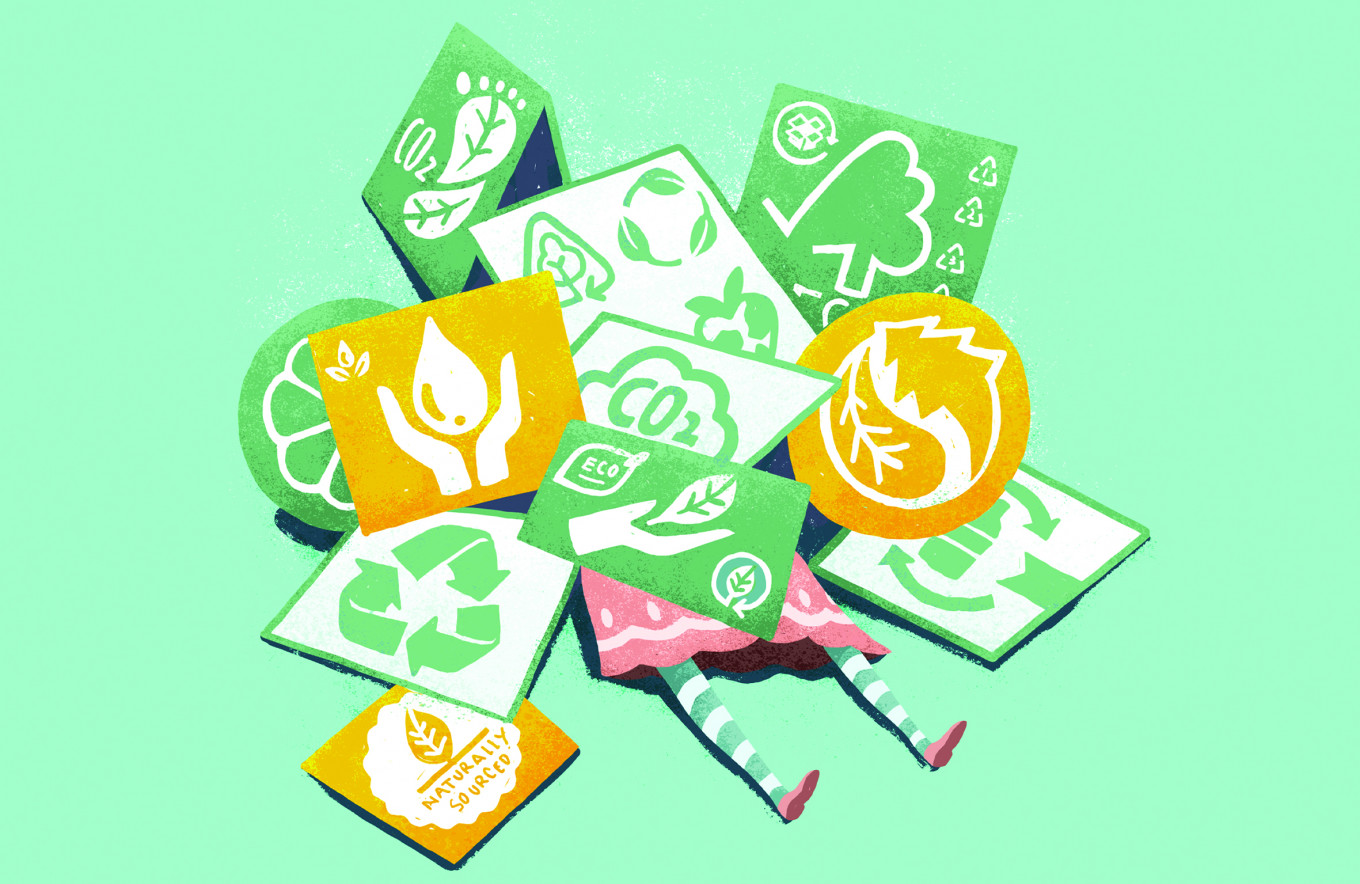
In this city, living ethically and sustainably often feels like swimming upstream: the nonstop marketing of things you don’t need, questionable sustainability labels, a nonexistent recycling ecosystem that swallows biodegradable products into the same landfill.
Here, convenience is king and sustainability is an afterthought. Sometimes I wonder whether any of it really matters—the reusable utensils, the linen-polyester swap, the fair-trade choices.

Thank you!
For signing up to our newsletter.
Please check your email for your newsletter subscription.
It’s easy to feel pessimistic knowing our impact is limited. But giving up seems equally shortsighted.
So the question becomes: How do we keep trying, without burning out?
When ethical living becomes a burden
When Zeilla Mutia Devi began living more sustainably, she aimed for perfection: no plastic, sustainable clothing, conscious shopping.
As a content creator at @zeillamudev and the head of education for Lyfewithless, a sustainable lifestyle collective, every photo she posted was open to public scrutiny.
“People could comment if they see me with plastic cups,” she said.
“So I wanted to appear perfect.”
But even if you’re not an influencer, that internal pressure still hits hard. I’ve definitely felt it.
When I was living in Bali, I kept a box of maggots at home to compost my organic waste. Now in Jakarta, I’ve abandoned the practice entirely because there are no composting services near me. There was also a time when I vehemently refused to use plastic bags, yet I still bought plastic trash liners.
My efforts felt inconsistent, even hypocritical. I was haunted by an internal critic that nitpicked every misstep. I was convinced this lifestyle demanded instant changes and all-or-nothing consistency—no contradictions, no days off, no slip-ups.
What makes it harder is when the people around you don’t share the same habits. What good is skipping one straw if your coworkers are sipping from plastic like it’s nothing?
“It feels like we’re alone changing the world,” said Nurie Lubis, an influencer at @belajarzerowaste_id, who carried her tumbler everywhere long before it was trendy.
But even individual change requires collective shifts. If a parent stops buying plastic-wrapped vegetables and wakes up at 5 a.m. to go to the wet market, the entire household changes pace. If a family begins sorting kitchen waste, everyone’s habits must adjust.
“It was a difficult change for my family when we started,” Nurie said.
“I knew I couldn’t just talk them out of their old habits. We also need to take it easy and be patient. It’s almost a one-year process.”
That also applies to our own efforts.
The biggest trap is thinking ethical consumerism is just about the products we buy. We rarely anticipate the deeper implications on our finances, routines, social norms—even our mental health.
That’s why it can feel exhausting, and even unsustainable.
Redefining ethical consumption
So how do we stay grounded instead of overwhelmed?
One way is to shift how we measure success. What if ethical living isn’t just about saving the planet, but about becoming more intentional versions of ourselves?
“The one question you need to ask is: Does living ethically help you become a better version of yourself?” Zeilla said.
For some, that starts with better finances.
I’m not embarrassed to admit that saving money is one of my motivators. Instead of expensive “sustainable” body lotion and makeup remover that feel like greenwashing, I’ve used virgin coconut oil for the past decade. Cheaper and less plastic packaging.
Nurie shared similar examples: swapping tissues with reusable napkins and menstrual pads with menstrual cups. In the end, she didn’t just reduce waste, she reduced expenses.
For others, ethical living sparks creativity.
My mother, now in her 60s, has spent the past few years making eco enzyme, a multipurpose liquid made from fermented food scraps. It stretches household cleaners, detergents, even shampoo. More than anything, she enjoys the process as a positive distraction. The environmental benefit is a bonus.
These little advantages add up. They may look disingenuous, but they’re immediate and practical, and they sustain long-term habits. Being an ethical consumer should support your goals in life, not detract from them.
“It should foster your life’s purpose and meaning,” Zeilla said.
“That you’re someone with real values and principles, not someone easily swayed by trends or discomforts.”
The simple hack that works
Ultimately, being an ethical consumer becomes satisfying when we feel in control of our impact.
“Make that reach small,” Nurie said.
“We don’t need to change the whole nation, but perhaps we can change our small family—or even just ourselves,” Nurie said.
The simplest place to start is using what we already have for as long as possible.
Before buying something, ask yourself: How long will this product last? Do I actually need to buy it now? Do I already own something similar? Do I really want to carry a stainless-steel straw everywhere?
The biggest mental shift is not about strict rules or long checklists. It is, as Nurie puts it, “simply to be content with what we have”.
Do we need another Stanley tumbler? Probably not.
“Once you decide to live sustainably, it’s easy to see that we don’t need these things to survive,” Nurie said.
“You learn how to consume things you really need. That’s the essence of ethical consumption.”
And maybe that’s the point. When we feel discouraged about whether our efforts make a dent, change the question. It isn’t: Am I saving the planet yet? It’s: Am I living more intentionally than I was before?
Because the real shift starts not in what we consume, but in how we see ourselves as consumers.
Like the old adage says, change starts within ourselves.
Michelle Anindya is a writer and journalist. From her home in Bali, she writes about anything from coffee to tech.