(Shutterstock)
I think the most Indonesian thing we do during Ramadan isn't "Selamat berbuka!" (Happy breaking of the fast!) It's: "Maaf ya..." (Sorry...)
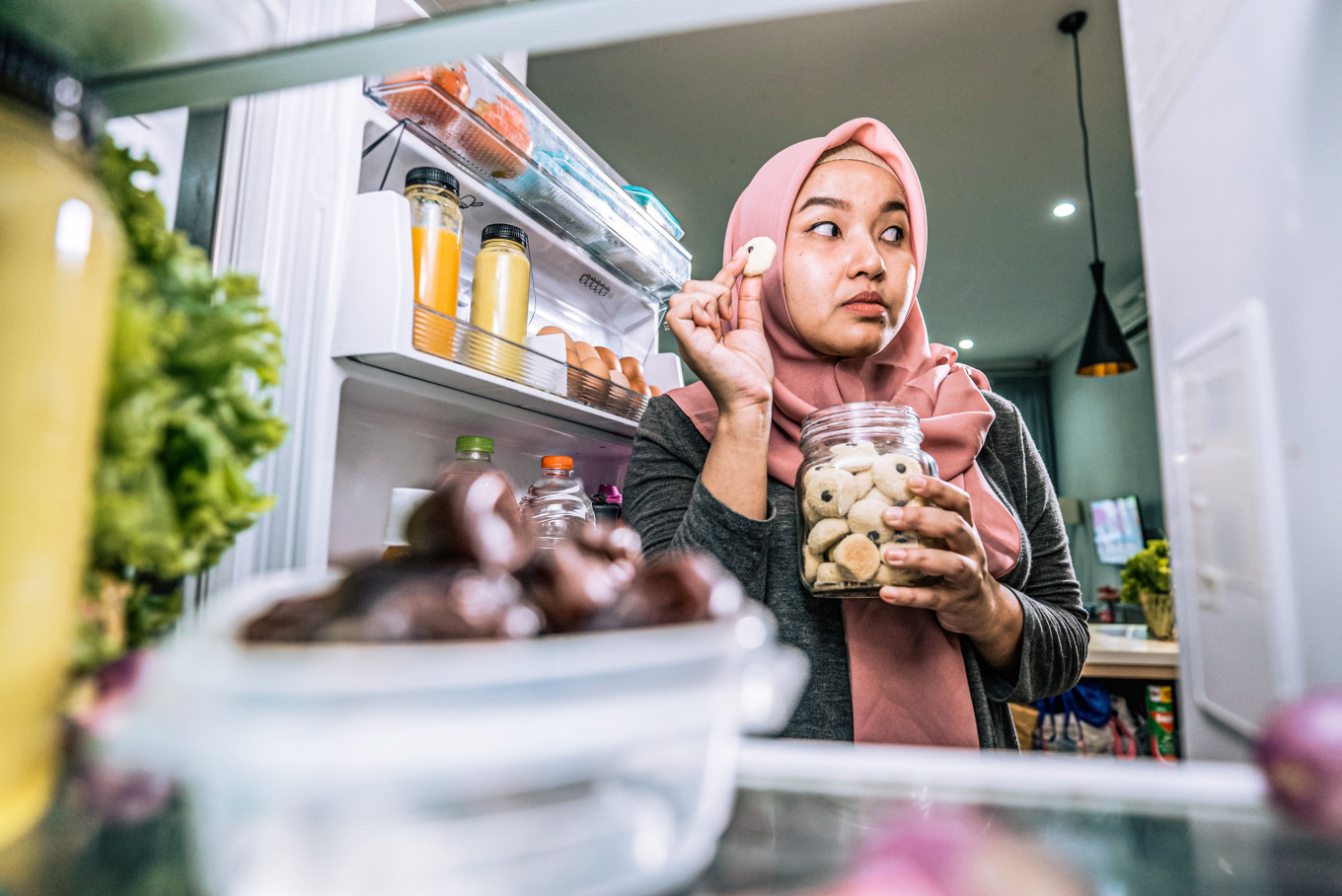
Sorry, I'm eating. Sorry, I'm drinking water. Sorry, I'm doing the most human thing possible at noon.
It happens in offices, college canteens, even in the most neutral place: the pantry. Someone opens a lunchbox like they're opening a secret. Then they look up and apologize, because apologizing feels like the safest way to keep the room calm. It's so routine, so normalized, that we've stopped noticing it has become part of the culture.
Most of what Ramadan does to public life in Indonesia is genuinely beautiful. Our schedule shifts. Meetings magically migrate to the morning like everyone suddenly discovered productivity before noon. Our group chat turns into an iftar (breaking of the fast) committee. At 4:30 p.m., the whole city gives off a very specific energy: half spiritual, half “I’m thinking about kolak”.
The city slows to something softer at dusk. We're a communal country, and of course our sacred months are communal too.

Thank you!
For signing up to our newsletter.
Please check your email for your newsletter subscription.
But somewhere along the way, we built a second system alongside all that warmth: a quieter, less celebrated set of adjustments, where people who aren't fasting learn to move through public space a little more carefully. Often, apologetically.
And I don't mean people who aren't fasting for reasons that are easy to explain, the ones with medical notes or travel exemptions. I mean people who simply chose not to fast. No footnotes. No moral debate. Just a choice.
In Indonesia, that kind of choice is awkward to name. Which is exactly why it's worth talking about.
The peace fee
What "Maaf ya..." does socially isn't only about manners. It's a kind of soft payment. I've started calling it a peace fee.
You pay it with a smile, a lower voice, strategic seating, the decision to eat somewhere less visible. It buys you a calmer room, fewer sideways glances, the feeling that you're not "disturbing the atmosphere". Most of the time, it's so small it barely registers as a transaction.
But after a while, the peace fee starts to teach us something: who gets to be the default citizen during Ramadan.
The default citizen is fasting. Everyone else becomes an exception that must be managed, politely, of course, because we're Indonesian, and we manage discomfort the way we manage traffic: by pretending it's normal and hoping it moves.
Has fasting, in public life, slowly shifted from personal devotion into something closer to a public standard? Not officially, not consciously.
But we can feel it in small things, like the way eating gets relocated from "having lunch" to "hiding lunch." The way a normal bodily need, water, becomes something you do quickly, discreetly, preferably behind a door.
Even the malls learn to whisper
If you want to see the peace fee made physical, go to a mall during Ramadan. Everything is still there: coffee, pastries, bottled water with impressive branding. But most eateries operate behind curtains or partitions.
In many cities, that's not merely a business aesthetic but a requirement. In Tangerang city, for example, an official government announcement explicitly says restaurants must use curtains until 5 p.m.
"It's just to respect those who are fasting," goes the explanation. And that's the kindest way to read it.
 (Shutterstock)
But the curtain does two things at once. It shields the faster from temptation, yes. It also shields the non-faster from being seen. And if someone needs a curtain to eat lunch without embarrassment, we have to ask: in that environment, has eating become socially risky?
The curtain is polite. It is also a signal: Your hunger is something the public space would rather not acknowledge.
When shame becomes a mandate
Most of the time, nobody is enforcing anything. It's just a look, a hush, a slight shift in the room's energy when someone unwraps food. This is the soft version: social shame. Diffuse, deniable, effective.
But when shame becomes normal, some people start believing they have the right to escalate.
Recently, a case in Banyumas circulated widely after reports that teenagers were assaulted for being caught eating during fasting hours. Police involvement and mediation followed. For most Indonesians, Ramadan is kindness and discipline, not violence, and the incident was widely condemned.
But the incident reveals the edge of cultural logic. When public space is treated as something that must look fasting, a person eating peacefully is no longer making a different choice. They become someone breaking the public order. And a broken order, in some minds, invites correction.
What's reassuring is that religious leaders themselves have pushed back against this impulse.
The Indonesian Ulema Council (MUI) has publicly asked people not to conduct sweeping operations on eateries during Ramadan, emphasizing mutual respect over vigilantism. Jakarta's provincial administration has also stated that it forbids mass organizations from sweeping eateries during Ramadan. The most devout voices in the room are reminding us that respect isn't something you can raid into existence.
So why do we keep building systems where non-fasters must hide?
Protected, not performed
Indonesia, at least on paper, is built to hold differences. The Constitution guarantees people the freedom to embrace a religion and worship according to their belief.
It's the kind of sentence you've heard a thousand times in civics class, which is maybe why we forget how practical it is. It's essentially the state saying: Worship is important enough to be protected, and personal enough to be chosen.
And if worship is protected as a freedom, it follows that public life shouldn't turn that freedom into a compulsory performance. Not everyone in a shared space is obligated to look like they're practicing the same thing at the same time. Shared space, by definition, isn't owned by one rhythm, no matter how dominant or beloved that rhythm is.
Ramadan is sacred. Public space is shared. Those two things are not in conflict, unless we make them so.
Courtesy vs. coercion
None of this means eating flamboyantly in front of fasting friends just to prove a point. That's not freedom, it's just being inconsiderate. Courtesy matters, and it's usually not complicated.
Courtesy can look like not offering snacks to a fasting colleague, choosing the pantry over a tight meeting room, not making your iced coffee a dramatic announcement. Most of the time it's just reading the room. It costs almost nothing and it's worth doing.
But where does courtesy end and coercion begin?
Coercion begins when the non-faster isn't simply being considerate but is expected to become invisible. When the apology isn't a choice but a requirement. When "respect" is measured by how small you can make yourself.
Here's the simplest test: Does the situation preserve dignity on both sides? If fasters can fast peacefully and non-fasters can eat peacefully, we're coexisting. But if one side has to carry guilt so the other side can feel comfortable, we're no longer talking about respect. We're practicing compliance.
And compliance is a fragile foundation for harmony. It can look peaceful on the surface, but it tends to crack the moment someone gets tired of shrinking.
Let the vibe be public. Let the practice be private.
A friend once told me, "Ramadan is a vibe." She meant it affectionately, and she's right. The month changes the air. The generosity, the slower evenings, the way people suddenly remember their neighbors exist, it's one of the loveliest things about living here.
But the healthiest version of that vibe is one where the feeling is public, and the practice is private. Because practice is where choice and sincerity live. And it's also where pluralism lives.
Choosing not to fast might be unpopular. It might be frowned upon in certain circles. But pluralism isn't a popularity contest. It's the agreement we make that public space belongs to more than one kind of person, which means non-fasters don't need to justify their existence. No medical notes. No moral explanations.
Not even an apology.
So the next time someone says "Maaf ya..." before opening their lunchbox, maybe just ask yourself: What are they actually apologizing for? And is that something we should want them to apologize for at all?
Lutfiya Tussifah balances government work and campus life, often escaping into words when reality gets too loud, hoping those words will one day become a book.