(Erasmus Huis)
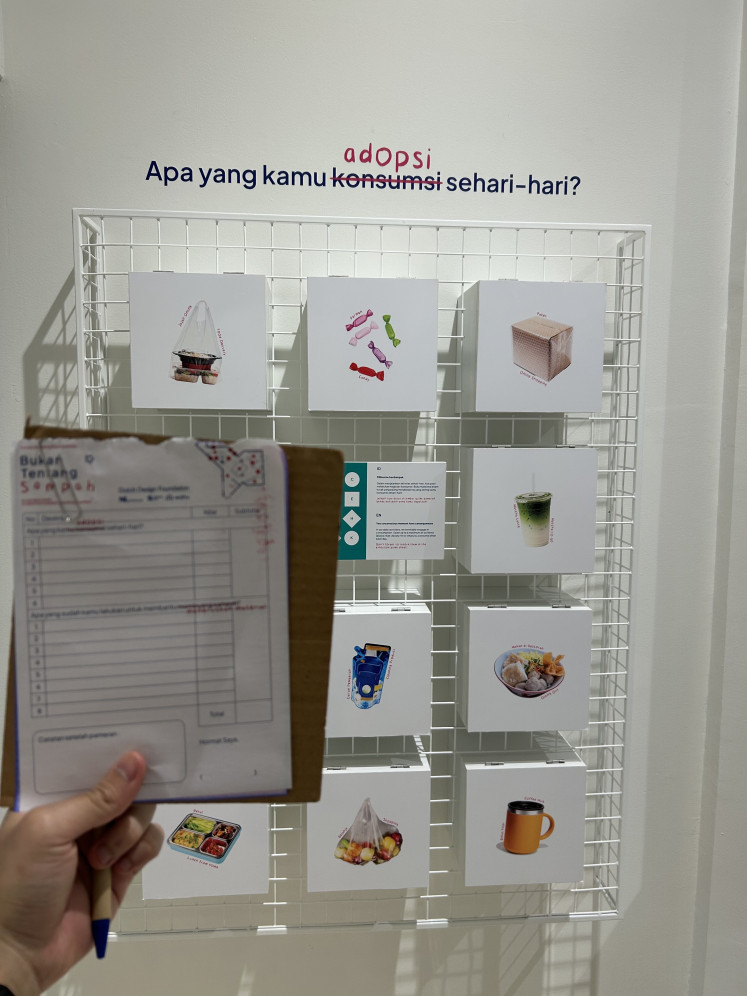
The unusual exhibition displays a grid of everyday items: potato chip packaging, a takeaway container, a cup of coffee, a box of your latest online order.
As I move through it, I realize the focus isn’t on the objects themselves, it’s on me and you and the everyday habits we take for granted.
Sorting waste adds points. Recognizing your reliance on single-use packaging leads to deductions. Every small decision we make, the takeaway coffee cup, the instant sachet, the plastic bag you didn't think twice about, suddenly has a number attached to it.
 (Erasmus Huis)
By the time I reach the end, I have a score of negative five. Too many instant coffee sachets, too many plastic bags, too many small decisions that add up.
This is Bukan Tentang Sampah (Not About Waste), an exhibition at Erasmus Huis running until May 2. Developed through the Co/Lab program by the Dutch Design Foundation in collaboration with Waste Hubs (WaHu), it brings together Indonesian and Dutch designers to rethink how waste is understood and managed.

Thank you!
For signing up to our newsletter.
Please check your email for your newsletter subscription.
I arrived expecting to write a visual commentary. Instead, I left with an introspective experience that pushed me to reflect my own habits and decisions that shape the world around us.
Seeing waste
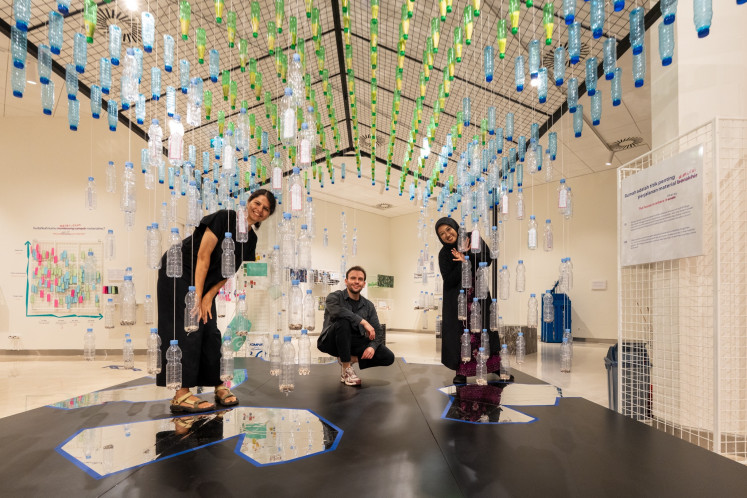
The exhibit brings together Indonesian designers Ade Amelia and Dhania Yasmin with Dutch designers Mayra Kapteijn and Noud Sleumer. Their aim isn’t just to raise awareness, but to provoke your conscience, and ultimately, shift perspective.
 (Erasmus Huis)
“We don't see waste as a critical issue in Indonesia because you don’t see it,” says Yasmin. “There’s this perceived distance; when in reality, it's been compounding into a problem that we haven’t solved.”
Our consumption habits, she said, have changed rapidly over the past 50 years, but disposal habits haven’t kept pace.
“Think of how we used to eat with banana leaves. Now we have single-use technology like plastic or styrofoam, but we dispose of it all the same,” Yasmin says. “They either end up in landfills or get incinerated in piles without proper sorting, taking up to 450 years to deteriorate or releasing harmful fumes to the environment.”
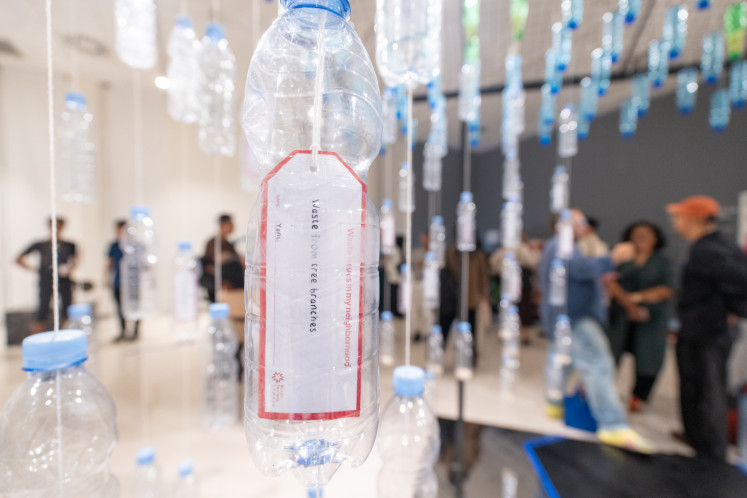
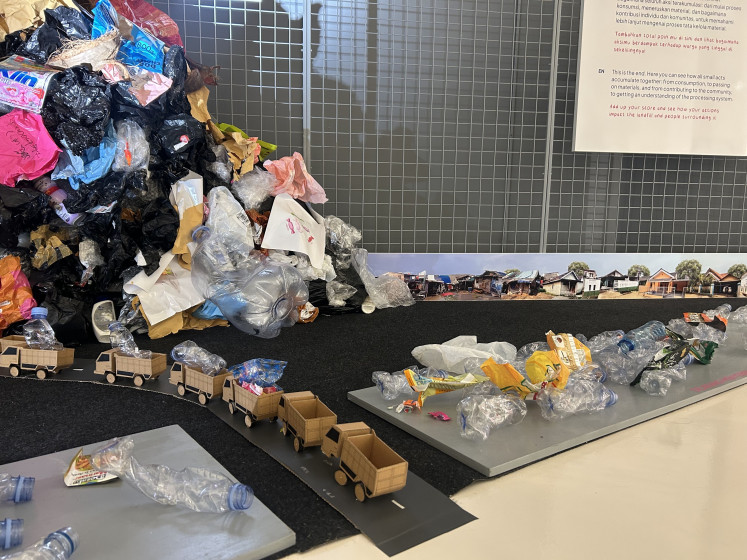
As you enter the exhibition space, an installation shaped like a house greets you, with rows of colorful plastic bottles suspended from the ceiling. Across the room, modern furniture made from recycled materials sits alongside miniature cardboard trucks inching toward a towering mound of waste.
 (Erasmus Huis)
At first glance it feels like a study of objects we throw away. The longer you stand there, the clearer it becomes: this exhibition isn't really about trash. It's about the habits that produce it.
“It’s important to make this topic personal. Not to make you feel bad, but to realize that there's another value to everything that you consume,” Yasmin explains.
For example, each matcha takeaway cup has an environmental cost. Waste is reframed not as something discarded, but something we “adopt”.
“The truth is when you get something, you also adopt its packaging. There needs to be more mindfulness to help Indonesia’s current waste system,” she says.
The bigger picture
That personal reflection sits against a much larger, harder reality.
Indonesia’s waste crisis isn’t abstract. The 2005 Leuwigajah landfill collapse in Bandung killed 157 people. More recently, the Cipeucang landfill in South Tangerang, Banten, has exceeded its capacity of 400 to 1,100 tonnes of daily waste. Bantargebang’s landfill also overflowed into surrounding areas, killing three people in its collapse.
The scale is systemic, but the exhibition's entry point is individual.
The exhibition's centerpiece is a house installation lined with messages from residents describing everyday barriers: irregular collection schedules, uncertainty about sorting, deeply ingrained family habits. The obstacles are familiar, and that's precisely the point.
 (Erasmus Huis)
"We placed this installation right at the middle because home is where you can make the most impact," Yasmin says.
"Bantargebang's waste is 60 percent from households and we're at critical capacity. Separating your organic and inorganic waste at home is where you can take the first step."
Where does it end?
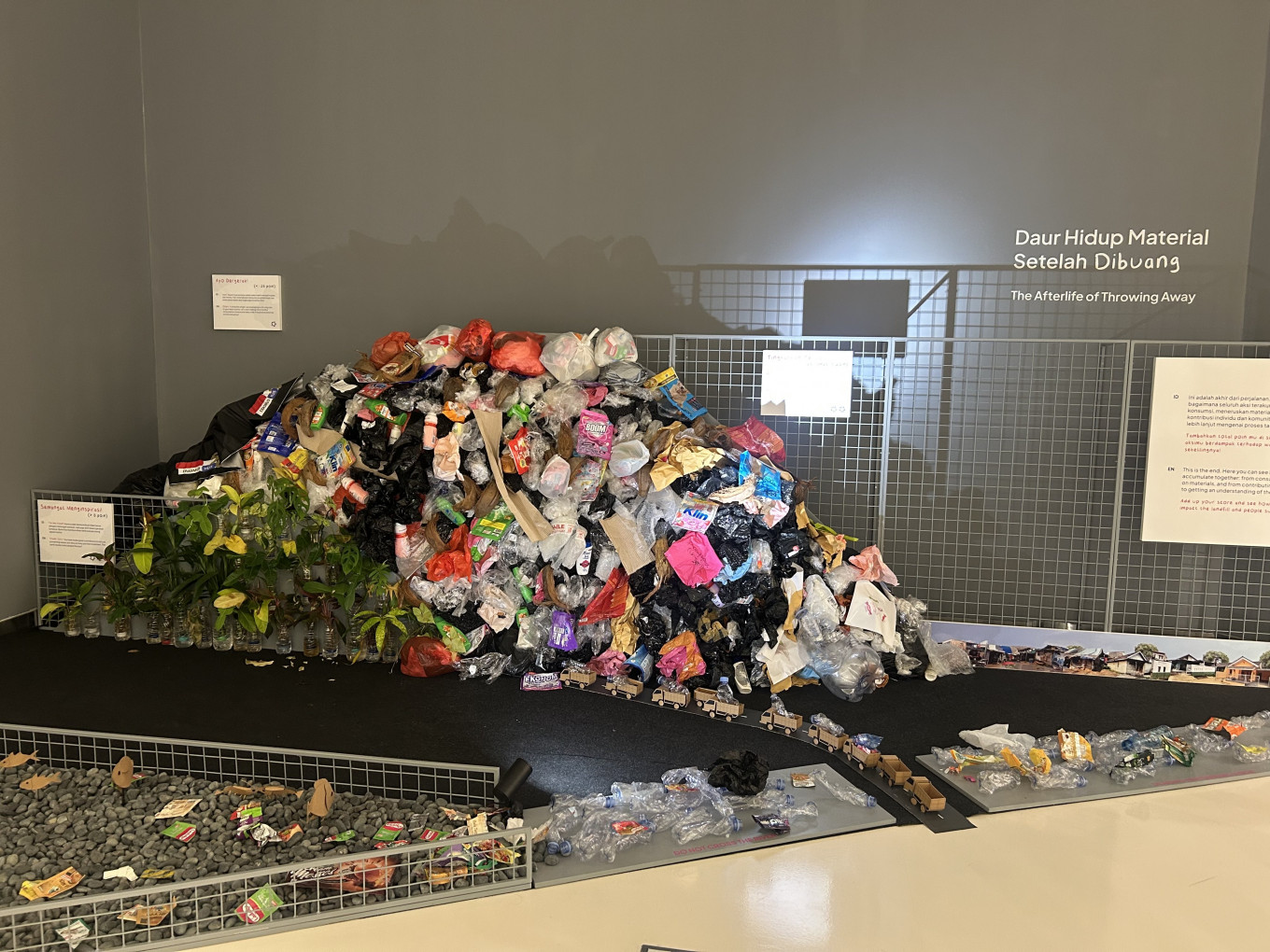
At the end of the exhibition, a mound of trash looms over miniature houses and trucks, showing where all of this eventually goes.
It's not subtle, and it doesn't need to be.
"We all only have one earth," Yasmin says.
"We hope that by experiencing this exhibition, people can start sorting themselves and encourage others to do the same. Doing it alone can make an impact, but doing it together can be transformative."
Nothing I saw here was new. The habits, the systems, the consequences: they've always been there. Only now, they're harder to ignore.
And maybe that's the point: not to shock, but to stay with you long after you leave the room.
Aqraa Sagir is a writer for The Jakarta Post's Creative Desk. He’s chronically online in the hope it would be a useful asset for the job.