(Shutterstock)
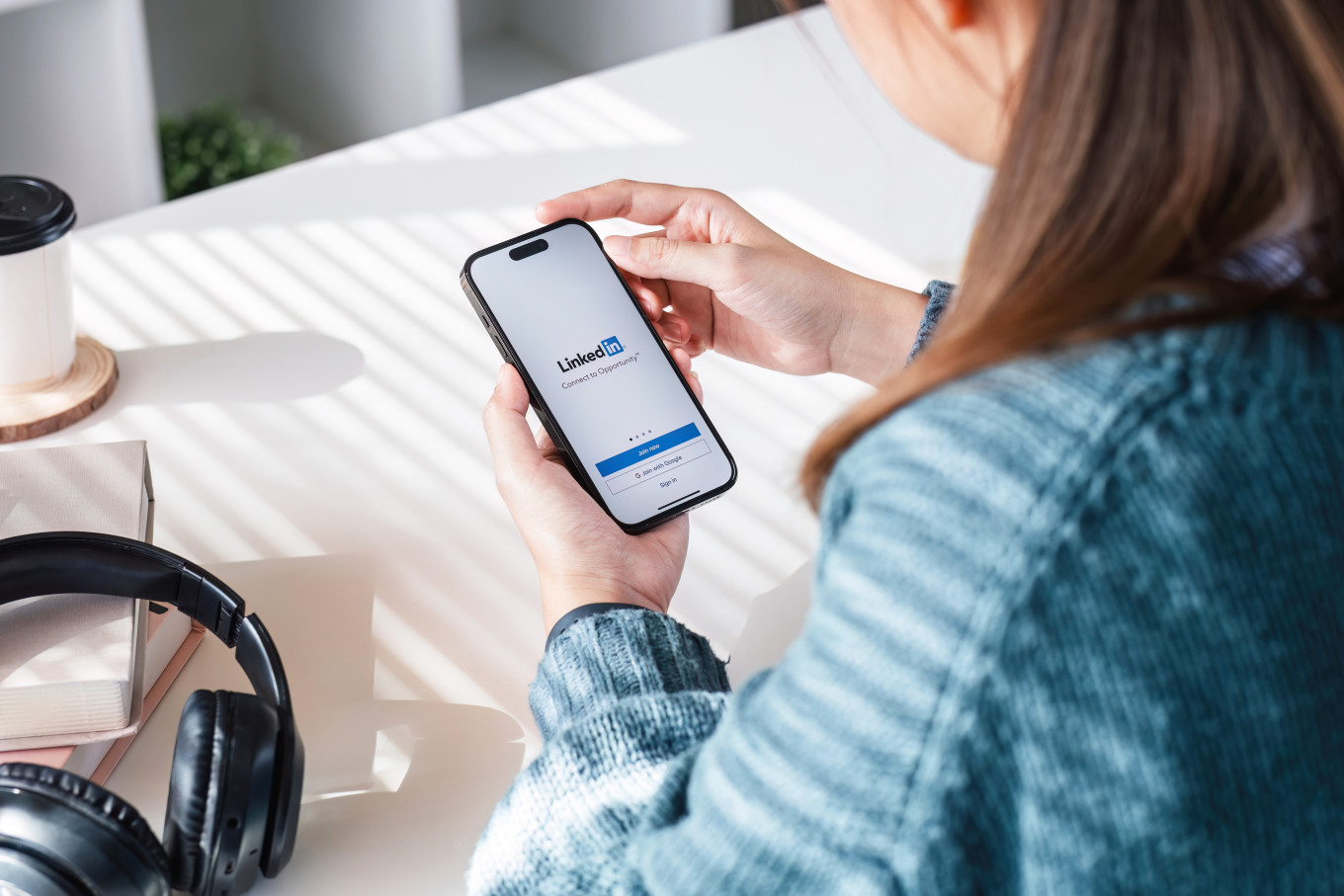
Filling in my first name, then my last name.
Filling in my profile data, then my contact details.
Next: "Describe your experience, industry or expertise."
My finger stopped.
It was 2020. I was 15, and it was my first time hearing about LinkedIn. I remember trying to make an account out of curiosity, expecting it to feel like any other social media platform. But the moment it asked me to summarize my experience, I stopped. At that time, I was just a junior high school student who barely knew what a career path looked like.
Thank you!
For signing up to our newsletter.
Please check your email for your newsletter subscription.
So I closed the tab.
Five years later, here I am, back on LinkedIn and somehow buried in it.
Entering my sixth semester, I was required to take an internship as part of my graduation requirement. And just like that, the season arrived with everything that comes with it: CVs, portfolios and LinkedIn profiles.
Suddenly, everyone around me seemed to be perfecting something. Updating their profiles. Rewriting their summaries. And slowly, without realizing it, I started seeing myself the same way.
Somewhere along the way, every new achievement started to feel less like growth and more like inventory. Organization? Add it. Certification? Add it. Internship? Add it.
I started looking at my life the way recruiters might, doing things that aren't really me just so they can look like me on a profile.
When LinkedIn became more than just a platform
There was a time when LinkedIn felt distant. To me, it was just a website for people who were already "in the industry." A place to upload your work experience, connect with colleagues and maybe look for jobs. Not somewhere I imagined stressing over in my early twenties.
But that changed quickly.
According to DataReportal, a global digital insights platform, LinkedIn users in Indonesia reached around 32 to 35 million in early to mid 2025, growing by approximately 15 percent from the previous year. The platform added roughly 4 million users in just one year.
At the start of each year, internship openings pour in. And so do the applicants. It's not just final-year students competing anymore. Fresh graduates, even working professionals, are in the same space, applying for the same opportunities.
At some point, LinkedIn stops feeling optional. It becomes something you have to have, something you have to update, something you have to take seriously, even before you fully understand what you actually want to do.
I even tried LinkedIn Premium for a month. Somehow, it made things worse. Seeing the number of applicants for a single role, 4,000 people for one position, felt impossible.
The pressure is subtle, but constant. You scroll and see people your age leading organizations, landing internships, juggling side jobs, joining competitions, collecting certifications, all posting with that familiar opening line: "I'm happy to share that…"
Another achievement.
And suddenly you start asking yourself: Am I doing enough? Am I already behind?
What makes it heavier is the expectation to build a "personal brand" early, to present yourself as polished, driven and certain about your direction, even when you're still figuring things out.
Because LinkedIn is no longer just a digital resume. It's a public one.
 (Shutterstock)
Unlike a CV, which used to be sent privately to recruiters, LinkedIn puts your progress on display, visible not only to employers but to classmates, colleagues, even strangers. And when everyone's professional milestones are constantly in front of you, comparison becomes almost unavoidable.
Reza, 21, understands that feeling well.
"I took LinkedIn seriously when I realized how well-structured people around my age were in updating their experience. At that moment I felt like I couldn't be left behind, so I began polishing my professional profile to look more engaging for potential recruiters."
Then he added something more revealing: "Sometimes I feel like I always need to do more, do something impressive. Not only for my professional career, but also for my own pridefulness."
That's what makes LinkedIn pressure different from ordinary job anxiety. It stops being about employability. It becomes personal. Your profile starts to feel like a reflection of your worth.
Eva, 20, admitted she feels that pressure too. When I asked whether she genuinely likes posting on LinkedIn, she was blunt: "I don't really want to, but I feel like I have to. Everyone else is posting, and it's all just for branding."
That may be what makes LinkedIn so exhausting for many young people. The pressure isn't always direct. No one explicitly tells you to post your internship, update your headline or optimize your profile. But when everyone around you is doing it, a blank profile starts to feel like falling behind.
A different kind of "behind"
The feeling of being behind isn't new. We've felt it on social media for years, just in a different way. On Instagram, it's about lifestyle: what your life seems like, where you go, how you look, what you do.
But LinkedIn hits differently. Being behind on LinkedIn feels structural. It's about your experience, your achievements, your future. It stops being a comparison. It starts feeling like a timeline you're supposed to be following. And if you're not hitting certain milestones at a certain time, it starts to feel like you're falling off track.
To understand whether LinkedIn actually matters as much as many my age think it does, I spoke with Tasya, a headhunter, who offered a perspective worth hearing.
"At the end of the day, recruiters hire people, not profiles. LinkedIn opens the door, but what keeps the door open is still capability, mindset and how you communicate yourself in real situations."
According to her, LinkedIn matters mainly as a first impression tool. It helps recruiters quickly assess someone's background, experience and industry exposure. But it is not the deciding factor. CVs and portfolios still matter. Interview performance still matters. And authenticity matters most.
"Just be yourself on LinkedIn. Don't exaggerate or try too hard to be something you're not, because recruiters will notice. If your LinkedIn profile doesn't match how you present yourself in interviews, it can become a negative point."
That, she explained, happens more often than people realize. Candidates sometimes build polished profiles that look excellent online, only for the substance behind the branding to fall apart in person.
LinkedIn may help get your foot in the door. It cannot walk through the interview for you.
Still, even knowing that doesn't entirely erase the pressure. Because what makes LinkedIn emotionally draining isn't simply that it helps people get jobs. It's that it transforms professional development into something visible, measurable and constantly updated.
We have always compared ourselves online. Instagram made us compare lifestyles. TikTok made us compare creativity and relevance. But LinkedIn compares something more uncomfortable. Not your personality, not your appearance, not your social life. Your progress.
And maybe that's why it hits harder.
So is LinkedIn the problem, or is it us?
Maybe LinkedIn didn't create the pressure. It just made it visible.
It shows us what everyone else is doing, achieving and becoming, all at once. And in that constant exposure, it's easy to forget that everyone is still figuring things out, just at a different pace and in different ways.
So how do we stay grounded in the middle of it? Maybe by remembering that our timeline doesn’t have to match someone else’s. That it’s completely okay to not have everything figured out yet.
These are things I had to remind myself of after a week of constant pressure, working on my CV, my portfolio, my LinkedIn profile. While my friends were already applying in December, clicking "apply" on every opening they could find, I only started at the end of January. I waited for opportunities that actually felt right for me.
I remember feeling so behind when a friend told me: "I've applied to more than 50 companies and none has accepted me."
Meanwhile, I had only applied to three.
But I made it to the final interview stage in all three, and got accepted into two.
And now, here I am, working at a place that made my lecturer text me: "You got into The Jakarta Post? Proud of you, Kez! Congrats!"
LinkedIn can be a tool, a bridge, even a door to the next opportunity. But it shouldn't become the measure of who you are or how far you've come. Because at the end of the day, we’re not just building profiles. We’re still building ourselves.
Maybe we don't need to win the LinkedIn race.
Maybe we just need to stop treating it like one.
Kezia Laurencia is an intern at The Jakarta Post’s Creative Desk. She carries her laptop like a personality trait, rarely shuts it down, and lives somewhere between too little sleep and far too much.