(BetterChocolateThanNever)
In Charlie and the Chocolate Factory, chocolate is pure spectacle—rivers flowing, golden tickets glittering. Real life is less theatrical. Behind every glossy box sits a global supply chain, rising cocoa costs and razor-thin margins.
Yet, come Valentine’s Day, chocolate still plays its part: dependable, gift-wrapped and expected.
According to the National Confectioners Association, approximately 58 million pounds of chocolate were purchased on Valentine’s Day alone in the United States last year. The National Retail Federation estimates that more than $20 billion is spent annually on the occasion.
In Indonesia, the ritual also exists, but it may surprise you to learn that Valentine’s isn’t the industry’s biggest season.
Beyond Valentine
Valentine’s Day may feel like a frenzy, but for Jakarta’s local chocolatiers, February is just one moment in a much busier calendar.

Thank you!
For signing up to our newsletter.
Please check your email for your newsletter subscription.
“Chocolate should be treated like a fashion commodity. It’s like fast fashion,” said Tissa Aunilla, the cofounder of Pipiltin Cocoa. “Our industry has to keep up with seasonal trends or events so that chocolate products can stay in the zeitgeist.”
Specializing in chocolate made from locally sourced beans, Pipiltin Cocoa typically sees around 20 percent uptick during the Valentine’s window. Larger holidays matter more.
 (Pipiltin Cocoa)
Sales rise closer to 30 to 40 percent during Christmas and Eid, when gifting stretches beyond romantic partners to families and offices.
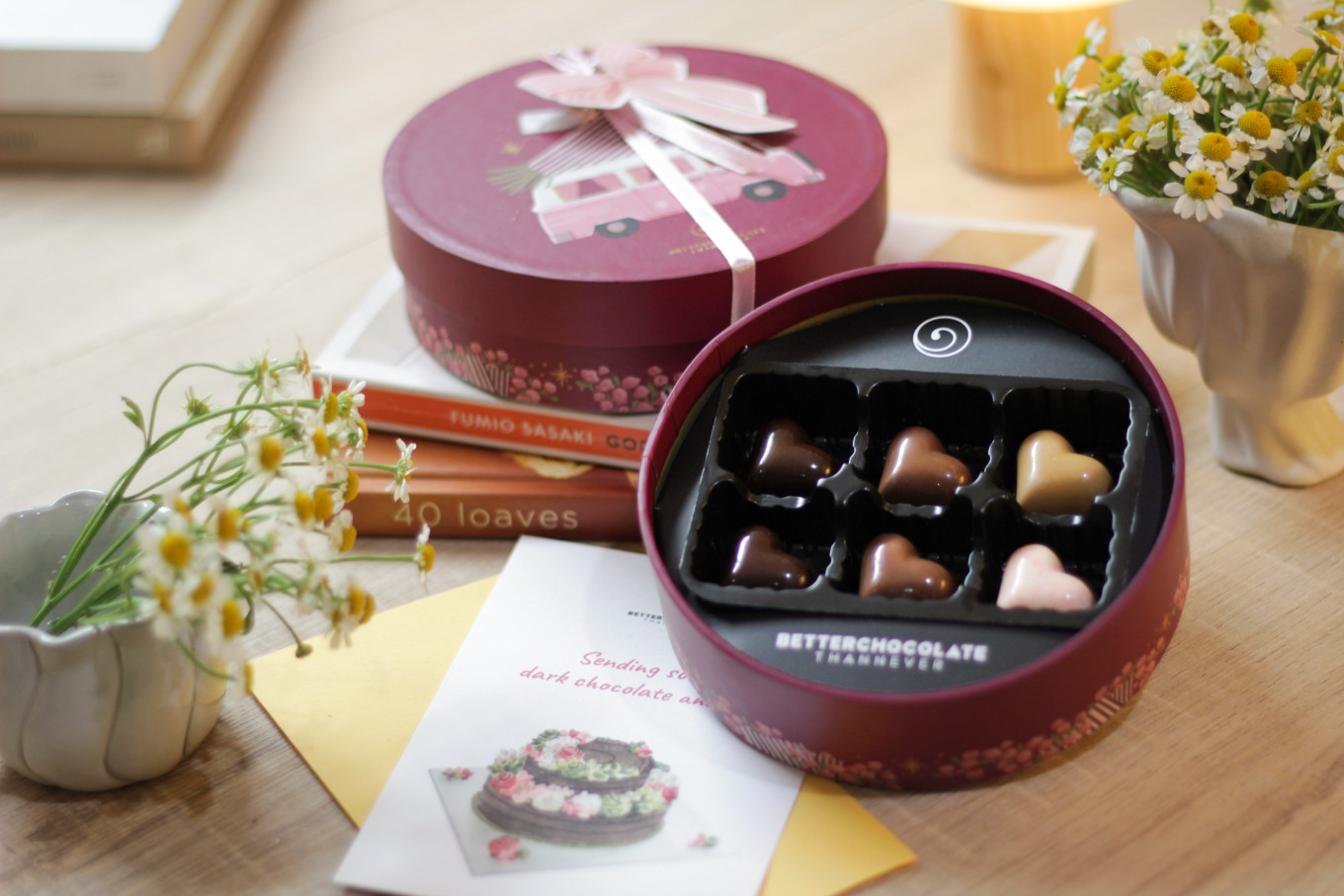
SCBD-based Aztec inspired, Kakaw and Panglima Polim’s dark chocolate expert, BetterChocolateThanNever report similar rhythms.
“Honestly, end-of-year celebrations usually give us the biggest spikes,” said Ci Maritzka, Kakaw’s marketing manager. “December has a lot of gift-giving—not just personal, but corporate too.”
“On February 13 and 14, we could see a four-fold increase in traffic at most,” said Mita, the manager of BetterChocolateThanNever. “But it's just those two days. During Eid and Christmas, it’s closer to double for the entire month.”
In other words: Valentine’s delivers a sharp spike, not a sustained lift.
For chocolatiers, the seasonal demand becomes a testing ground—limited flavors, exclusive packaging, short-run products—all designed to make the most of a brief period.
A maturing palate
Beyond the calendar, something else is shifting: taste. Milk chocolate still dominates, but Jakarta’s palate is widening.
“Indonesian customers have calibrated to the more nuanced flavors,” Tissa said. “They understand there's more than just chocolate bars.”
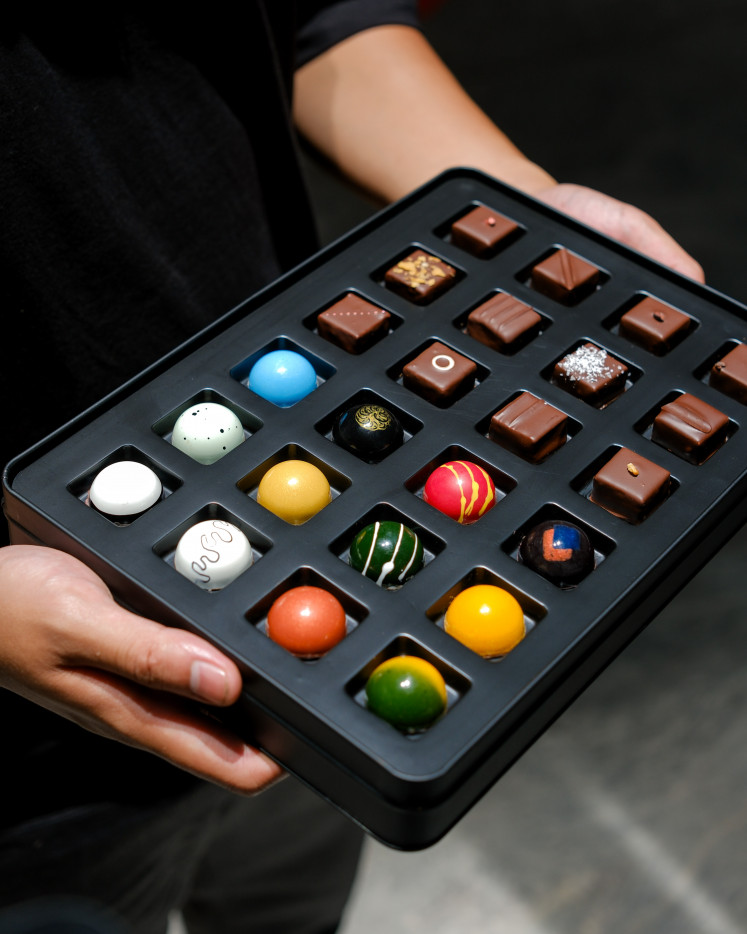 (Kakaw)
Over the past decade, demand has diversified. Chocolatiers now expand into adjacent products—cookies, cracks, dots—rather than relying solely on bars. Flavor collaborations are also becoming more popular with food trends, like matcha and kunafa. And with variety comes discernment.
“You could say that we’ve matured. There’s more awareness now around cocoa percentages and how they change flavors,” Mitta added. “There’s also more appreciation for dark chocolate.”
Health considerations play a role.
“Of course dark chocolate isn’t healthy,” Ci Maritzka laughed. “But it’s healthier because it's less sweet.”
Consumers are no longer buying chocolate just to satisfy a sweet tooth. Increasingly, they’re buying craft, origin and percentage—experiences that justify higher price points in a market under pressure.
Supply strain
That pressure is real. Global cocoa prices surged 136 percent between July 2022 and February 2024, reaching $11,530 per tonne, up from an average of $3,182 the year before.
“For the past three years, we saw an insane hike. Depending on the supplier, prices rose threefold, some even fourfold,” Mita said.
Erratic weather disruptions linked to climate change and swollen shoot disease have hit yields in Ivory Coast and Ghana—the world’s two largest cocoa producers—sending shockwaves through the industry.
“Thankfully, we have a great supplier that helped us plan inventory ahead,” Mita said. “But we still had to gradually increase prices, though not as drastically as the surge.”
To adapt and survive, BetterChocolateThanNever began developing smaller, more accessible formats—bonbons, miniature cakes—without compromising ingredients. The key is to adjust the scale.
 (BetterChocolateThanNever)
“This global shortage affects all Indonesian chocolatiers,” Mita added.
Even locally sourcing brands feel the strain.
“Foreign businesses are now turning to our farmers,” Tissa said. “So prices are still going up regardless.”
Indonesia ranks seventh globally in cocoa production, producing roughly 200,000 tons in 2025. But rising external demand has narrowed margins at home.
“We can't just scale the price of our products with the cost increase. We don’t want to do that either,” Tissa said. “So for now, we just absorb the thinner margins and stay creative.”
Pipiltin Cocoa has expanded into chocolate drink powders and soft-serve ice creams, diversifying to stay afloat amid volatility.
Supply is slowly recovering, but stability is far from guaranteed.
So, when you pick a box of chocolate this Valentine’s week, you’re buying more than a safe romantic gesture. You’re buying into a global supply chain, thinner margins and an industry adjusting in real time.
The fantasy may be sweet. The business behind it is anything but.
Aqraa Sagir is a writer for The Jakarta Post's Creative Desk. He’s chronically online in the hope it would be a useful asset for the job.