Here’s a thought experiment: if you could construct a life partner from scratch, what would they be like?
Would they mirror you, or be your opposite? A homebody with stable income, or someone with a travel itch? Ambitious and dominant, or soft-spoken and steady? Would they share your background, your religion, your social class?
These are the kinds of questions matchmakers start with. And most of us have answers ready.
We’ve been taught to have standards, to be bold about what we want and to articulate preferences clearly—even if it means admitting that, as women, that we want financial stability in a partner while still believing in equality.
We can insist on emotional intelligence, ambition, a good family background and an attractive appearance. No shame.
But how much of that list comes from deep introspection—and how much is inherited from society? Could some of our criteria be less about compatibility and more about unresolved fears we haven’t examined?

Thank you!
For signing up to our newsletter.
Please check your email for your newsletter subscription.
When I spoke to matchmakers, one thing stood out: People can be startlingly specific.
“Clients tell us, ‘I don’t want Javanese or Sundanese,’ or ‘I don’t want someone dark-skinned,’ or ‘Are their parents nosy?’” says Yasher Fadhli, co-founder and CEO of Ranum, a matchmaking and coaching platform.
“To be honest, we know our clients’ dark secrets better than their therapist.”
It’s uncomfortable, but it’s also revealing.
Maybe what we say we want says more about us than the person we’re hoping to meet.
For a long time, I assumed matchmakers were for people running out of time—tired of first dates, drained from apps, anxious about the clock. But what if matchmaking isn’t a last resort? What if it’s a way to become more intentional and more honest about how we date?
When dating gets tiring
At some point in adulthood, dating shifts. It stops feeling spontaneous and starts feeling strategic.
We calculate, we protect our time and we assess long-term viability by the third date. We wonder about timelines—marriage, children, financial stability—even before we know if we like the way they laugh.
Meanwhile, dating apps promise abundance but often deliver fatigue.
“Most people are tired of online dating apps. Too many scams and catfishing,” says Angie, co-founder of Chindomatch and Indomatch, which cater primarily to minority groups such as Chinese Indonesians and Catholics.
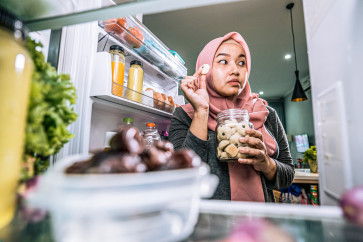
(Shutterstock)
And in Indonesia, dating rarely exists in a vacuum. Social or family pressures often demand that we conform to traditional Asian values, including the stubborn insistence to marry within the same race, religion and social class.
“Some people come to matchmakers after already going through self-assessment,” said Coach Anez, a certified matchmaker and dating coach at Ranum. “They’ve had relationships before, maybe even a marriage. They come ready, knowing what they want and what to expect.”
From there, matchmakers sift through their database of clients and professional networks to find potential matches that fit your criteria. A typical contract lasts around six months, during which clients are usually introduced to at least two matches, sometimes more.
Still, even with structure and guidance, it doesn’t always work. Because, as it turns out, many of us are still surprisingly clueless about dating.
“Many people expect us to find someone who matches TikTok standards: tall, rich, fair-skinned,” said Angie.
Sure, there’s no judgment if that’s your preference. But it does raise a harder question: Do we really know ourselves well enough to decide what we actually need in a partner?
Do we really know ourselves?
It’s a tricky question.
I’m the kind of person who ruminates excessively and calls it self-reflection. Years of journaling have made me feel reasonably confident about what I want from life and relationships. I’m quite good at turning failed relationships into “lessons”.
Social media has also made us think we’re fluent in relationship language. We’ve watched all the TikToks and Instagram reels. We know about attachment styles, different love languages, avoidant tendencies and trauma bonds.
Information is everywhere. But application? That’s another story.
“It’s easy to get information,” said Anez. “But it’s another thing to apply that knowledge in real life. So people end up overthinking without resolving anything.”
Friends don’t always help either. Their advice may come from genuine care, but also from their own wounds and biases.
“What works for them doesn’t always work for us,” Anez said. “We’re pairing two complex human beings.
That’s where matchmakers offer something different: perspective.
They listen to your criteria. Then they ask why. They assess whether your hesitation about a second date is a genuine concern or a knee-jerk reaction. Whether your standards are boundaries or defenses.
Many clients come in thinking they’re outsourcing the exhausting part of dating. But what they often gain is clarity about themselves.
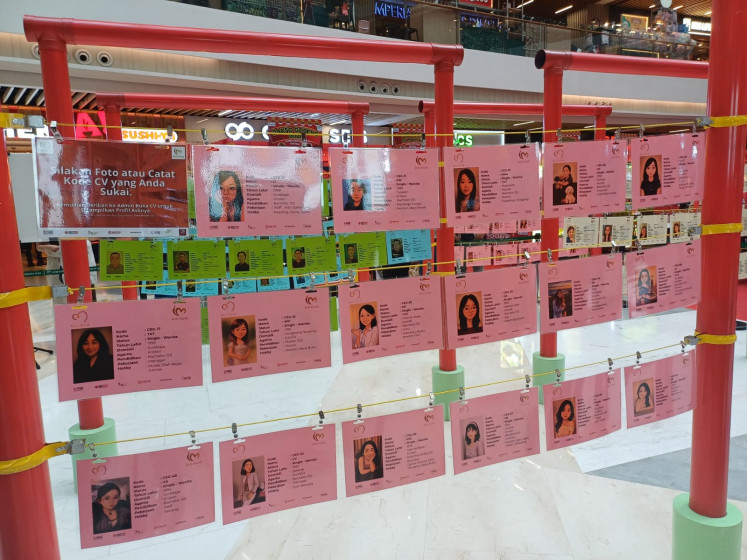
(JP/Michelle Anindya)
“I found a support system through Chindomatch’s WhatsApp group,” said Eva, 38, who is set to marry the man she met through the group last June.
“It was unexpected, but lasting. We learn from each other—mostly women—about upholding our standards instead of compromising.”
The match wasn’t the only outcome. The community was.
It’s not really about marriage
Contrary to popular belief, matchmakers don’t guarantee marriage. Nor should clients expect one.
Whether it’s private consultations, group programs, or curated introductions, the process usually circles back to the same uncomfortable questions: What do you value? What are you afraid of? Are you actually emotionally ready?
Matchmakers can help assess whether you’re equipped to handle the turbulence of a relationship—or whether you still need some guidance. They can pull you out of your own irrational fears and blind spots, offering a perspective that’s more pragmatic than emotional.
After all, finding a life partner goes hand in hand with finding yourself.
Ranum, for instance, offers a “single incubator” program before matchmaking, where clients undergo psychological assessments and build practical relationship skills.
“When they feel more secure for a relationship, we move on to matchmaking,” Anez said.
Even within the program, strategy matters. Should you go on a second date? If you’re unsure, is that intuition—or avoidance?
“If someone hesitates, we evaluate it,” Angie said. “Is it genuine concern or just fear?”
Matchmaking, then, isn’t about handing over your love life to a professional. It’s about borrowing a clearer lens, because sometimes the real problem isn’t that we don’t know what we want. It’s that we’ve never examined why we want it.
And maybe that clarity—whether or not it leads to marriage—is the real return on the investment.
Michelle Anindya is a writer and journalist. From her home in Bali, she writes about anything from coffee to tech.