(JP/Michiko Sarah)
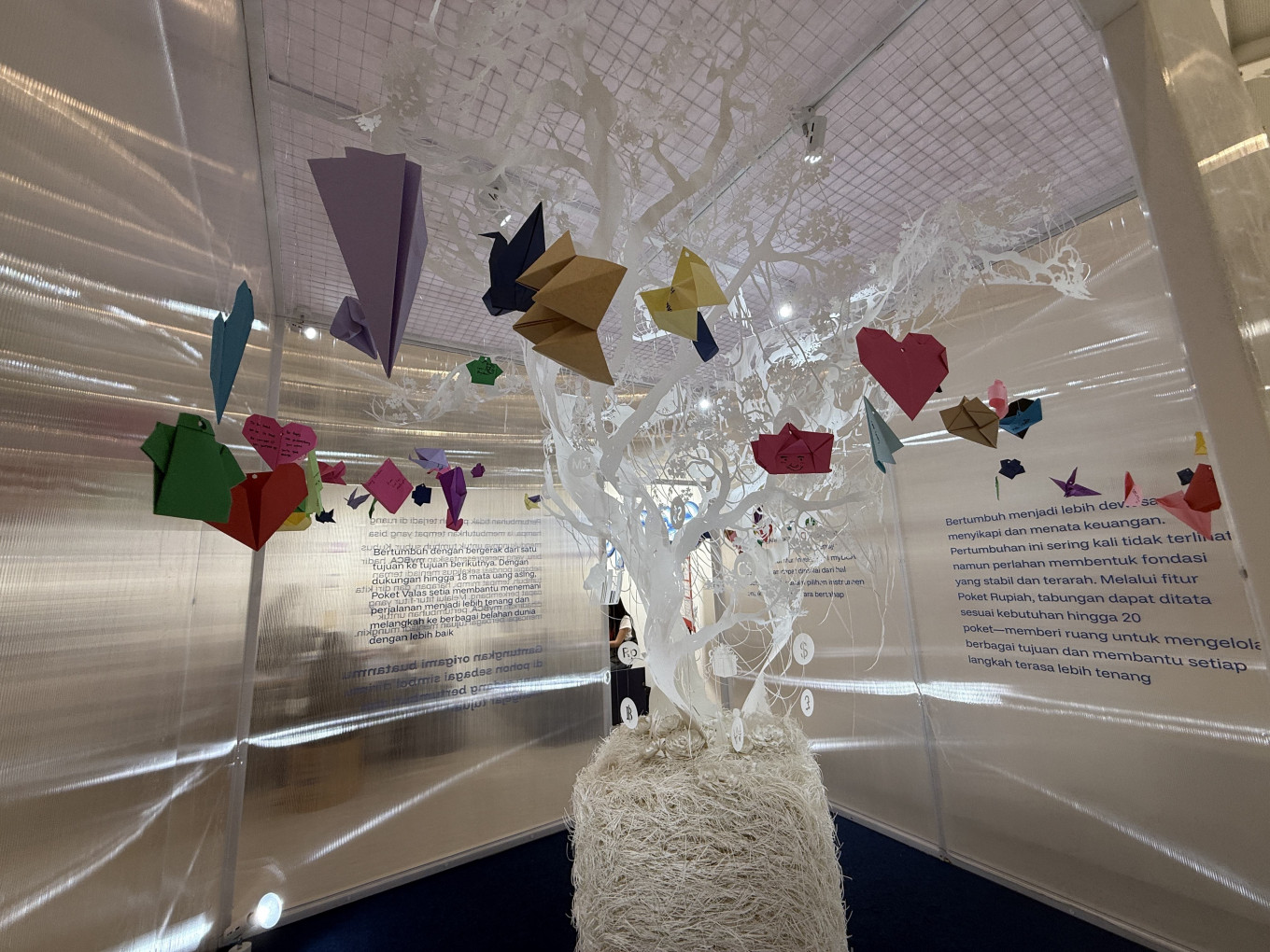
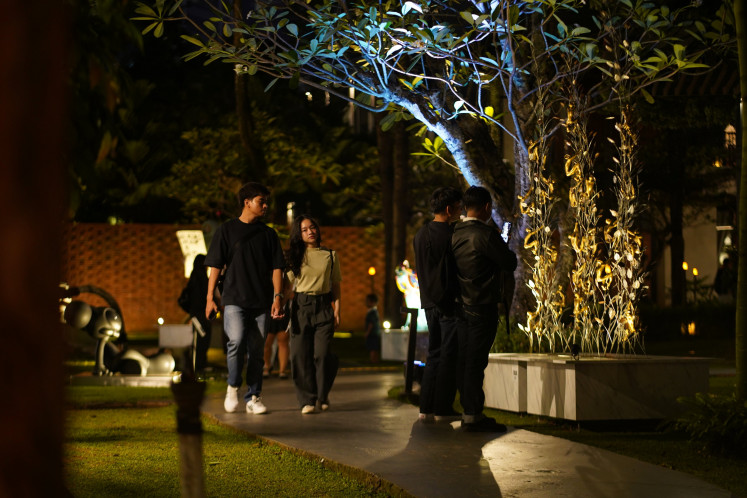
On a recent weekend jaunt to the inaugural Art Jakarta Papers at the City Hall in Pondok Indah Mall 3 in South Jakarta, I came upon a tree, its branches holding the hopes and dreams of those who encountered it.
Tucked inside a branded BCA booth, behind the credit card salespeople, stood the tree, as white as the meticulously hand-cut paper that formed it from root to branch.
Everlasting yet ephemeral, the art fair lasted all of four days, and robust yet delicate; it is paper, after all. A fitting reflection, perhaps, of the images we project and the imminent nature of everything.
The tree, I later found out, was the work of Yogyakarta-based, Aceh-born artist Rudy “Atjeh” Dharmawan, who for the past decade has extensively used intricate paper cut-outs as his medium of choice. The piece was commissioned by BCA for Art Jakarta Papers.
Beauty in contradictions
“Paper first attracted me for its paradoxical nature: it is fragile, yet capable of holding complex forms and histories,” Rudy tells me.
Thank you!
For signing up to our newsletter.
Please check your email for your newsletter subscription.
From legal documents to gorengan (fried food) wrappers, paper is naturally a part of our daily lives. We rarely think about it, unless perhaps you're an arts student on an assignment or a finance manager trying to find the cheapest office supplier.
For Rudy, though, the humble and accessible paper carries strong symbolic and conceptual potential. Even the simple act of cutting paper is filled with intention and reflection.
“Through cutting and perforating paper, I began working with absence as much as presence, the act of removing material becomes a way of drawing,” he says.
“The process of cutting paper is slow and meditative; it requires discipline, repetition and full attention, transforming the act of creation into a kind of ritual.”
This, he explains, resonates with his birthplace of Aceh, where faith, structure and daily practices shape both individual and collective life. Combined with the cultural significance recorded in paper, each cut becomes a gesture of remembering and reinterpreting personal history, landscape and cultural narratives.
Over time, paper became the conceptual foundation of his practice. Its fragility reflects the instability of memory and identity, while its ability to be layered and structured allows him to construct symbolic spaces where personal experience intersects with faith, authority and everyday life.
“In this sense,” he says, “paper is both my medium and my metaphor.”
Combining mission with vision
With paper taking center stage at the aptly named Art Jakarta Papers, Rudy’s paper tree stands as a metaphor for human life. Roots represent fundamental principles. The trunk symbolizes resilience and discipline. And branches signify the different phases of growth over time.
“Each branch embodies the results of past investments in time, knowledge and effort,” he explains.
“When life is well managed, individuals gain autonomy and direction. The work emphasizes patience, long-term planning and consistency.”
As a commissioned piece for a financial institution, the tree also engages with themes of growth and responsibility. Rather than translating corporate language literally, Rudy interprets them through interactivity by way of origami, a paper-based practice that’s “accessible yet challenging, much like the journey of human life itself.”
His rationale for interactivity is for viewers to become part of the artwork rather than staying as passive observers, contributing to the collective visual experience. Visitors were invited to fold origami tied loosely to the booth’s themes, though many messages I spotted leaned more toward self-love than savings goals.
For Rudy, collaboration begins with dialogue, where he aims to understand the values and objectives of the commissioning body while remaining faithful to his own artistic language. Balance, he continues, comes from finding shared conceptual ground where both can speak honestly without one dominating the other.
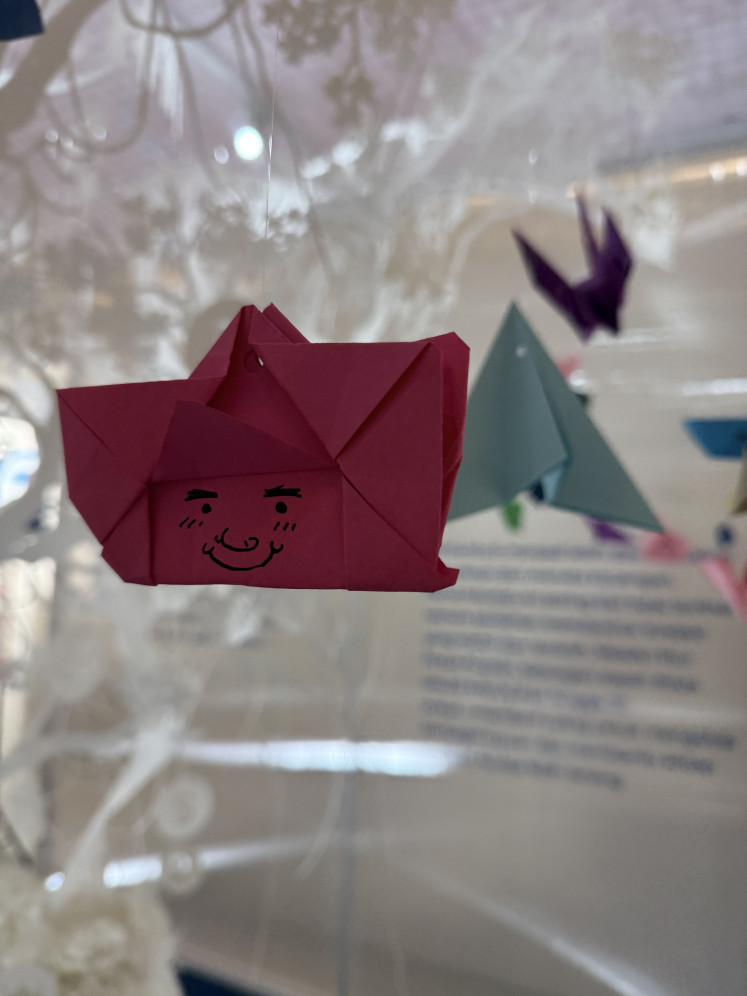 (JP/Michiko Sarah)
For this piece, the shared ground was growth, responsibility and long-term sustainability. Interactivity also helped maintain this balance, as the participatory nature of the work encourages contemplation as opposed to solely delivering a fixed message.
“I believe collaboration works best when it preserves critical distance while building connection, creating a meaningful dialogue between artistic inquiry and public engagement.”
A space to reflect
Between the interactive nature and Instagram-friendly visuals, Rudy ultimately wishes for visitors to be able to connect his work to their respective life journeys, whether they hang an origami star or pose for a new profile picture.
“This work conveys that nothing meaningful happens instantly. Growth requires patience, discipline and care. The metaphor of the tree and the act of folding origami point to how small, consistent actions accumulate into larger transformations,” he said.
“I hope the encounter encourages them to pause and reconsider how their actions shape who they are becoming.”
As for his future projects, he aims to continue opening spaces for dialogue between memory and the present, between personal experience and collective values.
“If there is one thing I want to convey, it’s that progress does not mean forgetting where we come from. Fragile materials can carry strong ideas, and art can be both simple and profound, inviting us to reflect, participate and grow.”
And that, I suppose, is what draws us to love paper, especially pieces printed with the faces of presidents.
Josa Lukman is an editor and head of the Creative Desk at The Jakarta Post. He is also a margarita enthusiast who chases Panadol with Tolak Angin, a hoarder of former "it" bags and an iced latte slurper.