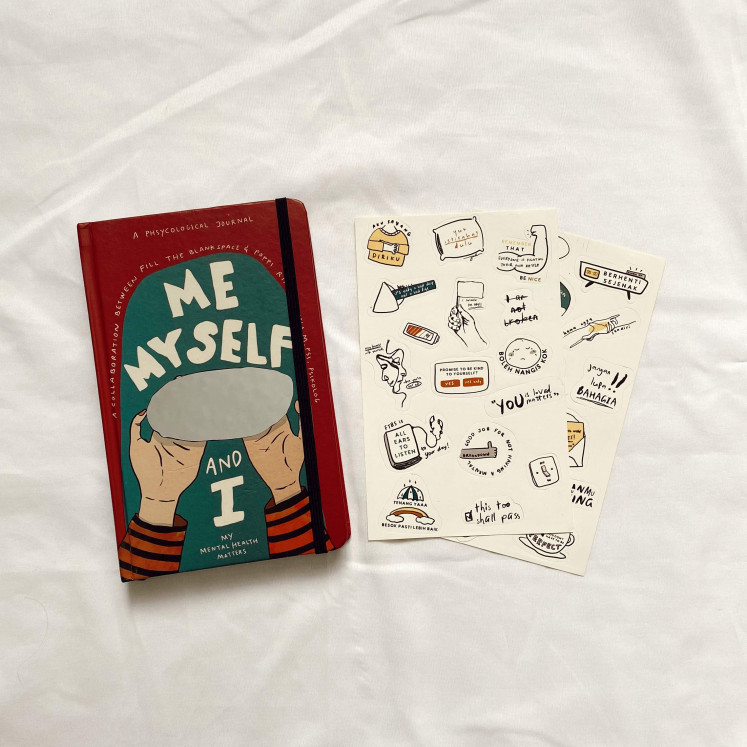
(Fill The Blankspace)
When you hear the words “budgeting” or “financial planning”, your brain might instinctively reach for the snooze button. Rarely do those tasks mix with fun, let alone be something you’d curl up with on a Sunday afternoon.
That’s exactly the gap that financial educator Aliyah Natasya and the team at Fill The Blankspace (FTBS) wants to close.
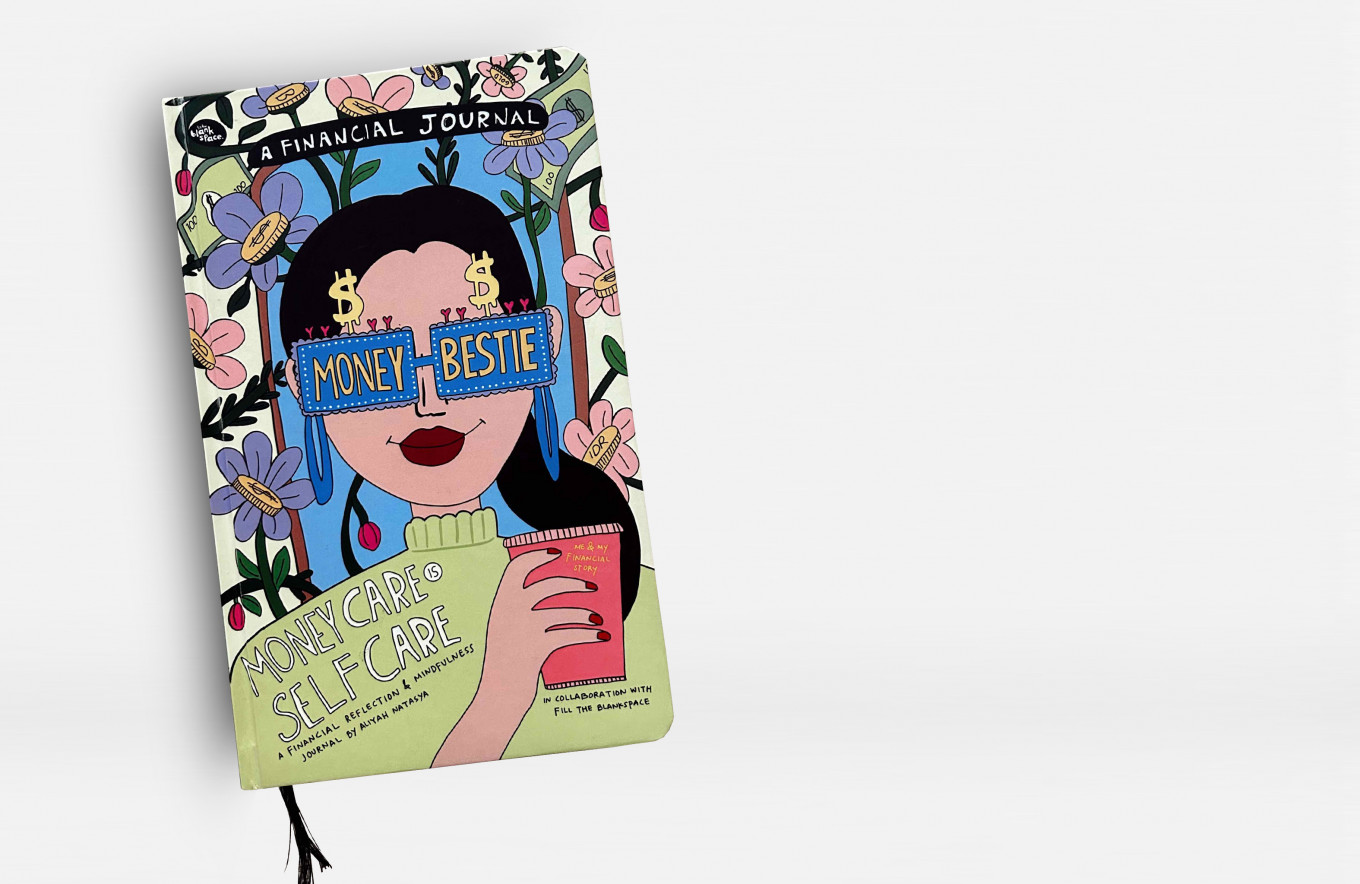
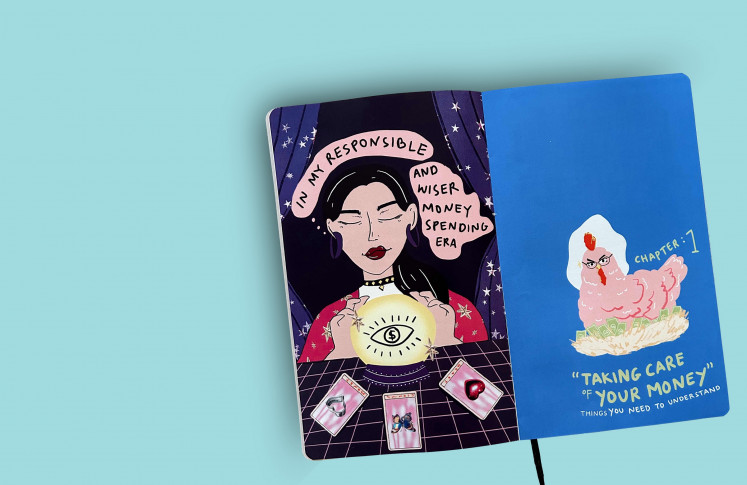
Published last month, A Financial Journal: Money Bestie marks Aliyah’s first foray into publishing. But it’s far from a conventional finance manual.
 (Fill The Blankspace)
Part journal, part guide and part gentle, big sister nudge, instead of lecturing about budgeting, debt management and investing, it invites you to sit down and get honest about your relationship with money.
The book isn’t just meant to be read. It also asks you to write down your first memory of money and answer multiple-choice questions about your spending habits, confronting potentially unhealthy patterns and perspectives.

Thank you!
For signing up to our newsletter.
Please check your email for your newsletter subscription.
“Money is very personal, so you need moments to reflect on how these concepts apply to you as you are reading,” Aliyah says.
“There aren’t many of these kinds of books that actively encourage self-reflection.”
Whether you’re fresh out of senior high school, earning money on the side or decades into your career, the book makes one thing clear: Personal finance is never one-size-fits-all.
Our upbringing shapes how we spend, save and invest. Understanding our past encounters with money is essential to improving how we manage it in the present, as well as how confidently we build toward the future.
And maybe the first step is admitting we don’t actually talk about it enough.
More than numbers
“When I was little, I went through a financial downgrade. After that, I promised myself that I must always understand how to properly manage my money,” says Aliyah, who has built her career around money.
She holds a master in economic competitiveness and international business and has spent nearly a decade in banking services, from wealth management to product development.
“For me, it's not necessarily a difficult activity, but it is for many Indonesians. I want to help people overcome that,” she says.
Today, Aliyah focuses on financial literacy for women through platforms like Instagram community Mama Bisa Investasi (@mamabisainvestasi), or “moms can invest”, and DNA Finance, a consultancy aimed at helping women achieve financial independence on their own terms.
Still, something felt missing: accessibility.
“I thought the book would resonate most with new moms, given the community I’ve fostered,” Aliyah says.
“But a wide mix of people have reached out to me, sharing their positive experiences. I’ve gotten messages from people in their early 50s, even.”
 (Fill The Blankspace)
Many shared the same thing: They said they wished a book like Money Bestie existed when they were younger.
“Nobody talks about money in a fun, ‘big sister advice’ kind of way. It used to be just in the newspaper, and that's how I and the preceding generations grew up,” Aliyah recalls.
In the section on financial planning, she writes: Every big dream in life can happen if you know what you have to do.
It feels less like a lecture and more like someone rooting for you.
Making finance fun
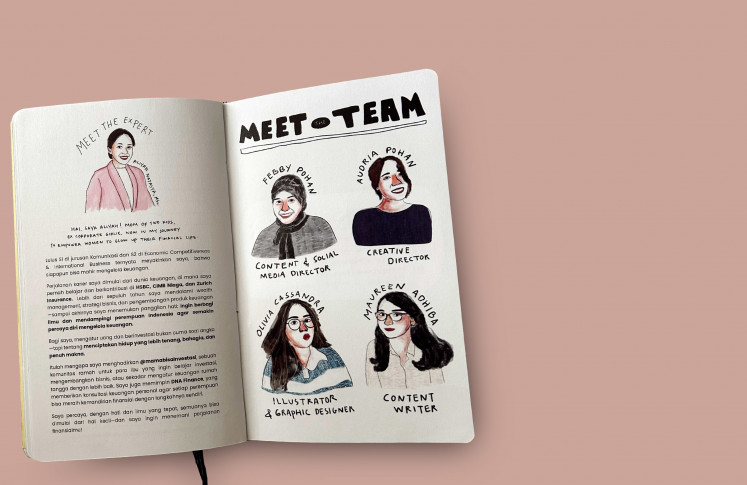
Money Bestie came to life through a collaboration with Eka Wulandari, cofounder of and creative lead at FTBS.
“I’m only good at Excel,” Aliyah laughs. “Eka and her team are good at turning daunting financial concepts into charming illustrations and thought-provoking prompts that fit a journal format.”
 (Fill The Blankspace)
The process took nearly a year. Aliyah began drafting the informational backbone in late 2024, with the interactive elements that arguably form the heart of the book taking longer to refine.
“Up to November [2025], we tinkered a lot with the interactive parts of the book. Our team learned a lot about the world of finance during the process,” Eka says.
“Because of our fresh eyes, we could turn Aliyah’s ideas into an accessible do-it-yourself kind of experience, because we're amateurs too.”
FTBS, known for its time management journals, yearly dream planners and a mental health guide, approached finance as it would with other intimidating subject: by softening the entry point without diluting the substance.
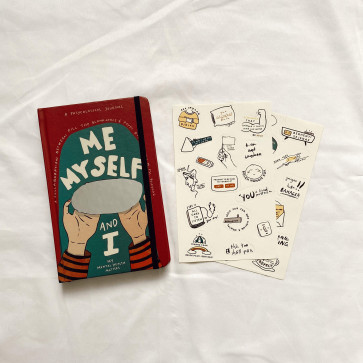
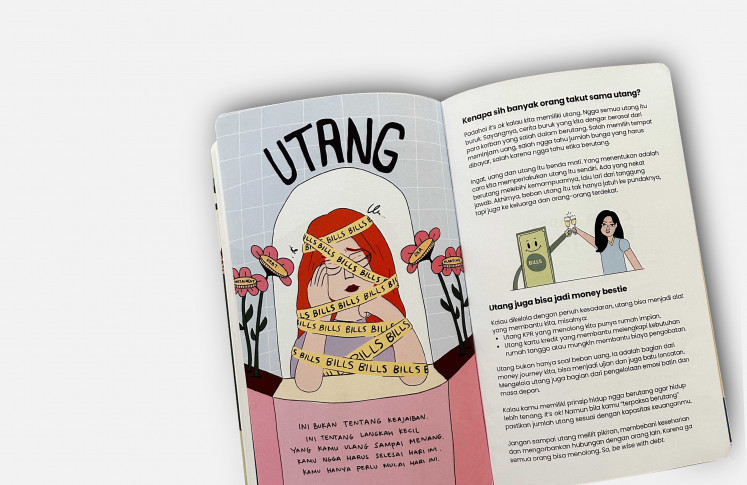
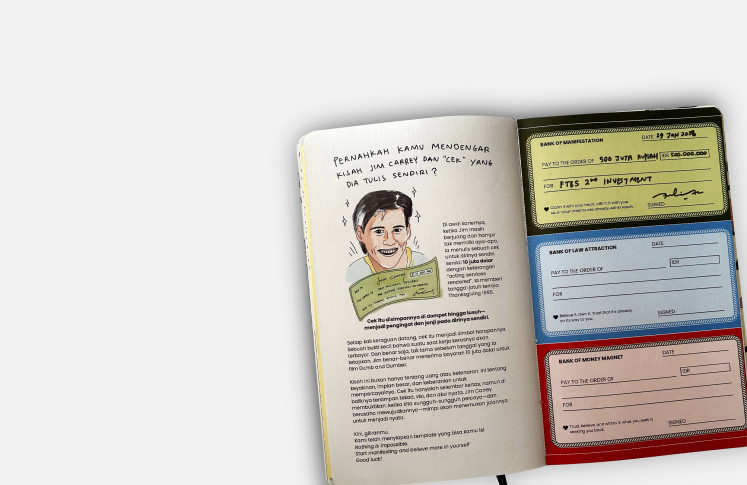
Instead of plain spreadsheets and technical graphs, Money Bestie’s pages feature caricatures and doodles. The rise in gold prices since 1998 is illustrated. Spending can be divided into mason jars. There’s even a Jim Carrey illustration tucked inside.
“That was the main issue, right? Finding balance between the serious topics and making them fun,” says Eka.
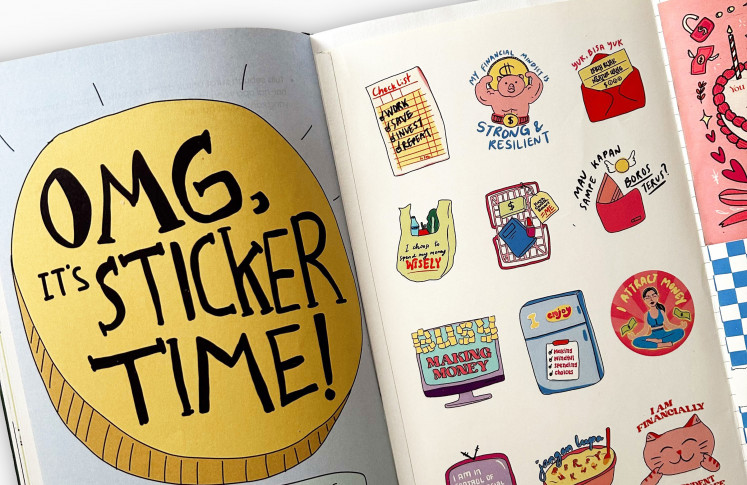
The design feels friendly and approachable with playful stickers and catchy images, particularly for younger readers who are encountering financial concepts for the first time.
Manifesting money
Among the many prompts, one section stands out for Aliyah.
“There’s this one part I like a lot, the manifest section,” she says.
“The best way for you to manage your emotions financially and to save is to have your dream be bigger than your fear.”
This section features three blank checks from the Bank of Manifestation, the Bank of Law Attraction and the Bank of Money Magnet. You’re invited to fill them out with any amount for any purpose.
 (Fill The Blankspace)
According to Aliyah, financial planning starts with ambition.
“Huge aspirations are so important because if your goals are too small, you will make excuses,” she says.
Eka gravitates toward a more introspective section of the book.
“There’s this part of the book that urges you to figure out the root cause of why you currently handle your money a certain way. This pushed me to process my childhood in a way that never even crossed my mind.”
She now thinks about giving her kids a different experience, one that is free from the habits she had to unlearn.
Mindset first
At its core, Money Bestie is less about spreadsheets and more about self-awareness.
“The goal is to know yourself more,” Eka says. “Because if there's no internal understanding, no matter how many budgeting templates you follow, at its core, you won’t relate the act of financial management with your own goals.”
Aliyah hopes Money Bestie will help lower the emotional barriers surrounding money, especially anxiety and fear.
“I hope we can change the insurmountable myths surrounding personal finance, because now it’s so accessible to start being smart about your money.”
 (Fill The Blankspace)
Whether it is through sticking with a disciplined budget, practicing mindful spending or delving deeper into investments, there's now no shortage of platforms that can help you gain financial literacy, no barriers limiting people on how they use their funds.
“In 2010, you needed maybe Rp 100 million to invest in mutual funds, now nothing is stopping you from starting with Rp 10,000,” Aliyah says.
“But there is still that fear of using your money this way. This mindset is what we hope we can help shift.”
Managing money, after all, isn’t just arithmetic. It’s also to do with habit, personal ambition and education, all mixed together.
Perhaps that’s why a journal, not a textbook, makes sense. Because before we manage our money, we have to understand ourselves first.
Aqraa Sagir is a writer for The Jakarta Post's Creative Desk. He’s chronically online in the hope it would be a useful asset for the job.