Last year, Jumbo did something rare: it told an original animated story full of heart, hit 10 million tickets and briefly became the highest-grossing Indonesian film of all time. It also cemented Ryan Adriandhy as a director to watch, until Agak Laen swooped in and took the top spot in December.
So what do you do after that kind of success?
If you're Ryan, you take on a different kind of challenge, no less ambitious, but rooted in a different kind of wonder.
This Eid, he returns with Na Willa, a live-action feature adapted from a beloved novel by Reda Gaudiamo. The story, loosely inspired by Reda’s own childhood in the 1960s, follows a Chinese-Indonesian 5-year-old girl seeing the world for the first time, asking why she’s treated differently, wondering who lives inside the radio and trying to take it apart to find out.
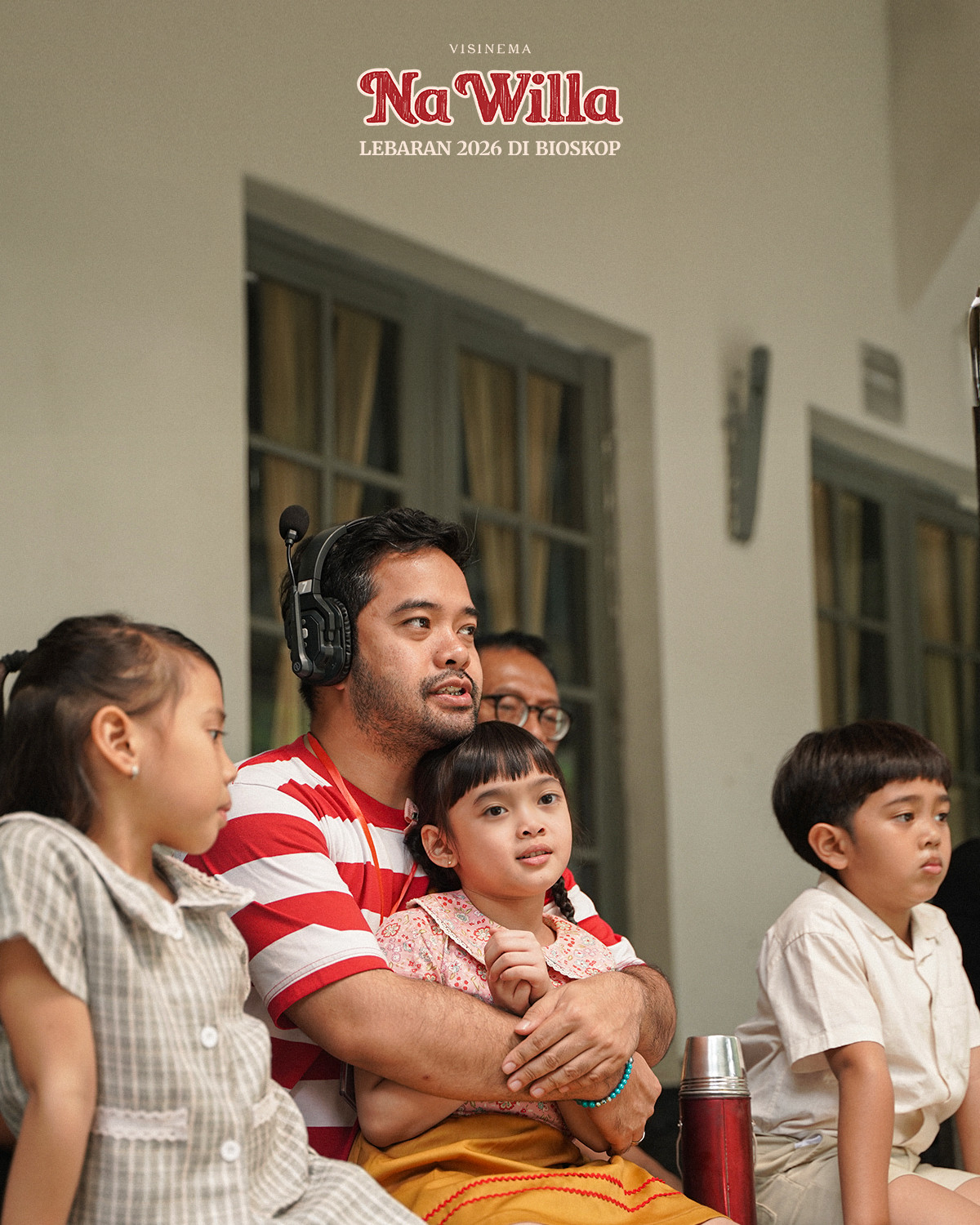
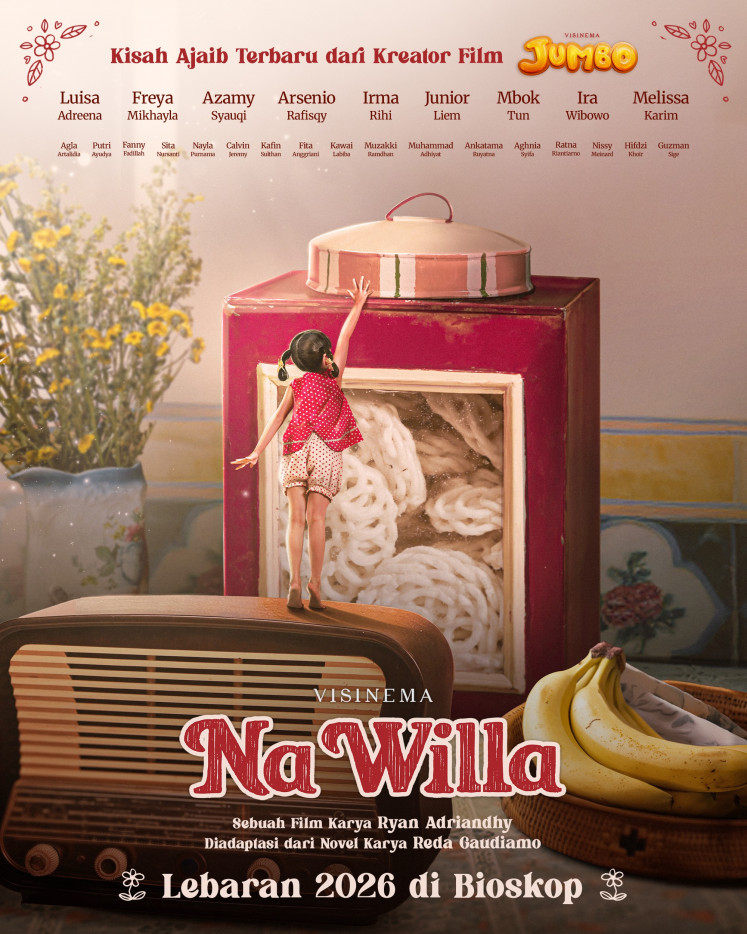 (Visinema Pictures)
The book, written in the voice of a curious child, is filled with tiny moments that land like memories. Her disarming honesty and wide-eyed wonder have made thousands fall in love with her, resonating both with other curious children and with grown-ups who suddenly remember what it felt like to be five and full of questions.
Thank you!
For signing up to our newsletter.
Please check your email for your newsletter subscription.
And now, Ryan is trying to bring that same feeling to the screen.
How a book finds you
Ryan first noticed Na Willa in a bookstore years ago, intrigued by the title but not enough to buy it.
Later, during the pandemic, Reda re-entered his orbit in an unexpected way: TikTok. Her soft-spoken “Hai, Nak” videos, where she gently lectures the internet like a loving mom, gained her over 350,000 followers. Ryan was one of them.
Then, during the filming of Domikado in 2022, a crew member’s twins brought the book to set. Their kindergarten had made Na Willa required reading, not just for literacy, but to teach things like math. That stopped him. A fictional story, being used for actual learning?
He finally read it and was immediately sold.
It’s easy to see why. First published in Indonesia and distributed independently, Na Willa went on to win the 2018 Franz Kafka Prize for Children’s Literature, and was later published in English by The Emma Press. It never topped sales charts, but the book traveled widely, passed from reader to reader, teacher to child, parent to memory.
When he pitched the idea of adapting Na Willa, he knew he wanted to direct it himself. The producers said yes. But the person who mattered most didn’t, not yet.
Earning the author’s trust
Na Willa isn’t a plot-heavy book. It reads more like a collection of small moments, filtered through the inner world of a child. That made adapting it, tricky.
“I kept thinking of it like My Neighbors the Yamadas,” Ryan says, referencing Studio Ghibli’s slice-of-life animated film.
Even after he developed a workable feature-length plot, Reda wasn’t convinced. Known for fiercely protecting her work, she’d already turned down multiple adaptation attempts. On a panel at JAFF Market, Ryan heard her pose the same question again and again: What will the story feel like?
Some directors had wanted to modernize the setting, like swapping the radio for a tablet. That, for Reda, was a nonstarter.
Ryan’s first pitch didn’t land. Instead of a rejection, she sent him something else: a kind of letter explaining what the character Na Willa means to her, the feelings behind it, the things that didn’t fit neatly into a screenplay.
That was the turning point.
Ryan realized the film couldn’t just tell the story. It had to feel like a child’s point-of-view. Na Willa had to be small, the world around her oversized and wonder had to live in the corners.
The film’s first poster captures it: Na Willa, tiny, stands on top of a radio reaching for a giant jar of crackers. That was what finally convinced Reda to say yes.
From drawing to directing
Though Na Willa is his first live-action feature, Ryan still approaches filmmaking like an animator. He storyboards everything.
“As an animation director, I storyboard everything,” he says.
Live action, though, moves faster and is less forgiving.
“You don’t need five years to make a film,” he jokes, referencing Jumbo’s famously long production.
But that animation discipline, the deep planning, the precision, gave him clarity. It helped him translate emotion into physical space.
I ask whether he prefers animation or live action, Ryan doesn’t choose. He wants both. Each form sharpens the other.
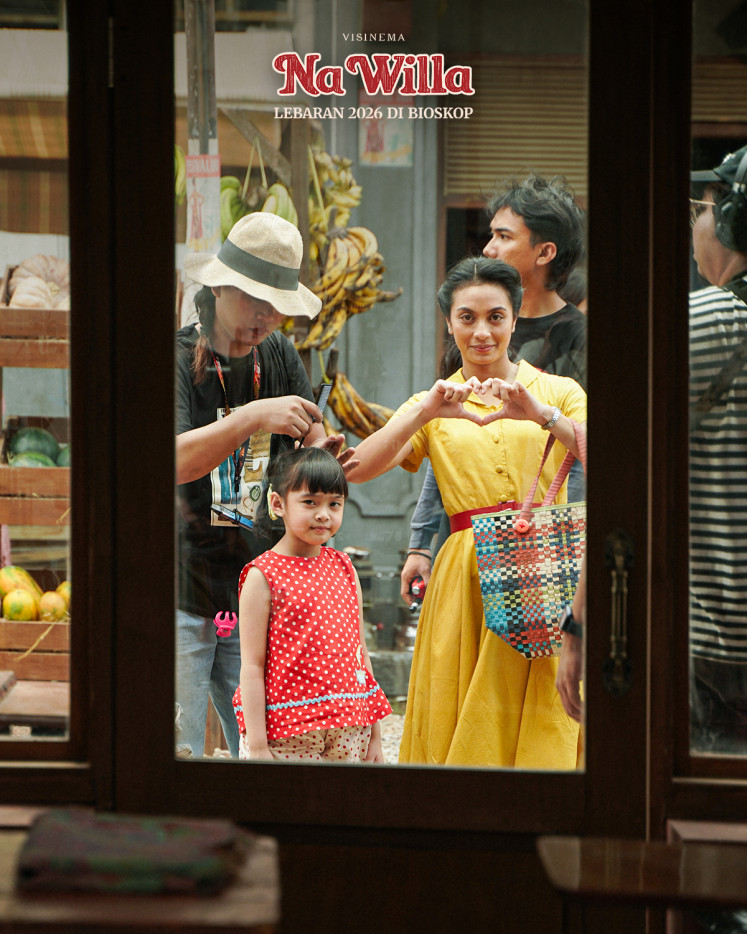 (Visinema Pictures/Jonathan Satriyo)
Whether Na Willa will match Jumbo’s massive box office numbers remains to be seen. But it doesn’t feel like a calculated follow-up. It feels more like a natural continuation of Ryan’s instincts as a storyteller.
Just like Jumbo, Na Willa rests on the belief that childhood memories, when treated with care and intention, can echo across generations. And maybe, during the quiet joys of Ramadan, that’s exactly the kind of story families will be ready to receive.
Reza Mardian is a winner of the Best Film Critic award at the Festival Film Indonesia 2024 and a “pawrent” to two rescued cats. He writes screenplays every time he finishes rewatching La La Land or Lady Bird.