(B/NDL Studios/Budhi Button)
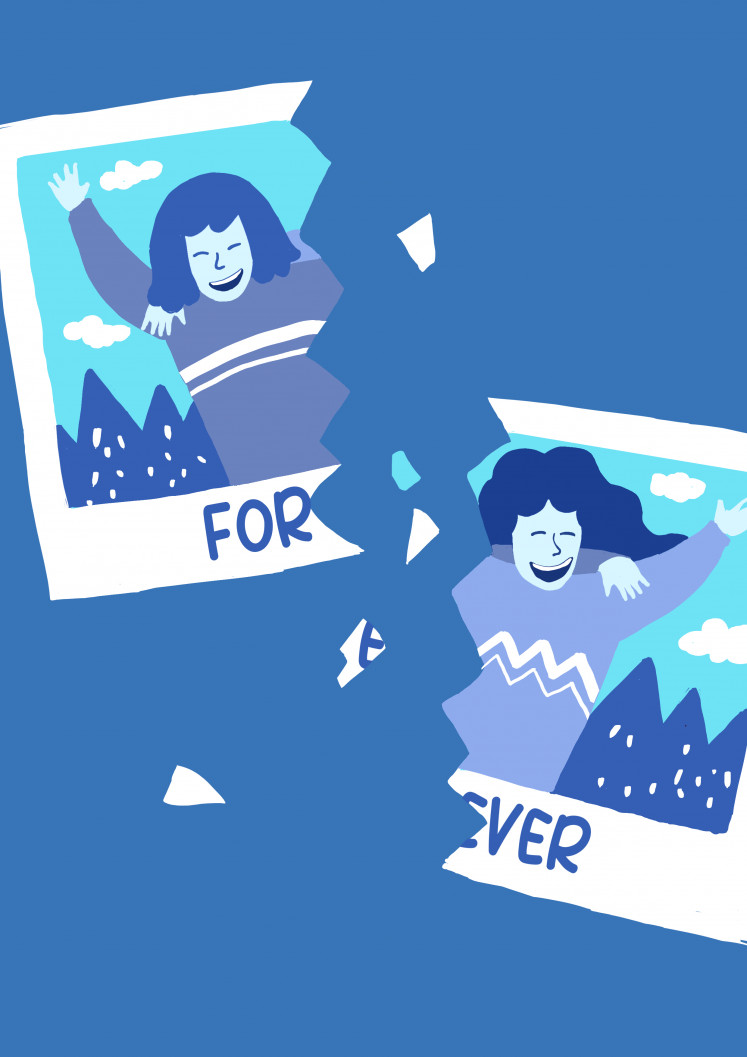
It started with a box of old Polaroids.
I was digging through it, looking for a throwback photo to post, just trying to keep up with a trending sound on social media. Then I found one from high school, taken a month before I left for college. A group of six of us, smiling like the world couldn’t touch us.
We once said we’d be friends forever. Turns out, forever wasn’t that long.
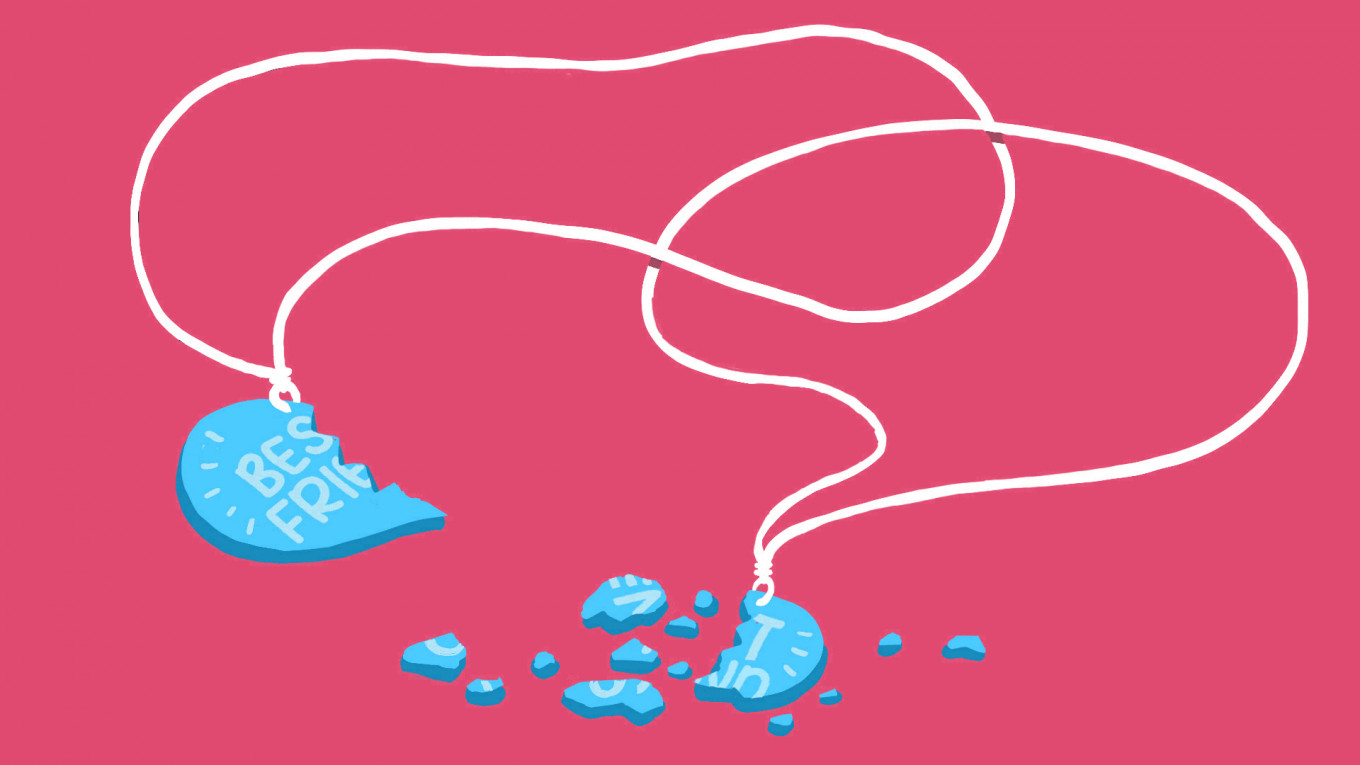
We tell ourselves that drifting apart is part of growing up, a natural cost of becoming new versions of ourselves. And maybe that’s true. Research shows your social circle tends to shrink after the age of 25, often continuing to contract through adulthood. But even knowing that, the unraveling of a friendship can still feel like a personal failing. Or worse, like grief without a funeral.
I thought I had it easy. I’ve never had a dramatic falling out. No screaming matches, no betrayal, no nail-in-the-coffin moment. But even the slow fades come with heartache, sadness, disbelief, guilt, regret. Even the happiest memories start to sting.
So what happens when the person who used to know you best no longer walks beside you? The road to healing after a friendship ends isn’t always mapped out.

Thank you!
For signing up to our newsletter.
Please check your email for your newsletter subscription.
The end of ‘us’
“When I look at my gallery and see old photos, it still feels like he’s still part of my life. But he isn’t anymore,” Dinda, 24, says of her childhood best friend, Kevin, who disappeared from her life after he got a new girlfriend.
“She asked him to create space between us,” Dinda said. “And he agreed.”
Unlike most cases of drifting apart, this wasn’t a matter of schedules or growing differences. It was a boundary drawn by someone else, enforced by someone Dinda once considered family.
“I kind of saw it coming,” Dinda admits. “When he told me, ‘I can't see you anymore’, I was so angry. Like, how could you? After everything I’ve done for you?”
Dinda says she was the only one who stood by Kevin after he cut ties with their shared friend group. They’d known each other since they were kids.
“I don’t even remember what life was like before him,” she says. “Like, how can you just toss me for someone that you barely know? He only knew that girl for less than a year.”
According to Grace Sameve, a child counselor at the International Wellbeing Center, friendship relies on three pillars: it’s voluntary, reciprocal and informal. When two of those crumble, like in Dinda’s case, the friendship often dissolves.
“Some theories say that friendship dissolution can happen in two ways. It can be a total dissolution, or it can be a friendship downgrade,” Grace explains.
The downgrade
The second, where it’s level or the degree of closeness that changes, is what happened to Biyan*, 42, whose friendship with Vienna* began in high school and ended after years of small, painful humiliations.
It came to a head at a wedding they attended with mutual friends. Everyone showed up with dates, except for Biyan, something Vienna made the butt of every joke that night.
Later, as Vienna became a mother, her tone toward Biyan turned patronizing. Conversations started with “You wouldn’t understand”, implying that without a partner or child, Biyan lacked wisdom or empathy.
The last straw came when Vienna told mutual friends they were no longer “on the same level”.
That pushed their downgraded friendship to a hard stop.
“It was exhausting,” Biyan recalls. “Even though I was the one who walked away, I feel like I was the one rejected.”
No road map
For some, the end of a friendship can hit harder than any romantic breakup. Grace believes the intensity of the grief can depend on your social needs and personality.
“People have different types of social needs, and these breakups hit harder for those with bigger social needs,” she explains.
In many cases, the hurt also runs deep because these friendships often begin earlier and form our sense of self.
“For kids in their preteens or primary years, the only social relationships they have outside of their family are friends. So if something happens to that, it hits hard,” Grace adds.
 (B/NDL Studios/Budhi Button)
Despite being so common, friendship breakups aren’t studied nearly as much as romantic ones. There’s little literature, few rituals and almost no language to process this specific kind of pain. We’re expected to just... move on.
But that might be changing. Grace says that there’s growing interest in studying friendship dissolution, though research is still fragmented and sparse.
“The need is increasing, because people are either getting married later or even choosing not to get married at all. So I think romantic relationships no longer define adulthood today,” Grace says.
So what helps us heal?
In her work with children, Grace sees something adults can learn from how kids handle friendship fallouts.
For one, children tend to drift apart over what adults might dismiss as “simple” reasons, someone didn’t want to share their toy, someone else joined a new group. But because the reasons are clear, and the emotions more openly expressed, resolution often comes quicker.
“Children are more introspective and would look inward,” Grace explains. “They ask themselves what happened, what they might’ve done.”
Adults don’t always do that. As we get older, our personalities are more set, and we’re more likely to blame the other person.
“It always takes two to tango,” she says. “And as we grow older, the idea of closure becomes more complex. Sometimes, saying sorry isn’t enough. So the real question is: Do we even need closure?”
Her advice is to start with reflection. “Take a step back and look at the situation objectively. What happened, really? What are you feeling, and why?”
This kind of self-inquiry is the first step toward healing. Grace adds that it’s not just about understanding the other person, it’s about recognizing how the experience affected you emotionally, and allowing those feelings to move through you.
And while the pain of losing a friend can feel isolating, support is essential. “We’re social beings,” she says.
“Of course, it’s hard to trust again after something like this. But seeking support from other social circles can be really helpful, even if it takes time.”
Leaving the door open?
As for whether reconciliation is ever possible, Grace said it depends.
Beyond the foundational qualities of friendship, being voluntary, reciprocal and informal, there are three other factors that matter: timing, communication and intent. If all three align, reconnection might be possible. But it should never be forced.
For Biyan, that door is firmly closed. “I burned the bridge intentionally for the sake of my mental health,” she says. “The way to heal and move forward is to focus on my own life and understanding myself better. For me, that’s self-love.”
Dinda, on the other hand, hasn’t ruled out a reunion. “I don’t hate him,” she says. “As strange as it sounds, I just can’t. But I think my biggest fear is that he’s no longer the person I used to know.”
“So if he does come back [...] I don’t know how we could go back to who we were.”
Sheena Suparman is a writer for The Jakarta Post's Creative Desk. She is based in Jakarta but wishes she could be anywhere else. She’s usually powered by coffee, chips and cheeseburgers.