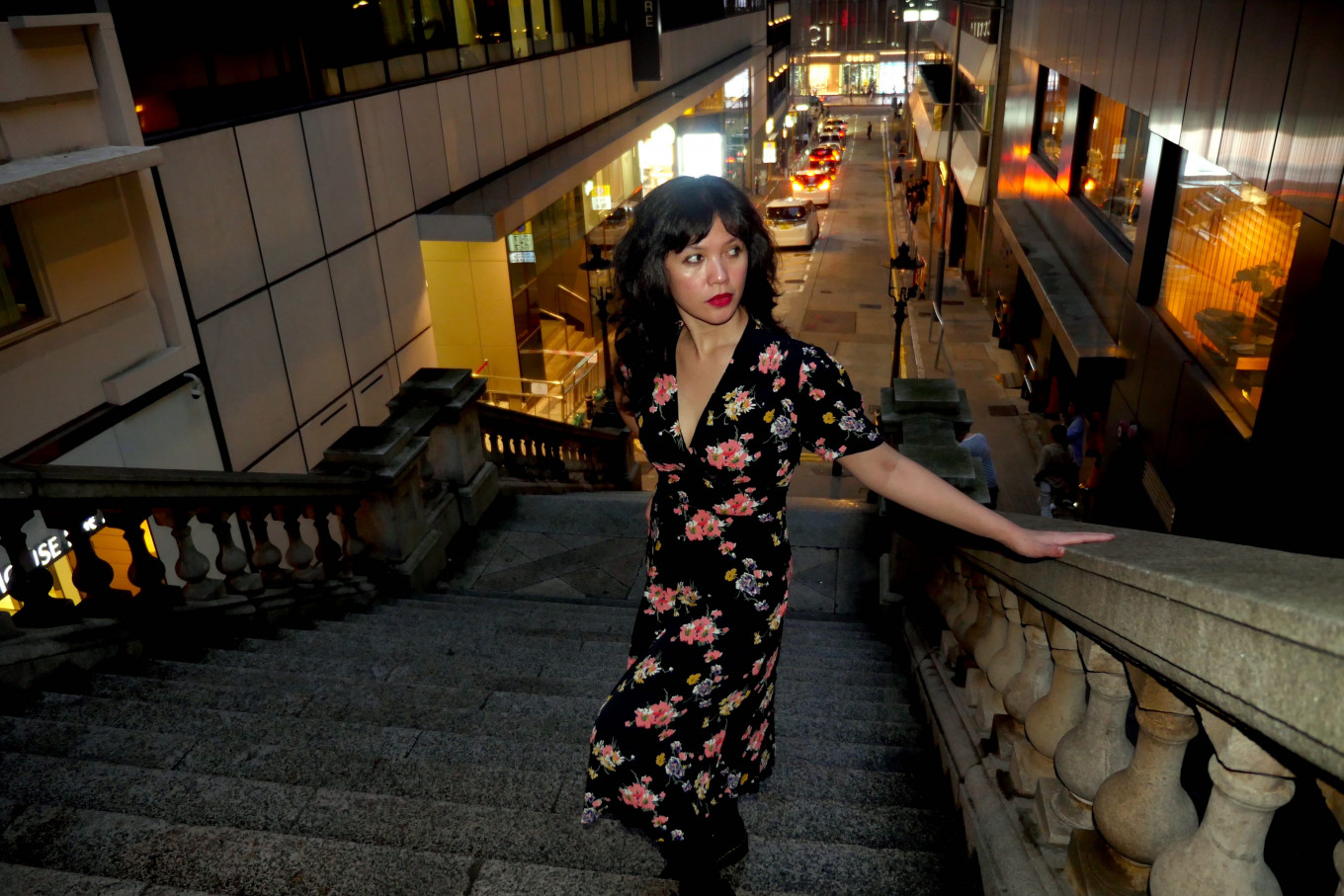
(Intan Paramaditha)
Intan Paramaditha's novel Gentayangan (The Wandering) is currently in its second printing in Poland. The book is full of kuntilanak (the angry spirit of a woman who died during childbirth), manusia harimau (were-tigers) and references to Quranic verses. None of it was softened for translation. All of it landed.
"They're a post-communist country, so many of Indonesia's hardships are relatable to them, like discrimination and violence against women," Intan tells me.
"When I went to Poland, I found out that despite the far different cultures—one from Asia, the other Eastern Europe—there are many relatable things we could discuss."
That might be the most counterintuitive thing about Indonesia's most quietly radical fiction writer: the more specifically Indonesian her work is, the further it travels. It isn't that any particular story crosses borders. Stories rooted in specific kinds of suffering find readers wherever that suffering exists.
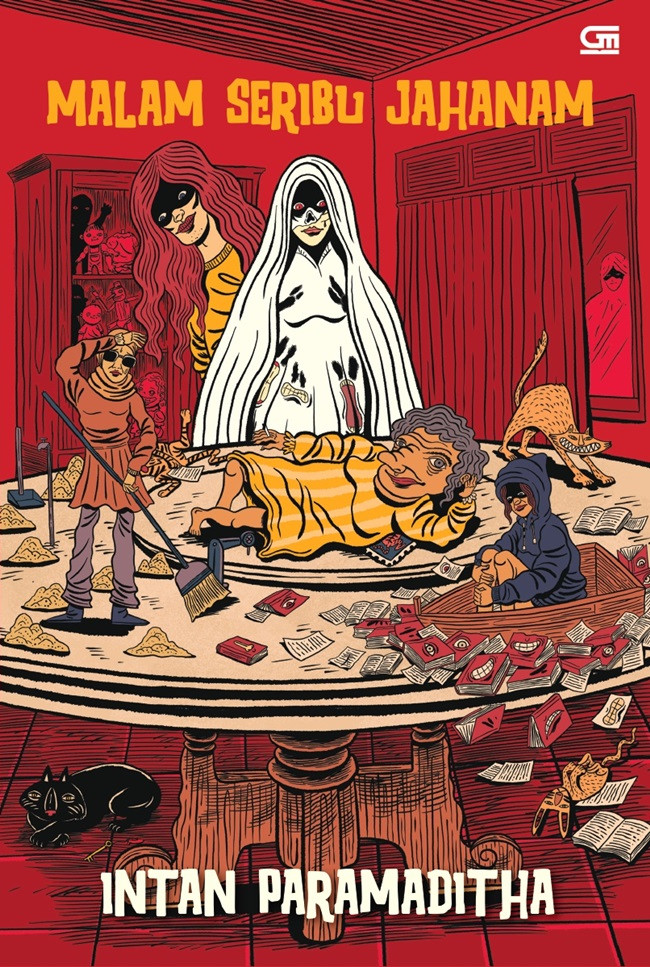
With Malam Seribu Jahanam (Night of a Thousand Hells) set for release in English and Italian this year, the experiment is about to repeat itself on an even larger stage.
"I'm not trying to universalize my work," she says.

Thank you!
For signing up to our newsletter.
Please check your email for your newsletter subscription.
"But personal things like family relations are the entryway for us to converse, even when our cultures differ. It's the start of transcending national boundaries."
Though she has not lived in Indonesia for nearly two decades, Intan's fiction continues to interrogate the country's social norms—the violence hidden inside families, the tyranny of majority opinion, the women the system turns into monsters and then punishes for it.
She calls herself Indonesia's "weird girl" author. The weirdness, it turns out, is the point.
Violence at home
The premise of Malam Seribu Jahanam may feel unsettlingly familiar. Its tale of an unlikely suicide bomber born into a "good" family mirrors real events.
"I started the novel in 2018, when the bombings in Surabaya happened. A wealthy enough family who brought their children along perpetrated it. That disturbed me greatly," Intan recalls.
The contradiction stayed with her. Families are often imagined as safe, nurturing spaces. But what if they are not?
"In truth, violence can be planted by families. Families aren't innocent from all of this. They're potentially toxic and discriminative," she says.
"Around the same time, anti-LGBT movements were spreading. It was in family group chats where I saw that violent speech."
What begins as observation becomes narrative. Intan's fiction unfolds like an argument, inviting readers to question what they have long accepted as normal.
 (Intan Paramaditha)
"My book examines how we and Indonesia's dominant ideologies operate and perpetuate alienation and violence. It critiques the tyranny of the majority," she says.
The idea that majority norms can silence and marginalize minorities is not unique to Indonesia. That may be precisely why her Polish readers recognized themselves in her work.
Reclaiming the weird
It's no accident that Intan reaches for horror and the grotesque to explore female experience.
"Feminist horror works give crazy, promiscuous and out-of-the-norm women a voice, making us able to see why they're considered monsters. That's why I've been interested in 'bad women'—to ask what sort of system gave birth to these monsters. The horror style enables us to question that reality."
In that sense, "weird" is not an aesthetic choice, it is a method.
Many readers, especially women, find unexpected recognition in these unsettling narratives. The discomfort becomes a form of clarity—which is also, Intan would argue, where honest feminism has to live.
"You can say that the characters in Malam Seribu Jahanam are feminists, if you define it as women's agency in making decisions. From the norm-following hijabi to the suicide bomber, they're feminist in their own ways. But they're not intersectional."
The novel includes a trans woman—a sister the other characters have quietly forgotten. It is, Intan says, also a critique of feminism itself.
"This is a critique of feminism and how it's not always intersectional. We have to reflect on ourselves and our practices too. It's a call to critique our own views and perspectives."
For Intan, feminism is not a fixed identity but an ongoing process. "We can continue resisting, reclaiming and reflecting—to resist oppressive structures, reclaim spaces with diverse perspectives, the feminist ones, the queer ones, the disabled ones—and reflect so we won't unknowingly become the oppressor."
Stories that belong to everyone
Intan's hope is simple, even if its realization is not: that Indonesian literature stops being something only read in university classrooms abroad and starts being something the rest of the world reaches for on its own.
"In global conversations, even one voice matters. These stories can connect and become part of them," she says.
She is not interested in making that easier by sanding down what makes the stories Indonesian. The kuntilanak stays. The manusia harimau stays. The Quranic verses stay. If readers in Poland can sit with all of that and still find themselves on the page, then the work is doing exactly what she intended.
"The biggest question is, 'how are we implicated?' In this day and age, we can be very self-righteous and ignore nuances. I want to invite Indonesian and international readers to think of our contribution and how we help develop violent structures personally and in our closest environments."
In Intan's world, the point is not to escape reality, but to question it, again and again, until what once felt normal no longer does.
Siti Syafania Kose is a writer with a soft spot for art, history and all things humanities. They're a self-proclaimed nerd who accidentally became a gym jock, and now lives somewhere in between.