(Courtesy of Rekata Studio)
On the way to the 2026 Sundance premiere of Para Perasuk (Levitating) in the World Dramatic Competition early this year, Anggun and her costar Maudy Ayunda were not talking about reviews, critics or red carpets.
“We were crying in the car on our way to the premiere,” Anggun says.
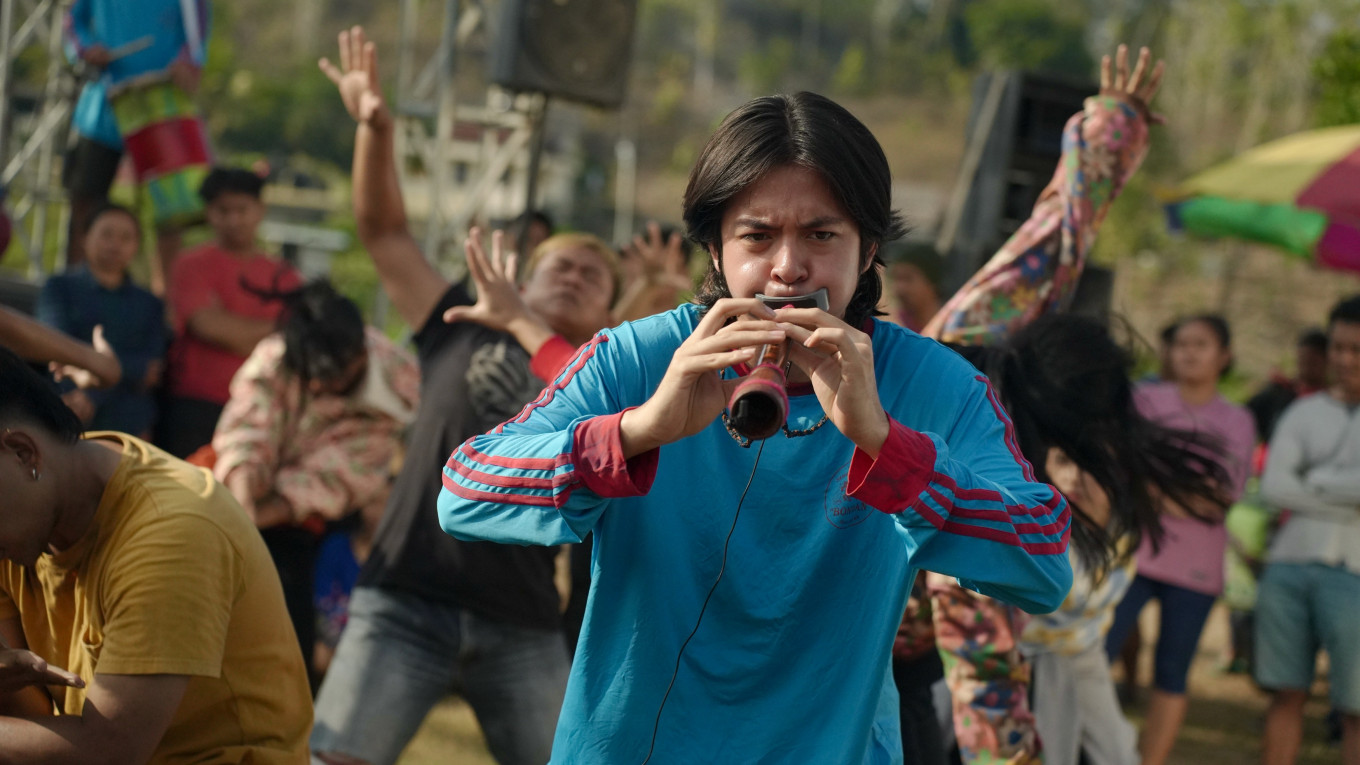
The film they were about to present to a largely Western audience felt deeply Indonesian, built around an invented ritual called sambetan, where people dance, enter trance-like states and become possessed by animal spirits.
It was strange, specific and far from the kind of story most people would expect to resonate globally.
“We didn’t know how American audiences would react to something this local,” Maudy says.
But the early reviews were positive.

Thank you!
For signing up to our newsletter.
Please check your email for your newsletter subscription.
Beneath the surreal world-building, audiences found something instantly recognizable: a story about ambition, belonging and the fragile balance between personal desire and communal responsibility.
That emotional truth is what carried Para Perasuk beyond its setting.
Building a believable world
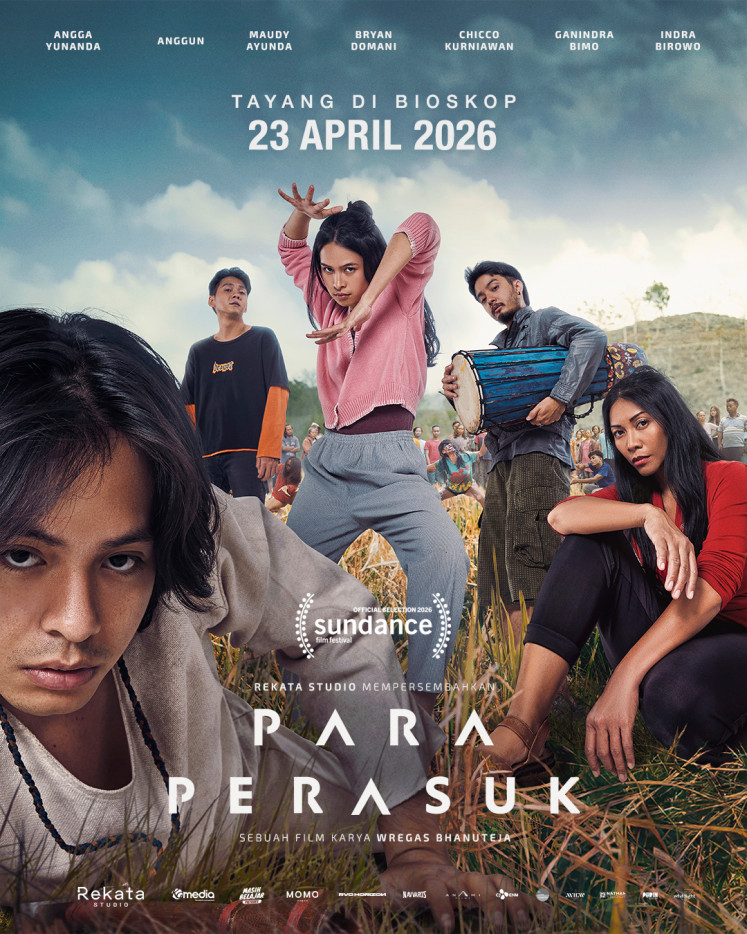
Written and directed by Wregas Bhanuteja, Para Perasuk takes place in Latas, a fictional town where sambetan rituals bring the community together.
The ritual may be fictional, but the world feels lived in. Wregas builds sambetan with the detail of inherited folklore, complete with its own roles, hierarchies and community rituals.
Despite the strangeness, the mythology feels real because of its strong emotional logic.
 (Courtesy of Rekata Studio)
In Latas, possession is not feared as a spiritual threat. Instead, It is treated as a source of pleasure, something people actively seek out together.
A sambetan ritual requires three elements: a teacher to orchestrate the music and ground the ritual in realism, a spirit channeler to summon the spirits, and the participants, known as “spirit addicts”, who willingly submit to possession.
At the center is Bayu, played by Angga Yunanda, a young spirit channeler determined to capture the rarest spirits and become the village’s leader. But as rivalry grows and the village faces eviction, Bayu must choose between ambition and the community that shaped him.
That tension, between individual desire and collective responsibility, gives the film its emotional pull.
Wregas has often explored harsh realities in his previous work, but this may be his most optimistic film yet. The film’s world is surreal, but its emotional stakes are deeply familiar.
Winning Anggun over
Despite Wregas’s reputation as one of Indonesia’s most acclaimed young directors, he was not able to immediately win Anggun over.
“I ghosted him,” Anggun says, laughing.
At the time, the singer and international performer had never seen his work, and a direct message on Instagram did little to build trust.
“I didn’t know how legit he was,” Anggun adds.
That changed after she watched his previous works. Wregas first gained national recognition through Penyalin Cahaya (Photocopier), which won 12 Citra Awards at the 2021 Indonesian Film Festival (FFI), and later for Budi Pekerti (Andragogy).
Once Anggun understood his distinctive voice, she agreed to meet him.
“He proposed to me in a French restaurant, speaking in French—with a Javanese accent!” she says.
What convinced her wasn’t just the role, but the clarity of Wregas’s vision. The unusual premise of Para Perasuk no longer felt like a risk.
As Guru Asri, the leader of spirit channelers, Anggun had to step into unfamiliar territory. She was not simply acting but helping bring an entire ritual to life. Her character chants and sings more than 20 different mantras throughout the film.
Instead of handing her a traditional script, Wregas presented the project through a detailed creative deck that mapped out the mythology, tone and atmosphere of the world.
That precision gave Anggun the confidence to trust him. For an artist who once turned down the chance to become a Bond girl, the fact that Wregas got her to say yes says everything about the strength of his vision.
Preparing for the ritual
Unlike Anggun, Maudy Ayunda was already familiar with the demands of film. She began acting at 11 in Riri Riza’s Untuk Rena (For Rena) and later earned two Citra nominations for Best Supporting Actress in Losmen Bu Broto (2021).
Known for being selective about her film roles, Maudy didn't sign on because the part was clearly defined. She signed on because she trusted the director.
“I was proposed to in a Korean restaurant,” Maudy says, laughing, before adding: “Maybe because my husband is Korean.”
Like Anggun, she agreed before fully knowing what the film would become. That uncertainty became part of the process.
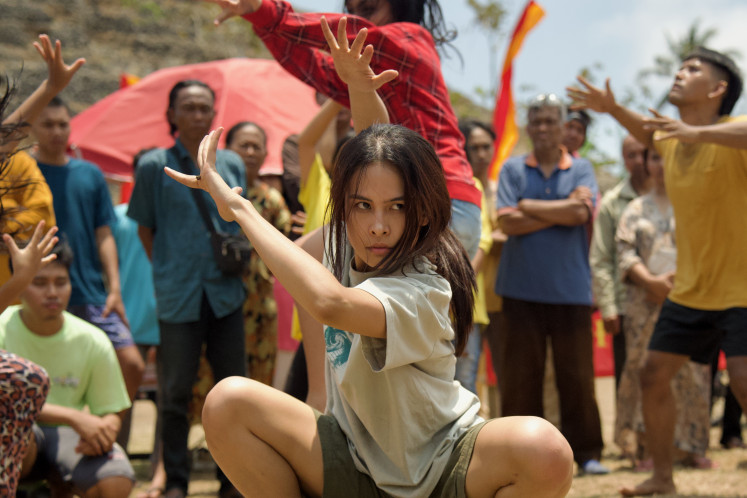
Maudy plays Laksmi, a spirit addict with a dark past who becomes Bayu’s love interest. She is the only character who fully performs the sambetan dance on screen.
“I have an obligation to visualize what being possessed feels like,” she says.
That meant translating possession into something physical, emotional and believable.
 (Courtesy of Rekata Studio)
To prepare, Maudy spent months in workshops and choreography sessions, studying how different animals might move through the body, from ants and turtles to oxen and tigers.
But the challenge was not just physical and technical.
She and Wregas spent long conversations discussing what possession should feel like emotionally, especially since the ritual was meant to represent pleasure rather than fear.
“Even a gaze can mean so many things,” Maudy says. “Whether it’s sharp, intense or empty, each can be perceived differently by the audience.”
Made locally, spread globally
The world of Para Perasuk may be invented, but the emotions at its core—desire, vulnerability and ambition—are immediately recognizable. That attention to emotional detail is what grounds the fantasy.
“What matters is how the story resonates with people, regardless of where it comes from,” producer Iman Usman says of Para Perasuk’s universal appeal.
Wregas has made no secret of his international ambitions, using the festival circuit to build momentum and reach global audiences.
With strong Sundance buzz and positive critical reception, Para Perasuk is already emerging as one of Indonesia’s strongest contenders for the country’s official submission to the 99th Academy Awards in the International Feature Film category.
But the film’s biggest achievement may be simpler than awards. It proved that a story grounded in a highly specific local world can still speak to audiences thousands of miles away.
After all, it’s not every day that a fictional Indonesian village holds the attention of an audience in Utah. And yet, Para Perasuk did exactly that. Because the more honestly a story belongs to one place, the farther it can travel.
The film is out in theaters on April 23.
Reza Mardian is a winner of the Best Film Critic award at the Festival Film Indonesia 2024 and a “pawrent” to two rescued cats. He writes screenplays every time he finishes rewatching La La Land or Lady Bird.