(Courtesy of Kimpton Naluria)
There comes a point when business travel no longer excites you. You go from airports to hotel to meeting rooms with hardly a moment to enjoy the foreign city you forget you’re privileged to visit.
This is particularly true of the vibe most hotels inside a city’s commerce district have: polished yet dynamic, perhaps a bit rushed, as if resting your eyes might throw you out of sync with the world.
But a new hotel in Kuala Lumpur’s financial district doesn’t quite feel like that. At the Kimpton Naluria, it feels like you can sit back and the world will keep turning whether you watch it or not.
I was in town for the hotel’s formal launch (yes, a business trip), what Kimpton calls a Housewarming Party, marking its debut in Malaysia’s luxury hospitality scene. The pre-departure letter promised “contrasts of modernity and tradition, energy and tranquility” over three days and two nights. It’s the kind of language that looks good in a press kit and usually means nothing by check-in.
Here, it actually delivered. And I say that as someone who has checked into enough hotels to know the difference between a concept and a feeling.
The lobby disagrees

Thank you!
For signing up to our newsletter.
Please check your email for your newsletter subscription.
The address alone sets up the first contrast. The hotel towers over The Exchange TRX, one of Kuala Lumpur’s newer upscale malls, in the Tun Razak Exchange financial district, a zip code close enough to KLCC and Bukit Bintang to matter, and walkable from the Royal Selangor Golf Club.
It’s an address that says it’s for business travelers and other professionals. But as soon as I stepped into the lobby, the finance-district logic started to dissolve.
Award-winning studio Hassell designed the interior around a concept called “Botanics Beyond Aesthetics”, earth tones, organic textures and lush plants everywhere. The glass-and-steel world I’d come from was still visible through the windows. Inside felt like a considered rejection of all that.
The effect wasn’t just aesthetic. It was almost physiological.
The option to opt out
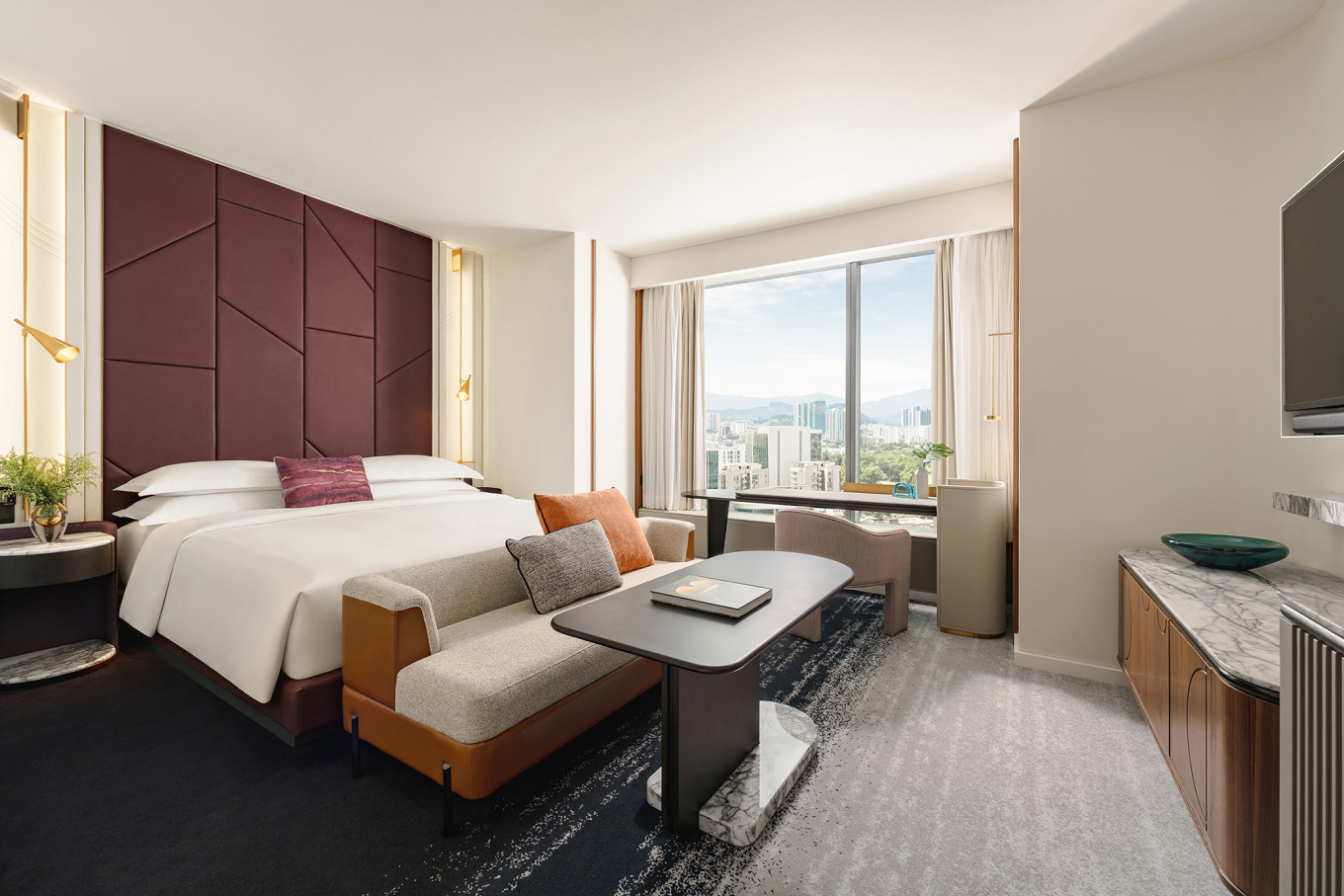
The Studio Suite carried the same tension. It’s a room that signals, at every turn, that it was designed for someone who treats travel as an extension of the workday, and at the same time permits you to do absolutely nothing.
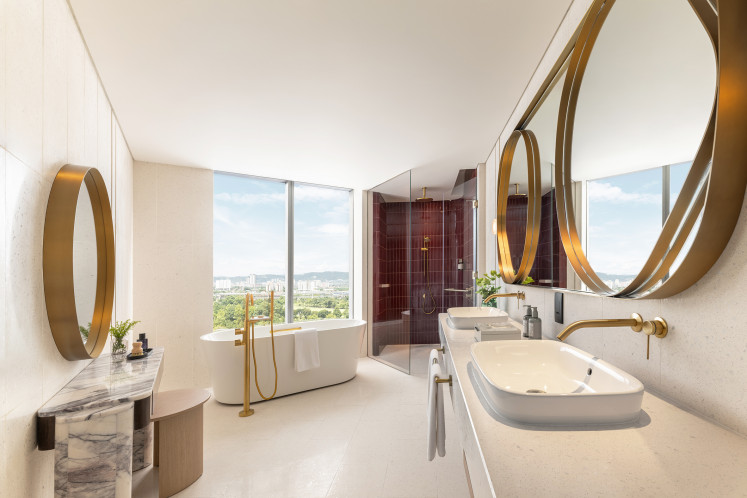
At 43 square meters, it was generously appointed: king bed, walk-in closet, and a bathroom that gives the main living area a run for its money, with a separate bath, walk-in shower, his-and-hers sink, and a dedicated vanity.
 (Courtesy of Kimpton Naluria)
The minibar stocked with protein bars and prebiotic beverages, the in-room yoga mat, the complimentary workout sessions at the rooftop fitness center, Pulse, all of it signaling that this is a hotel for people who optimize. I am not always one of those people.
And then the Penhaligon’s bath amenities arrived, and the Kuala Lumpur skyline caught the setting sun behind me, and I skipped the evening’s social hour without a second thought to soak in the tub instead.
The hotel had built in the option to opt out. I took it, and I didn’t feel guilty about it for a second.
The city underneath the city
I’m the kind of traveler who needs to find the real city before I can relax in the hotel version of it. The surrounding neighborhoods helped.
The first night ended with cocktails at PS150 in Chinatown. The second day brought lunch at Tommy Le Baker after a visit to Zhongshan in Kampung Attap, where local MSMEs offered a sideways glimpse into Kuala Lumpur’s design scene, the actual city, the one that exists below and beyond the TRX skyline.
 . (JP/Yudi Wanandi)
For the motivated, the hotel offers complimentary bicycle rentals. But I’m more content with a good pair of walking shoes and public transportation. It’s the best way to find a city’s nooks and crannies.
What surprised me was that coming back didn’t feel like a retreat.
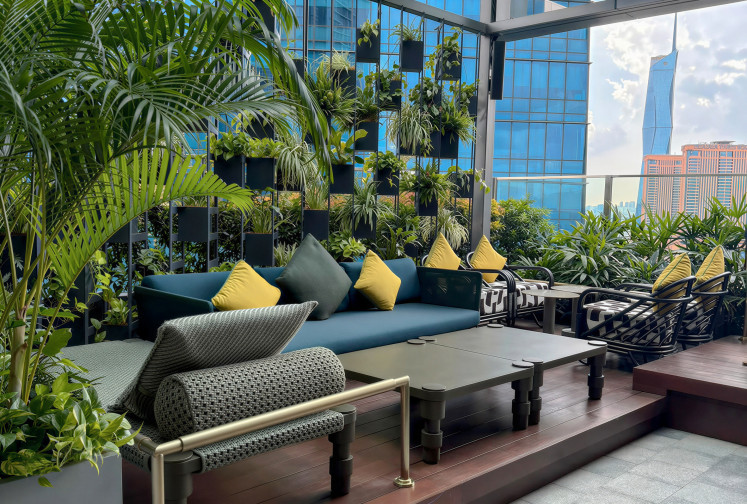
The second evening moved from cocktails at Four Siblings, the hotel’s rooftop lounge, to dinner at Sabato’s, Malaysia’s first and only Italian-American retro-inspired restaurant, and back up to Four Siblings for the afterparty. It had its own texture, its own sense of place. The contrast here isn’t between the hotel and the city outside. It’s between two versions of the same energy, and Kimpton, it turns out, is fluent in both.
When a VIP drops by
The most telling moment of the stay came mid-trip, when a prominent political figure coincidentally had a meeting at the hotel.
In most properties, a visiting government official means something: shifted schedules, a quiet cordon of security, the low-grade anxiety of staff trying to hold two realities together at once.
I’ve been in hotels where this kind of thing unravels the entire atmosphere. Here, guests and employees carried on. The meeting happened, the hotel absorbed it and no one made it anyone else’s problem.
It was the clearest possible demonstration of what the property is actually selling, which isn’t amenities or address but a particular kind of composure. It’s something you can’t manufacture. Either a place has it or it doesn’t.
The smallest contrast of all
But beyond the services and facilities, Kimpton Naluria Kuala Lumpur’s attentiveness and hospitality made this a trip something I’d look forward to again. The hotel manager and other staff made sure every guest was well taken care of and enjoying their stay, and it showed in ways that didn’t feel scripted.
The moment that stayed with me longest was the smallest. On the way out, someone pressed a freshly made sandwich into my hands for the drive back to the airport. I’d just spent two days in a hotel sitting on top of a luxury mall in a finance district, and the thing I’ll remember is a sandwich.
That, it turns out, is the contrast the press kit was trying to describe.
Yudi Wanandi is the CEO and publisher of The Jakarta Post.