(JP)
Indonesia has a wealth of biodiversity, culture, local wisdom and creativity. Yet for decades, many of our businesses were built by looking outward rather than inward.
We imported beauty standards, ignored our own superfoods, treated waste as a nuisance and turned away from the very resources that make this country one of the most naturally abundant places on earth.
For years, corporate growth followed the same script: scale fast, produce cheaply, mirror global demand. Profit led the way, and corporate social responsibility remained an afterthought.
But now and then, an entrepreneur will stand up and refuse that script.
In their hands, culture becomes strategy, biodiversity becomes innovation and waste becomes raw material. Purpose is not a feel-good marketing strategy, but the business model itself. These aren’t charities masquerading as companies. They are commercially strong enterprises whose impact works because their products are excellent.
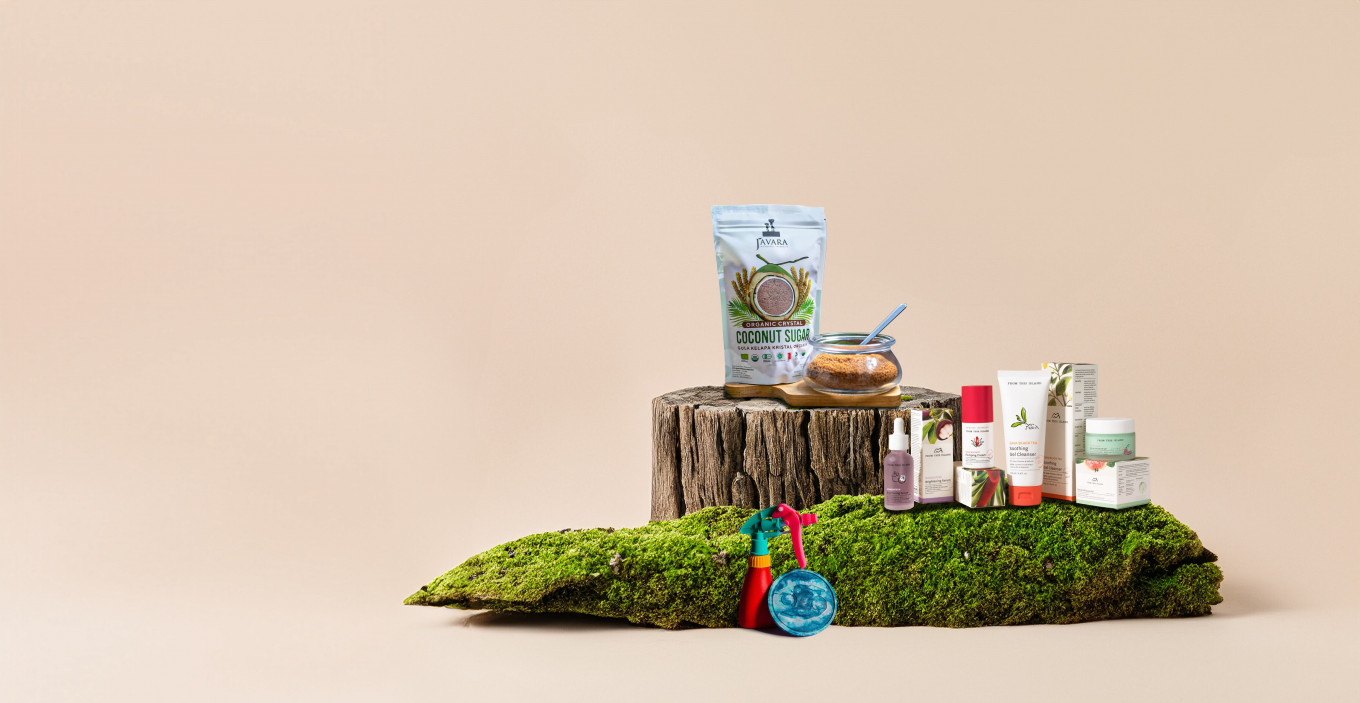
I spoke to Javara, a food-culture movement disguised as a company; From This Island, a beauty brand reclaiming Indonesian botanicals for modern skincare; and Olah Plastic, a creative recycler turning discarded bottle caps into objects people actually want to use.

Thank you!
For signing up to our newsletter.
Please check your email for your newsletter subscription.
And the conversations raised an important question: Are good businesses born good, or does goodness emerge when you decide to build differently?
Building purposeful businesses, accidentally
None of the three intended to slap social enterprise labels upon themselves when they started. They didn’t set out to “do good”. They followed a frustration, a curiosity or an unexpected detour that led them somewhere bigger. The journey that shaped the purpose.
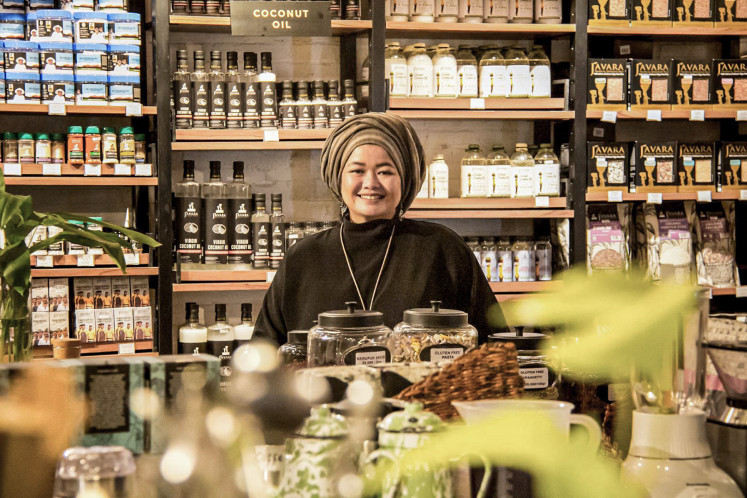
Before founding artisanal-food manufacturer Javara in 2008, Helianti Hilman was a lawyer. As part of her pro bono work, she assisted farmers entangled in fraud cases. At one point, her husband remarked that maybe what these farmers needed wasn’t endless legal aid, but access to a dignified market that treated them fairly in the first place. Something clicked.
 (Courtesy of Javara)
Helianti, who often travels and loves to cook, had already been meeting farmers, discovering forgotten ingredients and tasting local foods across Indonesia.
“We started as a foundation, then became a company. The expansion was organic. We didn’t have a business plan. We talked to farmers, visited farms and saw the potential,” she said.
Fast-forward to 2025: Javara now offers hundreds of stock keeping units (SKUs), runs an ecosystem-enabling cooperative and has helped thousands of farmers build better products and more stable livelihoods.
“We learned how to reach markets that would appreciate these amazing products. One door led to another,” she added.
“Eventually, we realized that to sustain the mission, we needed to enter mainstream markets, too. Sustainable consumption leads to sustainable production.”
For Maudy Ayunda and Patricia Davina, founders of From This Island, the frustration lay in Indonesia’s beauty industry itself. Friends since high school, the two found themselves questioning an ecosystem that felt saturated, trend-driven and outward-looking.
“We’ve been importing what it means to be beautiful, what counts as quality skincare,” Maudy says.
“All the while, Indonesia has the world’s second-largest biodiversity. It felt ironic we weren’t looking inward.”
Two years of research followed. When they began sourcing Indonesian plant extracts, they ran into an underdeveloped supply chain.
“Even mangosteen extract is easier to source from India than Sumatra,” Maudy says.
Breakthroughs came through persistence: an Indonesian researcher in Germany who had spent a decade studying Papuan red fruit (Pandanus conoideus) and patented an extraction method. This became their first hero ingredient.
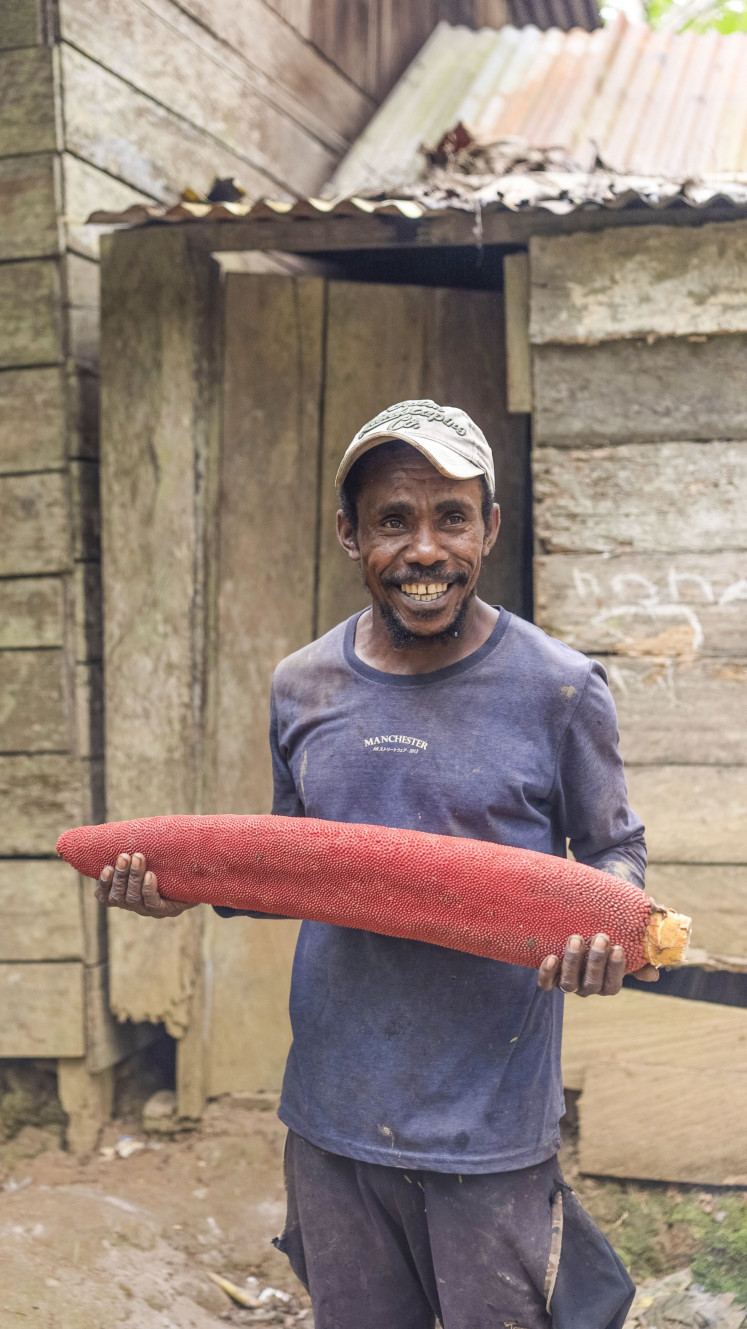 (Courtesy of From This Island)
Their second was illipe butter, or tengkawang, from Kalimantan. Each ingredient revealed how much local potential existed and how little had been tapped.
“Not all extracts are the same. We have to use ones that are scientifically and clinically proven,” Maudy says.
Next, they built an in-house formulation team and hired a head of extracts and a botanical-research PhD.
“We design everything ourselves,” Patricia says.
“We didn’t know how difficult it would be.”
Today, From This Island has 11 make-up and skincare series featuring local plant extracts, including Balinese Green Coffee, Blue Pea, Guava and Javanese Black Tea. They are also building their own butterfly pea supply chain, linking rural farmers directly to extraction and manufacturing facilities.
Olah Plastic began as a happy accident, too.
Founder Rizal Aziz, a Bandung Institute of Technology (ITB) sculpture graduate, ran a small customized-packaging business for action figures in Bandung. Waste systems and recycling weren’t part of the plan, but his studio kept producing too much plastic waste.
Rizal teamed up with two friends, one machine enthusiast and one marketer, to experiment. Then the pandemic hit, and time suddenly opened.
What if colorful bottle caps could become something else?
They asked friends to send in bottle caps. Mostly, their friends’ mothers answered. In return, the team turned them into coasters for free. Once they found a working formula, they tried selling them. Instagram ads turned their then-200-follower account into a flood of orders.
Ironically, they couldn’t keep up with the demand because they were running out of trash. Plastic waste is everywhere, but the kind they need isn’t: clean, sorted and monotone.
“That’s how we ended up working with waste gatherers,” Rizal says.
“They already had their own groups. Five years ago, we took assorted caps and rings, but now we can pay them more and ask for sorted colors.”
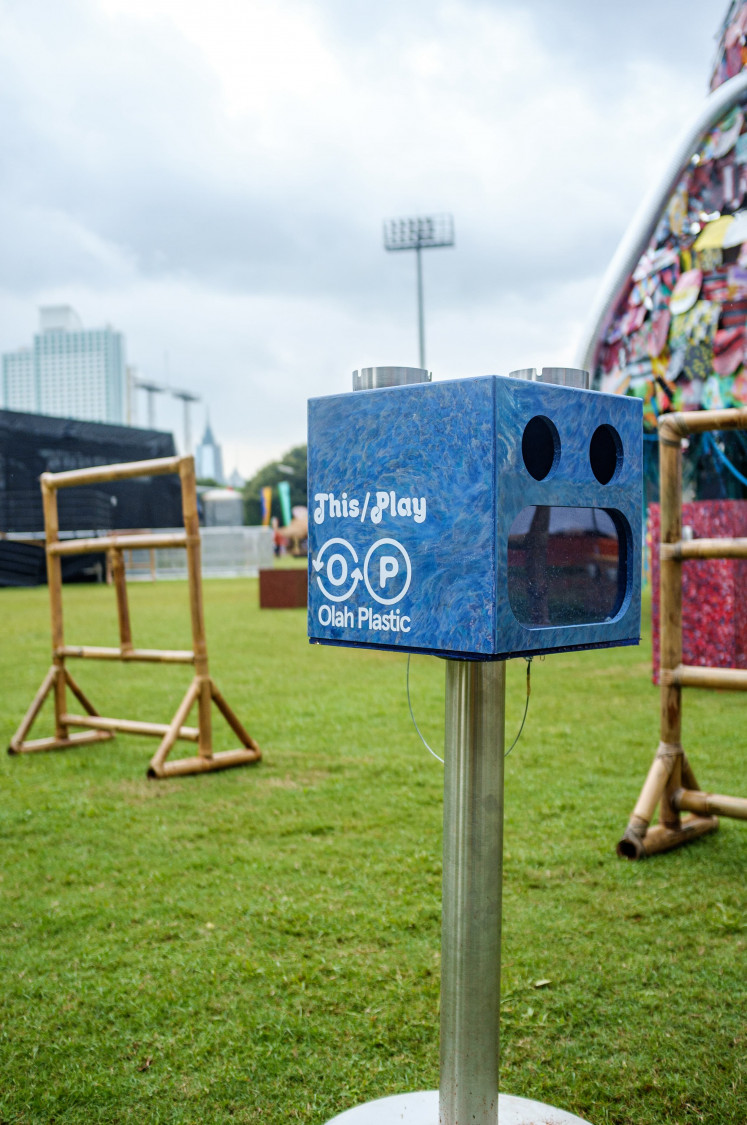 (Courtesy of Olah Plastic)
Rizal’s sculpture background turned out to be a perfect fit.
“Plastic is forgiving,” he says.
“If it fails, you melt it again. If a color changes, you adjust the design. The material becomes the medium. Nothing is wasted.”
From simple coasters, Olah Plastic expanded into colorful sheets, stools, cutlery and rings. Most clients are business-to-business, and the team also runs creative recycling workshops.
What began as personal detours became businesses shaped not by trends, but by conviction. Purpose, in each case, was found, not imposed, shaping each company’s foundation. And this foundation would define how they grew.
Growing without losing oneself
For mission-driven businesses, growth isn’t just operational, it’s philosophical.
Scaling brings seduction: speed, reach, expansion. It also brings risk: an erosion of values that made the business meaningful in the first place.
How do you grow without compromising the soul of the business?
For Javara, the answer lies in staying rooted.
“Our DNA is food diversity,” Helianti says.
“We don’t do monoculture. We work from a landscape mindset: coconut trees up top, ginger and turmeric underneath, everything growing together.”
That philosophy rejects forced scale. Out of Javara’s 600-plus SKUs, only 246 are available all year. The rest are seasonal, niche or made by demand, a choice that protects farmers’ cash flow and land health.
In Helianti’s words, she’s after economies of scope, not economies of scale.
“There’s a place for every player and every market,” she continues.
“Some rare ingredients go to fine dining; others go to supermarkets. That way, we avoid becoming exploitative.”
With biodiversity as Javara’s backbone, Helianti realized products alone weren’t enough. Farmers needed tools, skills and agency. That conviction led her to start Sekolah Pangan Javara (now Sekolah Seniman Pangan), helping farmers turn small plots into high-value food enterprises. Through culinary ventures, tourism and premium product development, the initiative reframes farmers not as suppliers, but as creators.
For both Javara and the school, one principle remains non-negotiable: quality.
“Mission-driven doesn’t matter if the product is mediocre,” she says.
“People shouldn’t buy out of pity, but because the product is excellent.”
Seniman Pangan is designed to sustain itself long-term, partially supported by Javara’s proceeds and grants, but largely funded through its own products, services and programs.
From This Island resists scale differently. In an industry obsessed with speed and constant newness, they choose restraint.
“We’re not trend-chasing,” Maudy says.
“We believe a lot in the integrity of the development process.”
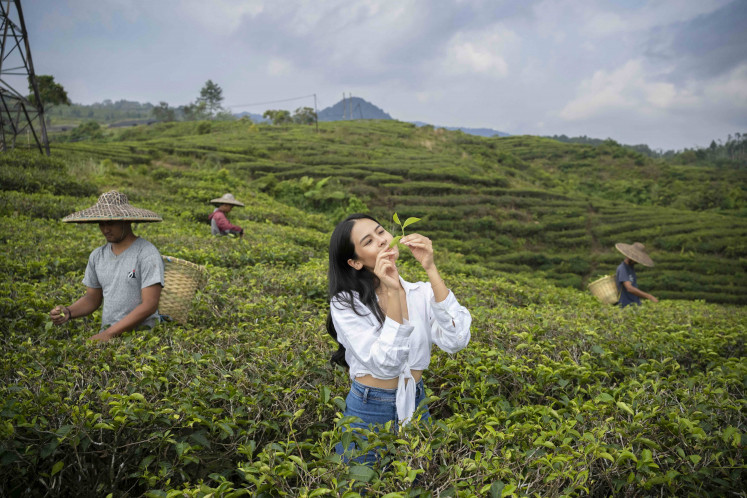 (Courtesy of From This Island)
As a premium, authentic mass brand, their cycle is intentionally slow: sourcing extracts, validating science, testing formulas, working with farmers.
They use only 1-2 percent potent extract per product’s total weight, and because the ingredients come from naturally occurring fruits and flowers, no trees are cut down. The real challenge lies in seasonal manufacturing capacity.
“Right now it's manageable, but we can foresee issues,” Maudy says.
For Olah Plastic, growth stems from collaboration. Rizal works alongside other recyclers in Bandung, sharing materials, knowledge and even orders.
“It feels like a network of tailors where everyone shares fabric and tips, not like isolated factories trying to outdo each other,” Rizal says.
Though they operate in different industries and adopt different strategies, all three companies show that growth doesn’t have to come at the expense of values. Commercial success and sustainability can move forward together.
Continuing the good work
Purpose-driven businesses can’t afford to stay still. What begins as a personal mission must evolve into a system others can carry forward. For these founders, sustaining impact means building something that grows beyond them.
After years of championing food biodiversity, Helianti realized Javara couldn’t carry the movement alone. Evolution meant widening the circle.
Two years ago, Koperasi Pangan Warisan was born, a multi-stakeholder cooperative connecting producers, chefs, experts and small food businesses into a single ecosystem. Javara became an anchor, opening export doors, sharing networks and strengthening standards.
“It becomes an economy of togetherness, so the journey doesn’t feel lonely,” she says.
This year alone, over 50 brands joined the infrastructure, bringing 450+ SKUs into the ecosystem.
From This Island’s next chapter focuses on deepening science and rebuilding supply chains: filing patents, working with universities and partnering directly with farmers. Alongside research is an impact loop: reforestation in Kalimantan, education initiatives in Papua and a commitment that each hero ingredient gives back more than it takes.
Olah Plastic continues expanding its network, partnering with manufacturers while strengthening relationships with waste workers.
“The market is growing rapidly, and the community is too,” Rizal says.
“We’re collaborating with more brands than ever.”
Though they have different paths, the three founders share the same instinct: Impact doesn’t scale through dominance, it scales through shared infrastructure.
Perhaps that answers the question. Good businesses aren’t just born; they’re built. These three show that with the right foundations, culture, land and community, growth and goodness aren’t at odds. They can move in the same direction.
Adelia Anjani Putri, a communications consultant and former reporter, has found herself writing again. She’s also exploring a career shift that would let her pursue her passions for cooking and catsitting—ideally with a paycheck.