(OH!SOME)
After losing a couple of hours to doomscrolling through social media, I realized one of the most sought-after items in life today isn’t a fancy car or a luxury handbag.
It’s an impossibly rare fidget toy: a glitter dumpling.
I don’t know where it’s sold, how it found its way into my algorithm, or why I couldn’t scroll away from creators opening box after box of squishy toy buns. What I do know is that they’ve spent thousands of dollars on this hunt. For a toy.
And they’re not alone. In 2021, the global blind box toys market was worth around US$11.38 billion. By 2033, it is projected to reach $24.2 billion. Singapore-based Victor Tan, the chief investment officer of Mighty Jaxx, known for its collectible toys, says blind boxes now make up most of the company’s revenue.
Some say the craze went mainstream with Labubu, the quirky Pop Mart character popularized by Blackpink’s Lisa in 2024. But the thrill of the unknown? That’s not new.
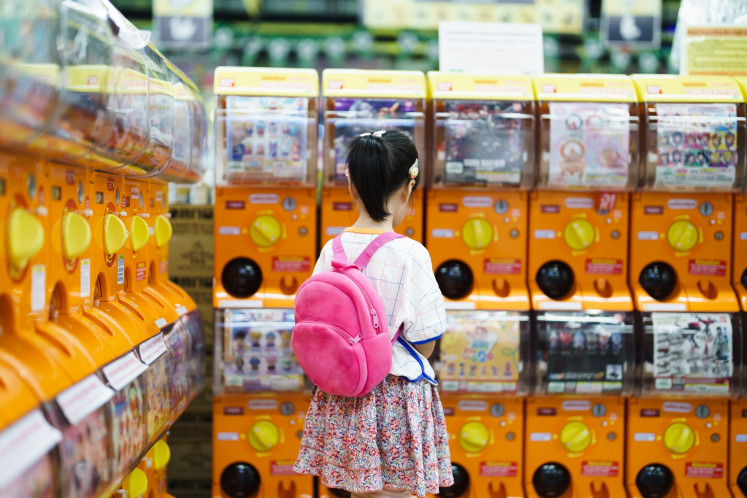
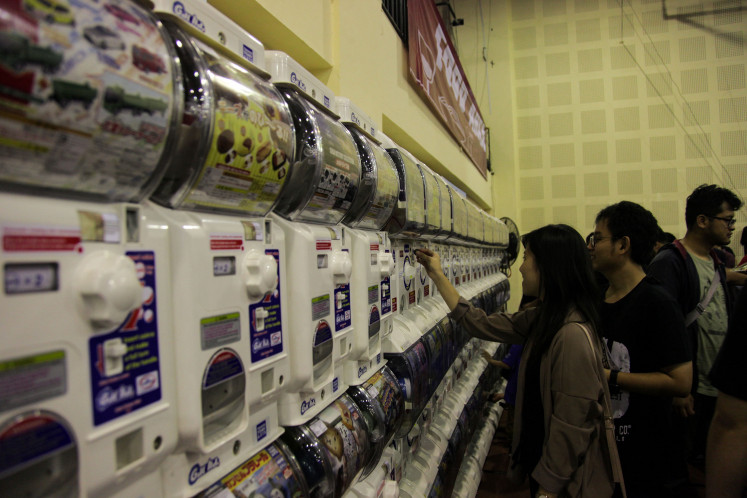
“It's something that's existed for a long time. When I was a kid, we used to buy little packets from the gachapon (a Japanese vending machine-dispensed capsule toy),” Victor told me.

Thank you!
For signing up to our newsletter.
Please check your email for your newsletter subscription.
 (Shuttterstock)
He added with a laugh, “A lot of Europeans don’t get blind boxes. They’re not Asian.”
And yet, it’s North America that currently dominates the global blind box market. Asia-Pacific, led by China and India, is the fastest-growing region, with a 7.8 percent compound annual growth rate. We grew up with gachapon, left them behind for a while, and are now circling back with our adult wallets.
Because maybe it was never just about the toy.
The business of surprise
It’s the powerful combination of collectibility and surprise, according to Cognitive Market Research, fueling this unboxing phenomenon amplified by social media.
Brands know this. Limited-edition collaborations with big entertainment franchises create a constant sense of urgency. Pop Mart doubled its revenue in 2024 to $1.8 billion, thanks to collectible dolls like Molly, Dimoo, Skullpanda, and of course, Labubu.
“We own and incubate our core Artist IPs. Unlike licensed properties, POP MART's iconic IPs, like Molly, Labubu, Dimoo, Skullpanda, Hirono and Twinkle Twinkle are original IPs,” a POP MART spokesperson said.
“These are the soul of our business.”
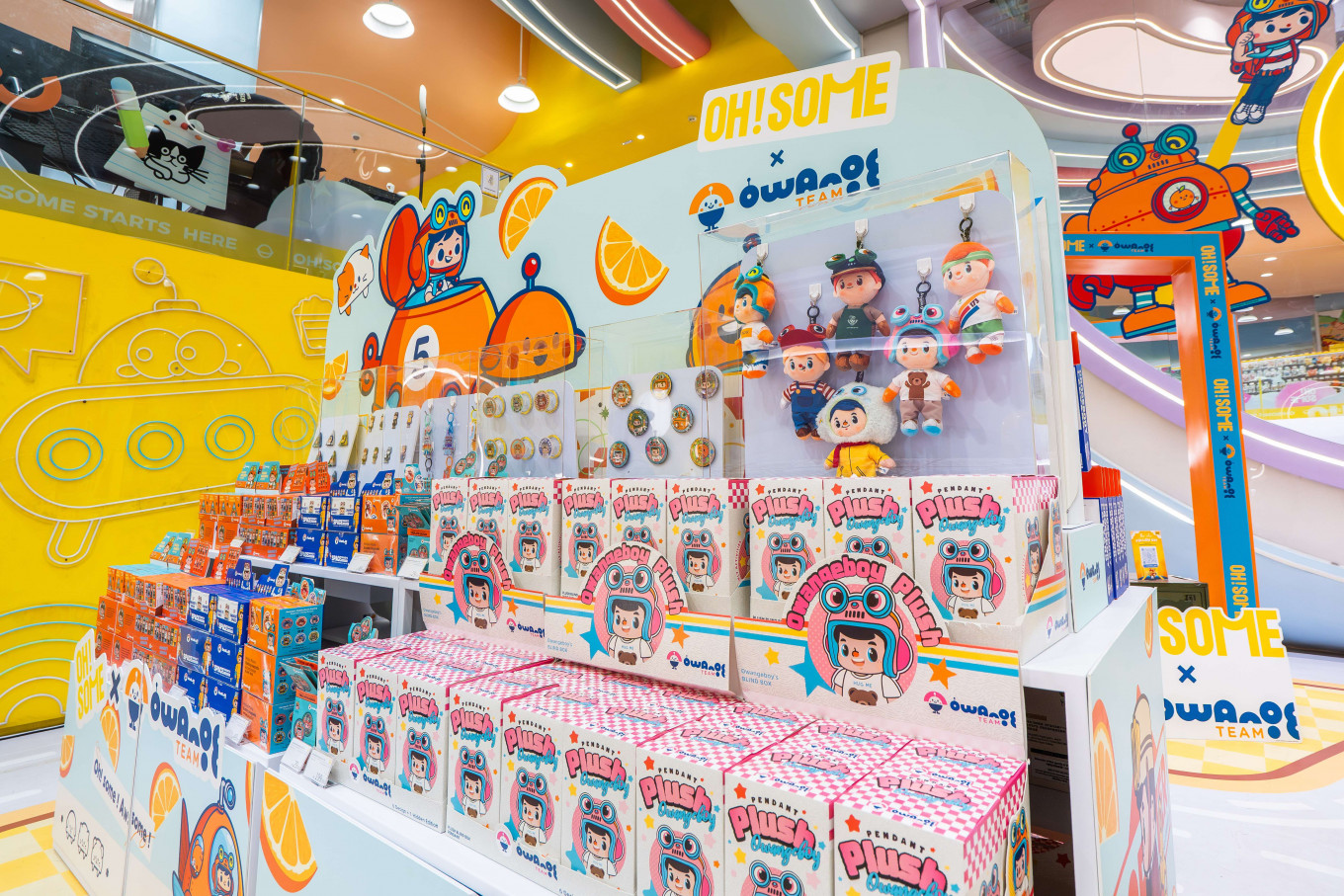
Other players followed. Mighty Jaxx partnered with Blibli, MINISO and Toys R Us. OH!SOME collaborated with local artist Kong Andri to release the Owange Boy, one of its best-selling blind boxes.
“We started selling blind boxes since we opened our first store in Indonesia on Aug. 1, 2024,” said Tisiana Triwina from the OH!SOME Public Relations team.
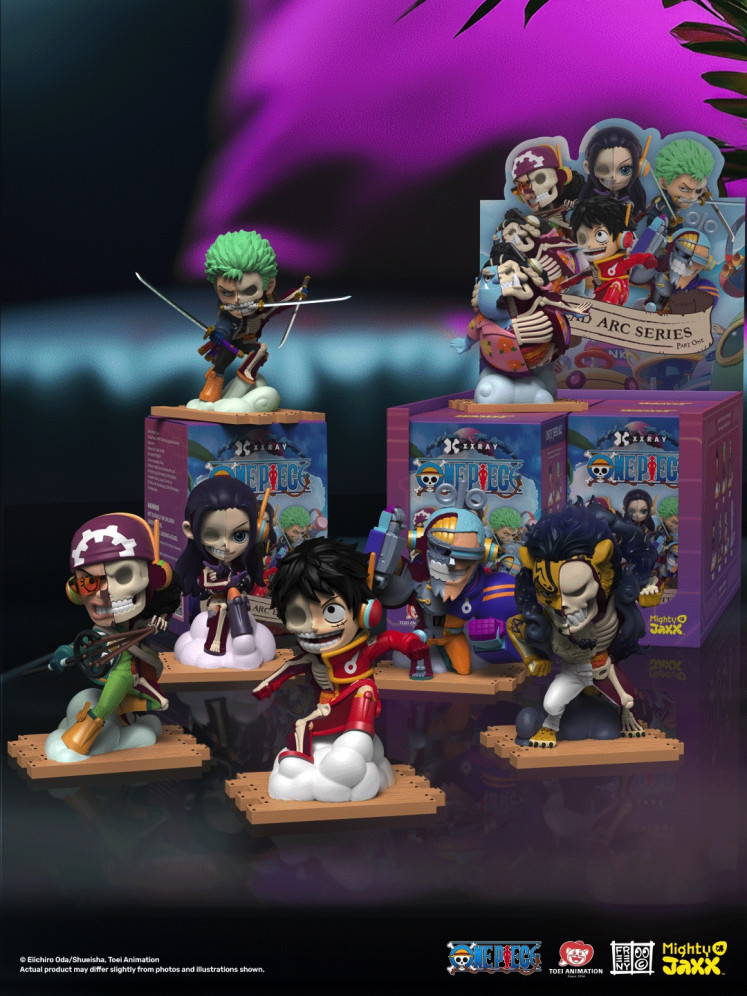
Mighty Jaxx, meanwhile, banks on artistic reinterpretation.
“What we do is we take the original IP [intellectual property] and bring in a famous or an up-and-coming artist. It could even be one of our own in-house styles, and then we mesh the IP,” Victor explained.
 (Mighty Jaxx)
The result is a collector’s dream: art, nostalgia and exclusivity, all wrapped in a mystery box.
What we’re actually chasing
So what keeps us coming back?
According to Laras Sekarasih from University of Indonesia’s Economic and Consumer Psychology Research Group, it’s partly about status, at least within collector circles.
But beneath the surface, it’s about our brains and how they’re wired.
Laras points to two key concepts: variable-ratio reinforcement and prospect theory.
Variable-ratio reinforcement is when a reward comes after a random number of tries. In the world of blind boxes, that means you keep buying, hoping this time you’ll get the rare one.
Prospect theory, on the other hand, explains why we’re willing to take bigger risks when we’re already at a loss. The more we invest, time, money and energy, the more we feel we need to keep going, even if the odds don’t make sense.
“The second principle is also found in gambling,” Laras added.
“We’re willing to keep risking more, even when the odds are low.”
The appeal lies in anticipation, the thrill of possibility. Each unboxing delivers a brief surge of excitement, an engineered moment of uncertainty and adrenaline rush.
And for adults, there’s the bonus of nostalgia.
Just like we once turned the gachapon knob with sticky fingers and wide eyes, we now peel open cardboard boxes with manicured nails and a high-functioning adult budget.
The joy isn’t only in the toy, it’s in the reveal.
“A lot of us who grew up in that era have nostalgic ideas of what we like. It's nice to see it reinterpreted in a new way today,” Victor said.
“Nostalgia plays a big part in a lot of our launches.”
Some brands now even target this directly, marketing “kidult” blind boxes that tap into a collective longing for simpler times.
But whether it’s a toy from the 90s or it’s the new Tap Tap Babies, there’s another powerful force: herd behavior.
“Popularity can signal that this item is worth wanting,” Laras said.
“That enthusiasm becomes socially contagious.”
How many boxes are enough?
“There's been a clear increase in customer interest over the years,” Tisiana said.
“What has changed is not the volume of the buyers, but the diversity.”
Blind boxes have shifted from niche collector item to casual impulse buy. Shoppers now range from students to middle-aged professionals, and they care about more than cuteness. Design quality, IP backstory and exclusivity matter.
Victor agrees. The age range spans from 9 to 50-somethings, each drawn by generational nostalgia. Older buyers lean toward Hello Kitty or Looney Tunes. Younger fans seek out Cinnamoroll and Kuromi.
But whatever they buy, most customers prefer to buy in bulk.
“I started buying blind boxes about six months ago,” said Phonny Intan Pratiwi, 30. “A cute crybaby doll kept popping up on my page. At first, I didn’t plan on collecting it. Before I knew it, I was hooked.”
She now owns 10, spending as much as Rp 700,000 ($41.73) per visit. Total damage? Around Rp 7 million.
Others, like Yohana Belinda, 28, began long before the trend reached Jakarta.
“I got a Labubu about 10 years ago in Melbourne,” she said.
“Then came Bearbricks, Sanrio, Totoro, Kuromi. I never expected it to become such a big thing.”
Will we keep buying?
“Once you get one, it’s really hard to stop,” Phonny said.
“You feel like you need to collect them all. That lottery-like thrill keeps you chasing the secret doll.”
For Yohana, it’s about recapturing the feeling of ‘back in the day.’
But even the most viral trends lose steam.
Labubu’s moment might be fading, only 2 percent of respondents in a recent Citi Research survey said they still plan to buy one. Many cited rising prices and declining quality.
 (JP/Rian Alfiandi)
Still, the blind box formula endures. As long as these toys can tap into identity, nostalgia and social capital, and are marketed just right, the guessing game continues.
“In the next 18 months, we will have a lot more new IPs coming up,” Victor teased. “Anime ones.”
The box might change. The toys might change. But the thrill? That stays.
Sheena Suparman is a writer for The Jakarta Post's Creative Desk. She is based in Jakarta but wishes she could be anywhere else. She’s usually powered by coffee, chips and cheeseburgers.