(Shutterstock)
There was no dramatic resolution to log off. I had no grand plans, no sudden withdrawal.
I just noticed how crowded the things vying for my attention had become. Too many devices, tabs and notifications competing for my limited focus. I was overstimulated by a constant joyride.
Digital life, I realized, had shifted from necessity to reflex, from urgency to obsession.
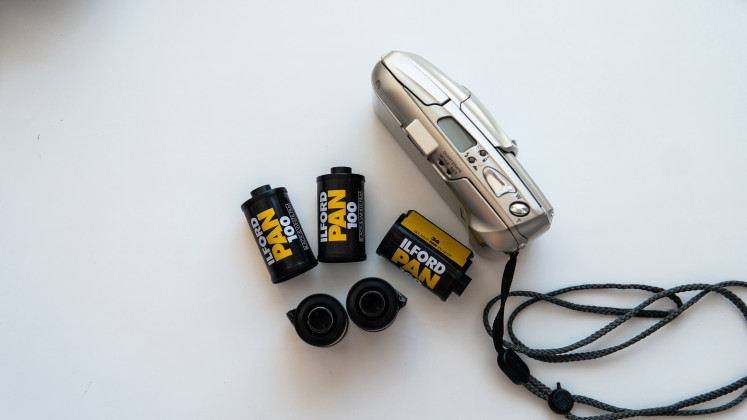
So I looked for a middle ground. I named it “camerologist”. It’s a side quest involving analog photography, where infinite scrolls were replaced by deliberate clicks from my Fujifilm DL-150 camera.
 (Shutterstock)
Maybe it was boredom. Maybe instinct. Either way, it was an attempt to replace screen time with something tactile, slower and self-directed, a creative endeavor. After all, I couldn’t go cold turkey with nothing to hold on to.

Thank you!
For signing up to our newsletter.
Please check your email for your newsletter subscription.
Three days offline
Inspired by David Strayer’s Three-Day Effect, I learned what many already sense intuitively: The brain needs at least 72 hours away from digital saturation to reset.
“The three-day minimum appears to be the threshold for measurable cognitive restoration,” Strayer said.
“That first day in nature, your mind is recalibrating and you start to notice things a little bit, to unwind from the modern world.”
I planned a modest experiment of this mini digital detox: a weekend reset. Just four hours of screen time per day. Fresh air. Organic laughter. Film photos. In short, I created a three-day schedule for my inner camerologist.
A digital detox isn’t about abandoning the online world. It’s about pausing long enough to remember there’s more beyond it.
Friday, a national holiday, started imperfectly. I clocked six hours of screen time, mostly Google Maps and Spotify. Not a win, but not a failure either. I wandered through Menteng with my camera, ditched the car, and took public transportstion for a photo-hunting stroll. I let the day stretch.
Saturday felt lighter, a small step forward. I wasn’t sure how many hours I spent on my phone, but we made a pact: no Instagram stories, just presence. We visited a library, then walked through Cikini. It was conversations between shelves, a day focusing on real pages and print books.
Sunday, the final round, was harder. All I wanted was to stay curled up in my cold bedroom. I stayed in, cooked lunch, read seven or eight pages then binge-watched Netflix. The camera stayed unused until later. Not failure, just friction.
The payoff
What this experiment offered wasn’t transformation. It was awareness.
My three-day reset, even though it did not go exactly as planned, made me realize a digital detox isn’t about abandoning the online world. It’s about pausing long enough to remember there’s more beyond it. It’s about being conscious of the moment, about being willing to wait.
 (Shutterstock)
Unlike digicams, analog cameras turn waiting into momentum. Limited frames mean restraint. No spray-and-pray. No instant validation. I had to wait, and surprisingly, that felt okay.
But let’s be real. Jakarta without GPS is a total nightmare. Film rolls are a moody partner. One wrong rewind and my “masterpiece” turns into a series of dark blobs.
And the hardest part? Letting go of instant gratification feels like loosening your grip mid-fall.
Planning a detox isn’t complicated, but following through, recognizing your addiction and admitting dependency are.
As a 2004 baby who once carried a 2008 Blackberry 8220 Pearl Flip in middle school, I realized how much I miss being alone with my thoughts, free from interruption or distraction.
Maybe my not-so-cheap analog habit isn’t indulgent after all. Maybe it isn’t a waste of time either. Maybe it’s a tribute to tools that didn’t demand attention every second, like that old flip phone.
By the end, I want to do more of those mini escapes. I felt refreshed, and time stretched a bit longer. I could do more of these no-internet maze catch-ups because it means I don’t need to be everywhere at once.
Living with screens and presence
Full disclosure: This isn’t my first digital detox. But a pattern is starting to emerge. Every attempt to set boundaries circles back to the same question: Do I actually want to disconnect?
Letting go of digital life completely feels unrealistic, almost absurd. The internet was created for convenience, and convenience has become an instinct, a lifestyle, a second nature. We use digital tools to make life easier, and that’s okay.
But stepping away taught me something essential: Attention isn’t infinite; it’s something we choose. And choosing it doesn’t have to feel rigid. Ultimately, it’s about balance.
A digital detox, I’ve also learned, is a personal exercise. It works best when it’s intentional and self-designed. It shouldn’t feel like punishment.
Sometimes all it takes is a quiet walk, a small camera and the willingness to let the noise fade, just long enough to get lost in the silence for a while.
Trust me, your nervous system will thank you.
Ainur Kiki is an intern at The Jakarta Post’s Creative Desk. He spends too much money on expensive, niche lattes, and occasion-ally forgets his stomach needs to be fed.