(B/NDL Studios/Budhi Button)
My dad is the best I've ever seen at what he does. He worked hard, brought work home, stayed late and gave the company everything.
For a long time, watching him was how I understood what success looked like. An impressive title, a company that needed you and work that followed you home because you mattered that much.
I wanted to be successful, just like him.
But in 2024, I resigned.
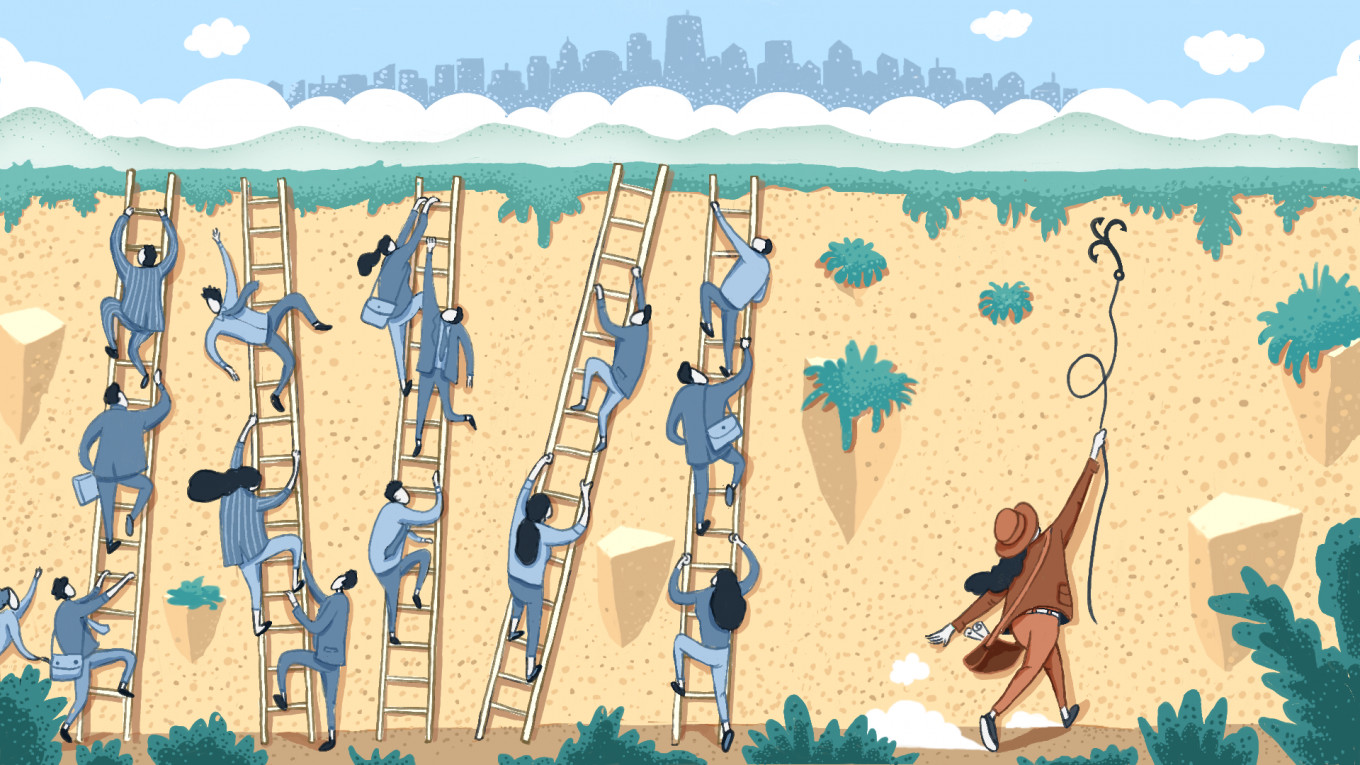
The reason felt almost embarrassingly simple: I could no longer find my purpose inside the structure I was in, and I wanted to keep writing, really writing, for as long as I could. Not writing as a function, but writing as a life. The corporate ladder wasn't where that life was going to happen, so I stepped off it.
What I didn't say out loud, at least not right away, was that I could afford to. My parents backed me financially when I resigned. That support, the knowledge that there was a floor beneath me if I fell, is the reason I had the freedom to make that choice at all. I'm aware of what that means.

Thank you!
For signing up to our newsletter.
Please check your email for your newsletter subscription.
Not everyone in my generation has that floor. A lot of them are the floor, for their parents or siblings, for households that don't run without their paycheck. The choice I made as an act of self-determination is, for many of my peers, simply not available.
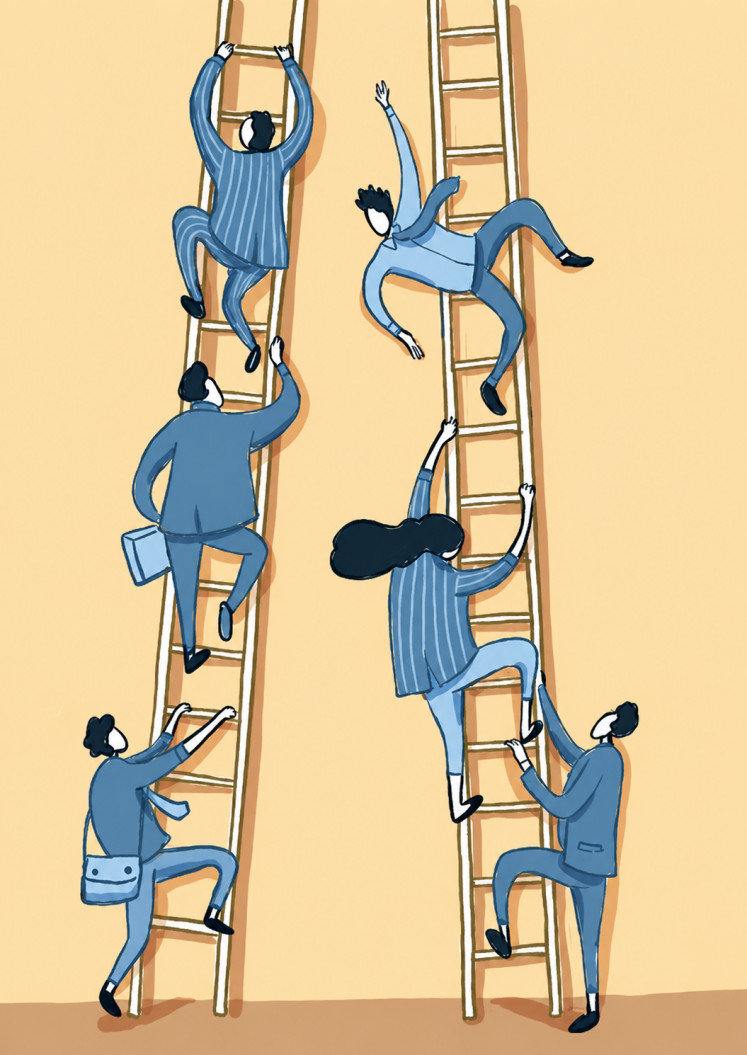
But whether we stay or go, most of us have already stopped measuring ourselves by the ladder.
What’s on the other side
In the year-plus since I left, I've secured a book deal, launched a podcast, done sustainability reporting, collaborated with journalists across several time zones and taught myself data scraping and coding. I even earned a Global Reporting Initiative certification.
I became, slowly, the kind of writer I'd only imagined being. And here’s the bonus: Freelancing has allowed me to earn more than what I used to.
None of it would have happened if I'd stayed.
None of it came without a cost either. Pitching is relentless. The work doesn't stop when the workday does, because there is no workday: There's just the work, always, at the edges of everything. Some evenings I miss dinners with friends because a deadline doesn't care about time zones. Some months, the uncertainty is loud.
But my dad's version of success also had its own costs. He bore them for the company, for us, for a life he was building.
I bear mine for myself, for a life I'm still figuring out. I'm not sure either one is easier, but I know that my version, where I can be my own boss, create the exact working environment I thrive in, tell the stories that matter to me, and even earn more, is a better fit for me.
What we’re looking for
Many dismiss us as the “strawberry generation”, accusing us of being too soft, too easily bruised to survive real workplace pressure.
The statistics seem to support them, at least on the surface. Deloitte’s Gen Z and Millennial Survey found that 50 percent of Gen Zs in Indonesia who resigned did so to seek work-life balance. Easy enough to read that as avoidance.
But Febi Ivanka, 27, who has worked at three companies in less than five years, a Big Four accounting firm, an FMCG company, then agribusiness, pushes back on that narrative.
"I didn't job-hop because I was bored," she told me. "I moved because I paid attention to what each place taught me about myself.”
We don’t quit jobs because we’re lazy or disloyal or unable to commit.
On the contrary: “I think we're just more self-aware earlier,” she said. “We don't want to waste 10 years just to find out we're in the wrong place."
Leaving the Big Four, she says, was one of the hardest things she's done.
"My mental health was really compromised," she said. "So it was also a relief once I did it." Leaving her second company was harder in a different way. "I'd actually built something there. I was proud of it. So leaving felt more like graduation than escape. I left on my own terms."
That's not fragility. That's self-knowledge.
Ina Liem, an education and career consultant, says we can't expect every person to be suited to a corporate environment, and some workplace cultures themselves have become deterrents for many.
In the Deloitte survey, 77 percent said their job is a major factor contributing to feelings of anxiety or stress.
"Each person brings different work values to the table," she told me.
"Job seekers and employers alike must ask whether their values truly align. Some workers prioritize flexible hours, others chase high income, and still others seek recognition, status, or a harmonious environment. The list goes on."
A mismatch, when it exists, is corrosive. And Gen Z, she suggests, is simply less willing to endure it quietly.
A different kind of ambition
In the Deloitte survey, only 6 percent of Gen Z respondents want to become managers in their current roles. But this isn’t because we lack ambition.
For Febi, what she wants isn’t a fancy job title but mastery, to be the person in the room who actually knows what she's talking about. Leadership, for her, is a function of competence, not a rung on an org chart.
"I'm not going to force myself to become some 'important person' with a fancy title just because that's what everyone expects," she said.
I'm not looking for status from my job either. I want to be more present, to fully explore the kind of stories I can tell and skills I can develop, to have ownership of my time and earning capacity.
This isn’t a lack of ambition. It’s a different kind of ambition.
 (B/NDL Studios/Budhi Button)
Human capital expert Adriana Novitasari, who has 30 years of experience in the field, says that by prioritizing personal fulfillment over traditional corporate hierarchies, Gen Z is simply making different, not inferior, career decisions.
"Gen Z are as likely to lead as they are to be led," she said. "The professional landscape has fundamentally shifted."
The same Deloitte survey says that 66 percent of Gen Zs in Indonesia say they are building skills to advance their careers, logging time before or after work at least once a week or on their days off. Some 34 percent of those who quit left in pursuit of financial independence.
Even more striking, 97 percent of Gen Zs in Indonesia consider a sense of purpose very or somewhat important to their job satisfaction.
So we are working, actively, toward better versions of ourselves.
What's harder to generalize is what purpose actually means to us, and why so many of us have concluded that the corporate ladder isn't the place to find it.
Because times are changing
What I know is this: the skills I've built since I left, coding, data journalism, multimedia storytelling, are the ones that make me employable in the world that's actually coming, not the one my dad navigated. I learned most of them on my own time, after hours, out of necessity to navigate the changes happening around us.
With AI reshaping what writing can and can't be, standing still inside any structure, corporate or otherwise, is its own kind of risk.
My father's model of success still moves me. The commitment, the discipline, the pride in doing something well that I witnessed growing up, I didn't reject them. I translated them.
The difference is that I'm doing it for a story I chose, not one that was handed to me with a job offer. Some days that feels like freedom, but some days it just feels like a lot of weight to carry alone.
I'm not sure I'd tell someone without a safety net to do what I did. I don't think I've earned that advice. What I would say is that the version of success we inherited, the ladder, the title, the office that needs you, was always just one model. It worked for some people and it didn't for others, and that was true long before my generation came along.
Yohana Belinda writes about pop culture with a business twist. Her ABCs stand for ambition, bag charms and capybara.