(Shutterstock)
By day, I'm a writer, which I genuinely enjoy: It's dynamic, I get to meet interesting people, chase good stories. I also have a band, which is something else entirely.
We play original songs in cramped venues across Jakarta, and for a long time it was the one part of my week that existed completely outside everything else: no performance metrics, no deliverables, no audience-targeted optimization, just a group of friends making silly noise we like.
I'm not sure I can say that anymore. Somewhere along the way, I started thinking about it differently. Are we doing it correctly? Are we playing the right rooms?
I don't know exactly when that shift happened, I just know the thing I did to escape the logic of work has started to feel a little like work. I'm not alone in this, and it's no coincidence.
 (Courtesy of Maseta)
In Jakarta today, around 180,000 workers hold multiple jobs, up 92 percent from 94,000 in 2010. The standard explanation is economic pressure: wages that don't stretch, costs that keep rising, a job market that offers less security than it once did.
Thank you!
For signing up to our newsletter.
Please check your email for your newsletter subscription.
That's all real, but it doesn't fully explain what's happening to a generation that, according to a 2024 study in the United States by Canva and PureSpectrum, is actually the least money-motivated when it comes to side hustles. Among Gen Z respondents, only 43 percent cite extra income as their primary driver, compared to 61 percent of millennials and 63 percent of Gen X.
This raises a different question entirely. If side hustles aren't primarily about money for this generation, what are they about? And what happens to them once the economy finds them anyway?
The thing that was uniquely ours
According to the Canva survey, Gen Z’s more common reasons for having a side hustle are what you’d expect from a generation known to care less about the corporate ladder: creative expression, personal growth and passion.
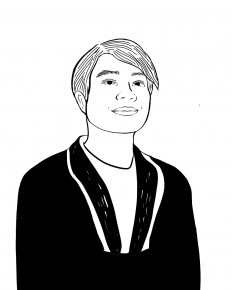
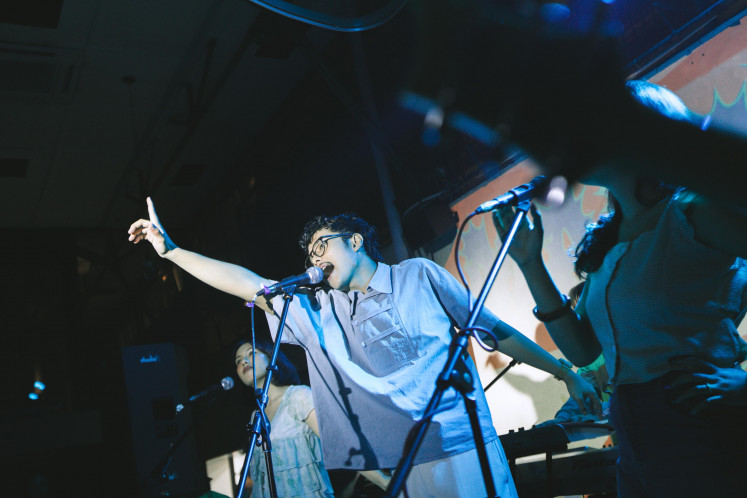
For Teto, 24, a part-time musician who goes by the stage name Maseta, it’s the love of performing.
“Performing, meeting people through shows, learning the industry, it's deeply fulfilling,” he says. “And luckily, everyone I make music with are my mates.”
Jamming doubles as hanging out. That’s the whole point.
Tanya, 23, a freelance illustrator who goes by Majahari Society (@majaharisociety), started drawing as an escape from university assignments, just to have somewhere to put her mind that wasn't a philosophy essay.
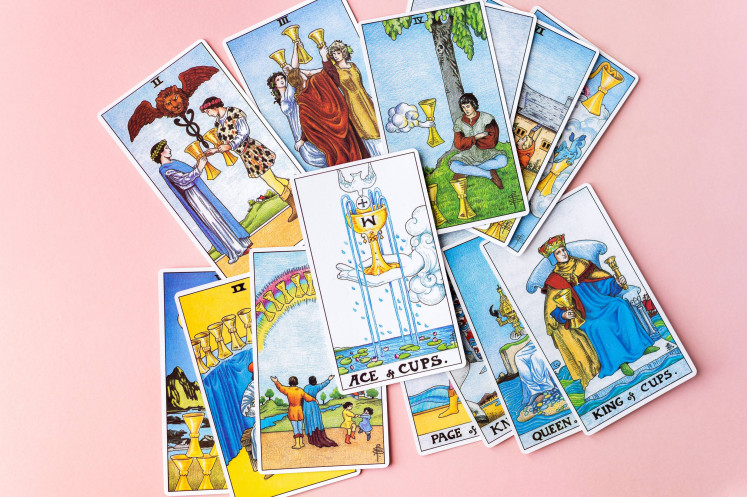
Tisyam, 24, (@tisyyam) began reading tarot cards for her friends for the same reason most people do anything in their spare time: personal enjoyment.
"At first, I only did this for my friends," she says. "They told me [my readings] are pretty accurate and helpful, so they urged me to try it with people outside my circle."
 (Shutterstock)
Three different people with three different pursuits, all started for essentially the same reason. Whether music, illustration or tarot, this was what was theirs, what existed outside the capitalist structure. It didn't need to justify itself.
We sometimes talk about passion projects as though they were always proto-businesses just waiting to be activated. But most of them started as the opposite: a refuge from the parts of life that already had to perform.
What followed us in
Here's what's different now, and what the previous generation of hobbyists didn’t have to contend with: The infrastructure of monetization and optimization is no longer something you have to seek out; it seeks you.
Every platform that hosts your creative work also tells you what it could be worth. Every algorithm that shows you someone else succeeding with your hobby is also implicitly asking why you aren't.
Every comment section, every DM, every well-meaning friend or family member asking if you've thought about turning it into something, this all adds up into a continuous, ambient pressure.
There is now a mechanism that makes hobbyists like us feel like we’re not doing enough, that we’re leaving money on the table.
Maseta feels this akin to a checklist.
"Success in music is really difficult to measure, right? But there are so many stories of musicians making it nowadays and all the details of how they did it are just out there online,” he says.
“Now there are these checklists I feel I should follow so that I'm doing things right."
He's not sure following these checklists makes him a better artist, but ignoring them feels like a choice he has to make actively, not a default.
For Tanya, it arrived at the dinner table.
"My family is nudging me to build a specific portfolio that can guide me to a wider pool of clients. But I know what niche I enjoy, and it doesn't always match with what sells," she says.
Tisyam compares it to an internal voice she didn't invite.
"There is this internalized sense of pressure to not waste time, a kind of push to always be productive because of social media," she says.
She still loves doing tarot readings. But the thought is there now, sitting in the background: Am I making enough of this?
What's changed for my generation isn't that passion and money sometimes conflict; that tension is ancient. What's changed now is that there is almost no space where the optimization pressure cannot reach.
I feel this with the band. There are nights after a gig where, instead of just enjoying the fact that we played and it was good, I find myself thinking about whether we should have filmed it, whether we're building toward something or just having fun. “Just having fun” used to be the answer, but now I'm not always sure it still feels like enough.
What it costs
The pricing derives from the most basic currencies: time, energy, creative capacity. And for some, the financial math barely adds up.
Tanya earns around Rp 500,000 (US$28) per commission for roughly four hours of work. Tisyam charges between Rp 70,000 and Rp 150,000 per tarot session, which can run anywhere from 30 minutes to over an hour.
Maseta and I sometimes walk away from a gig with nothing more than a free meal, which is less a reflection of effort than of a live music industry that still has no standardized fee structure for performers.
Maseta hasn't written a new song in a year or so, because the space where the songs used to come from has been filled with other things: positioning, digital presence, the operational costs of keeping a music career alive in a country that has no standard fees for live musicians and no institutional support system for working artists. He uses his salary to fund the non-recording side of his career and counts leave days when shows fall on weekdays.
"In my head it's always, when I get home I can work on demos, finish some lyrics," he says. "But that rarely happens. I'm just in bed."
He's already trading his social life to keep both things running. "It's just kinda sad to think that I consume more than I create as an artist."
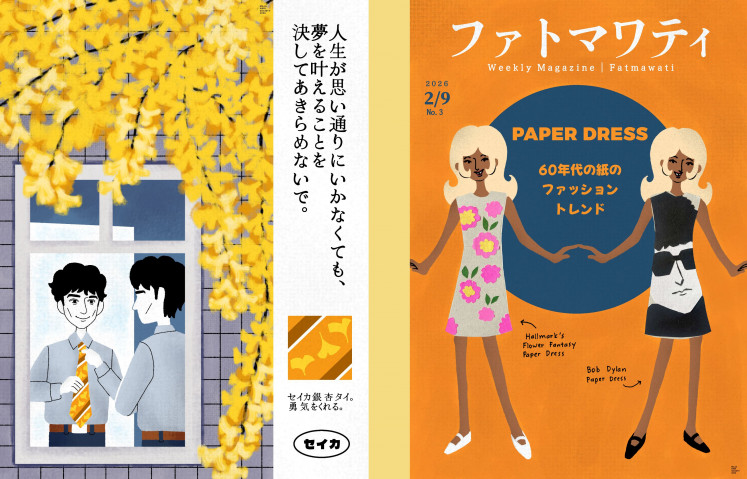
Tanya has learned to ration herself. "It still makes me happy to draw. but if I do this constantly, I will burn out," she says, noting that the best part of being an illustrator is the freedom to create wherever she wants. However, this still exists within the constraints of everything else.
"Time management is the toughest part, allocating when I should draw and when I should just enjoy free time doing something else. It's a tricky balancing act."
 (Courtesy of Majahari Society)
Tisyam comes home from her day job to a list of people waiting for a reading. "Sometimes I get home and I can't fully rest yet because there's still a list of people I need to tarot for."
The in-person sessions take more, and the list doesn't clear when her workday ends.
What they're all describing, in different ways, is the same thing: the refuge has a schedule now. The thing that used to restore them is also making demands.
What we’re holding on to
Something about having these two lives, this contrasting duality, makes the other more bearable.
That's how I'd put it anyway. The band makes the writing job feel lighter, while the writing job gives the band room to breathe: because it doesn't have to be everything, it gets to stay fun. I'm not sure either one would feel the same without the other running alongside it.
So none of us are walking away.
Maseta has made a particular peace with it. "I used to think I had to be a rock star, that I couldn't have an office job. But now I'm just happy that I still get to enjoy doing music. As long as I'm happy doing it."
The pressure, he says, is what can eat you, so he's chosen not to let it. His day job makes the music feel like play. Without it, he's not sure the music would feel the same way.
Tanya's vision is the most deliberate: She wants her work as Majahari Society to run parallel to her graphic design career, each reinforcing the other, neither consuming everything.
"A lot of people my age feel that just doing a nine-to-five is insufficient these days. I'm hoping I can use the skills I'm passionate about at a steadier workplace while still developing my portfolio as a freelance illustrator," she says.
Tisyam wants to grow — have more reach, better systems, an actual social media presence for her practice — but on terms that keep the thing she loves intact.
"I need to come up with a better scheduling system so that I don't get overwhelmed,” she says. For all three, whatever their endgame, the immediate goal is the same: to keep the hobby alive inside the monetization, to hold on to the part that started all of this, the part that was just theirs, before everything else found it.
The same is true for me. Despite the cumulative hours that surely surpass a typical 40-hour workweek, I still want to write, and I still look forward to creating music with my friends that 13-year-old me would have loved. Both sides give something the other simply can't.
It’s a tightrope of vocation and passion that still holds true, even when the balancing act is hard. I just hope I don't end up burning myself from both ends of the candle.
Aqraa Sagir is a writer for The Jakarta Post's Creative Desk. He’s chronically online in the hope it would be a useful asset for the job.