Dating is messy, even more in our 20s and 30s on dating apps. And while most of us try to forget our past love lives, Mira Sumanti has turned hers into a book.
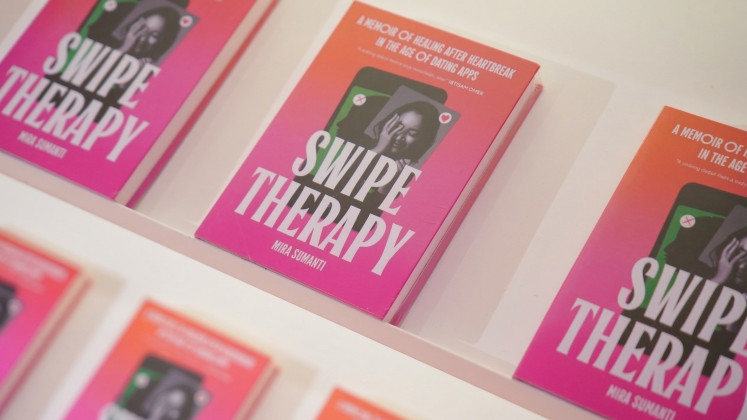
“It's part memoir, part breakup survival guide for the Tinder generation. It's not a self-help book, but it does come with reflections and learnings from my own personal experience,” she tells me when I ask her to describe Swipe Therapy.
The book follows Mira after a messy breakup in 2016, moving through a series of brief romantic encounters: a neuroscientist, a pornstar, a divorced banker, all met through dating apps, where connection is instant and understanding isn’t usually part of the deal.
Set between the streets of San Francisco and the nightclubs of Amsterdam, the story captures the chaos and red flags of love at a time when we’re still figuring ourselves out.
“I remember when I went through that breakup journey, it was really, really painful. It affected my work, my sleep, everything,” Mira recalls.
“At that time, I found it hard to relate to a lot of the other stories out there. The closest breakup book that was popular then was Eat Pray Love, written by a white American woman going through a divorce.”

Thank you!
For signing up to our newsletter.
Please check your email for your newsletter subscription.
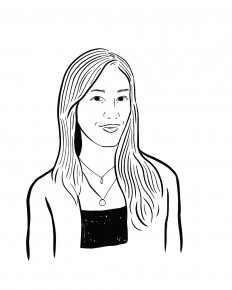
As someone who recently turned 30, I agree that Eat Pray Love isn’t something most people my age relate to. The woman sitting across from me for this interview, an Indonesian, a wife, a mother and a Google marketing executive handling Southeast Asia, feels like a better contender.
Mira now seems far removed from the woman who globe-trotted with an active Tinder profile a decade ago. But she kept the receipts: fragments of the people she met and every version of herself along the way.
Not your usual rom-com
She didn't set out to write a book. They were just private notes, a way to process her experiences, until her sister suggested that her stories sounded like "chick lit."
“When I decided that this was going to be a book, it meant someone else was going to read it,” Mira says.
“I had to look at my experiences and make sense of them. It's actually a form of self-therapy.”
The structure reflects that process.
(Mira Sumanti)
Before the book’s central rupture, an engagement that ended five months before the wedding via text, Mira opens with an unexpected scene from several months after the breakup: herself in an all-black leather outfit in Tokyo, pouring wax on a date, during what had started as a multi-million-dollar budget work trip.
“It's my favorite to write because there's contrast. My career was at its height, but I was extremely lonely and couldn’t share it with anyone,” she says. “I just wanted to have a fleeting romance moment, but it turned out to be a mistake.”
That Tokyo episode is followed in the book by a reunion party in Bali, built on her non-refundable wedding bookings.
Growing up, many of us learned early to sweep negative situations under the rug in the name of family reputation. By throwing a party anyway, Mira doesn't play by those rules. She works through the mess in plain sight.
Lessons, not lovers
The men on the page don’t stay, but the lessons they teach do.
“At first, meeting people through dating apps was to distract and entertain me, to find connection when you're lonely,” she says.
“After a few years of doing that, I realized that when I actually put myself out there, swiping and meeting people, even though a lot of them did not end up becoming my romantic partner or anything, I learned a lot from them.”
In fact, the Bali party was a suggestion from a Tinder date Mira met in Australia.
“It was that neuroscientist who actually convinced me to go to the place where [the wedding] was supposed to be, with the intention of shaping it to become a different event,” she says.
“It’s actually the best way to reclaim that memory and turn it into a positive one.”
Without that push, Mira might not have done it. But the logic made sense, and she followed through.
Some people say don’t date until you're healed, but Mira says otherwise. It can also be part of the process. Dating, for Mira, was never just about finding someone. It was part of the process of finding herself.
The road to clarity
Mira wrote three different versions of the manuscript, each shaped by how she felt at that time: anger, confusion, distance.
Before the version available in bookstores today, the original manuscript was full of profanity and explicit details. She needed eight years to edit the final version. Those years gave enough distance to make it less reactive and more reflective.
“Had I published it years before, I wouldn't have the same level of emotional depth in understanding my own story,” she says. “The eight years were necessary because I think I, as the writer, needed to grow first.”
The final cut also came with another consideration: making sure her child can read it 20 years from now.
Which brought me to an obvious question: even the parts about gaining clarity from drinking ayahuasca, the illegal Amazonian psychedelic brew?
“I'm not shying away from the mistakes or the really messy parts,” she says. “Some people say it’s needed because a lot of memoirs or stories for women are often too rosy. So I think people appreciate that honesty.”
(Mira Sumanti)
While I won't give away how the book ends, I have to say it left me with a longing to call all my friends and reminisce about the versions of ourselves we've tucked away somewhere. Maybe even a little envy for a carefree life I've never quite had, compared to Mira's.
Swipe Therapy reads like a record of becoming. The beauty that is unique to being an ingénue in your 20s: the emotional rollercoaster of wanting everything at once, feeling too much too fast and finding a strange kind of excitement in not having a clue where life is going.
Let’s face it, none of us do.
Sheena Suparman is a writer for The Jakarta Post's Creative Desk. She is based in Jakarta but wishes she could be anywhere else. She’s usually powered by coffee, chips and cheeseburgers.