(Shutterstock)
“You’re too weak.”
“It’s not that bad, you’re overreacting.”
“Just take a Panadol and be quiet!”
Those were some of the things people around me said every month. After a few years, I stopped needing them to say it out loud. The words had become my own inner monologue.
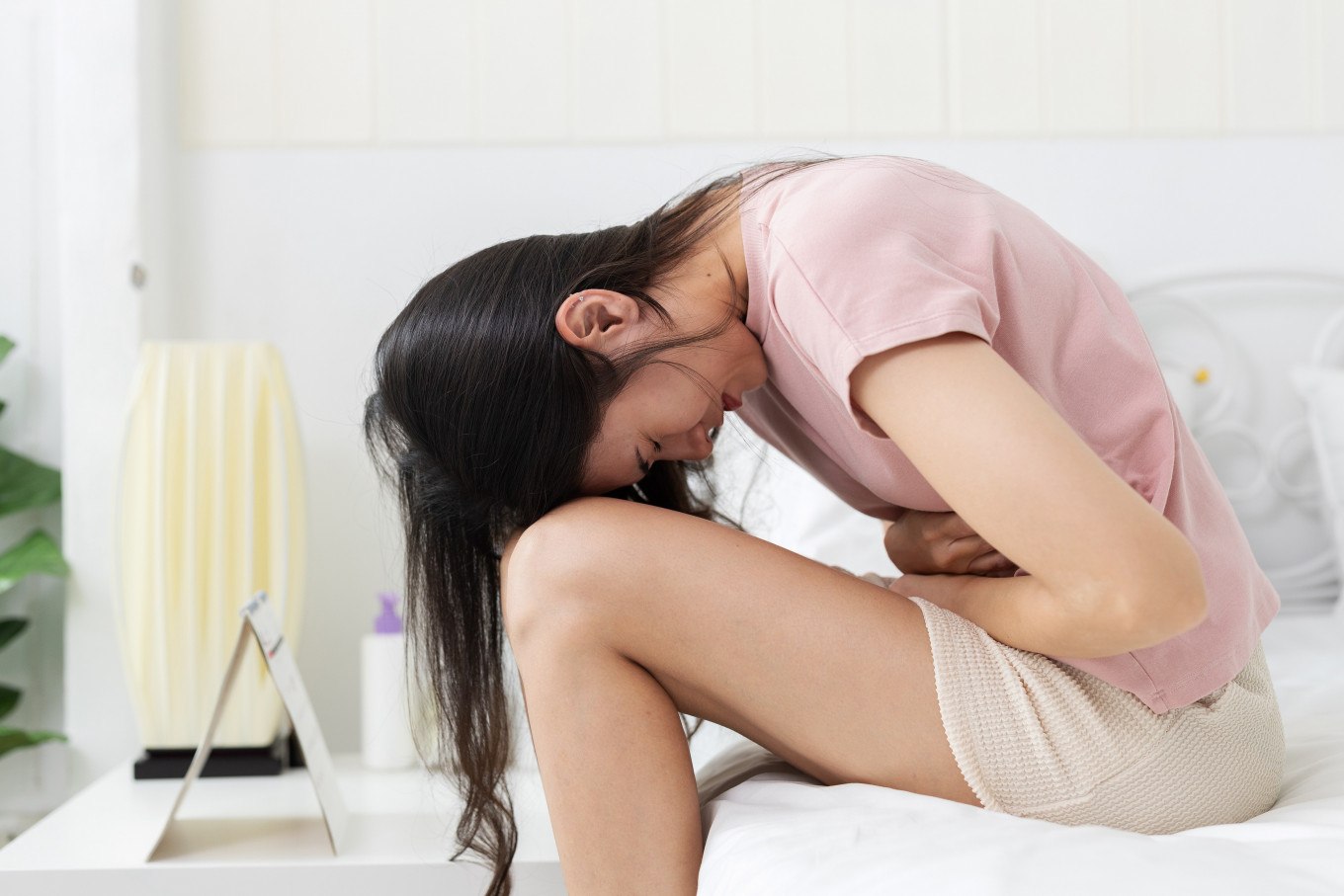
Maybe it was my diet, I told myself, or my lack of physical activity. Either way, taking a day off work to survive dysmenorrhea (painful menstrual cramps) had become a monthly ritual.
I had spent years scouring the internet in an attempt to self-diagnose, reading about endometriosis, a condition where tissue similar to the uterine lining grows outside the uterus, and polycystic ovary syndrome (PCOS), a hormonal disorder that disrupts ovulation and can cause cysts to form on the ovaries, two different conditions, both notoriously underdiagnosed, both capable of making your life miserable every single month.
Thank you!
For signing up to our newsletter.
Please check your email for your newsletter subscription.
All while doing everything in my power to avoid going to an actual doctor. Instead, I stocked up on painkillers and brewed jamu (traditional herbal medicine) and locked my door to suffer alone.
My reasoning, if you could call it that, was simple: If a doctor told me nothing was wrong, I’d have to conclude the pain was all in my head. And I wasn’t sure I could survive that verdict.
But all of that was about to change.
The journey begins
It happened in December. Waking up to stomach pain was not unusual for me. Waking up to pain so severe it pulled me out of a dead sleep, on a day that had nothing to do with my cycle, was something else entirely.
“What the hell did I do to deserve this today?!” I screamed at no one in particular.
It felt different. I opened my period tracking app and confirmed I wasn’t ovulating or due to bleed anytime soon. That should have been my first sign.
After an arduous day of being poked and prodded across a clinic and a radiology center, a gynecologist finally looked at me and said: “You have endometriosis. And based on your ultrasound, you’ve got three serous cystadenoma cysts.”
A serous cystadenoma is a benign tumor filled with clear fluid. It sounds alarming, but it sits at the more manageable end of the ovarian cyst spectrum. The doctor added that they’re usually asymptomatic, which, in some twisted way, made me feel special. My doctor sent me home with a receipt and a prescription for Visanne to manage the endometriosis.
As for the cysts? They’d pass on their own.
Or so we thought.
The diagnosis was my best Christmas present. Not because it was good news exactly, but because it was news. Confirmation that the pain was real. That it was not, and had never been, all in my head.
‘A little cramp,’ they said
There is a lot to overcome when it comes to being an Indonesian woman seeking good healthcare, even for one with adequate insurance and generous parents.
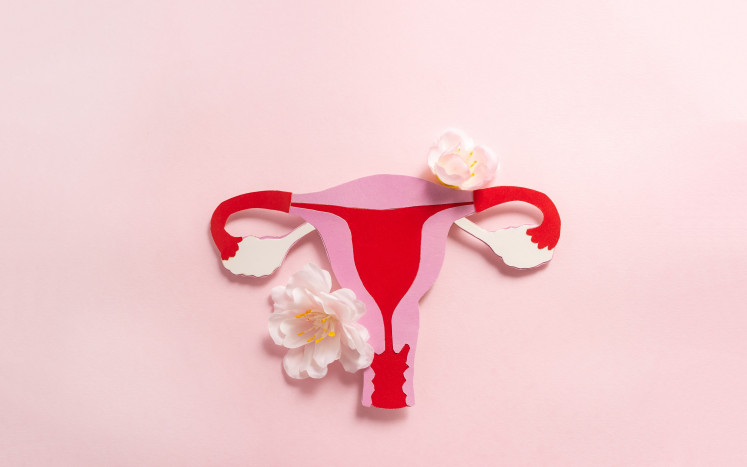
According to data from the Indonesian Demographic and Health Survey (SDKI), the incidence of ovarian cysts in Indonesia reaches 37.2 percent, a bit over a third of all women, generally occurring in those within reproductive age. And yet the stigma is real.
 (Shutterstock)
When the word “cyst” becomes kista in Indonesian, the images that surface are either saintly or grotesque: Mother Teresa, or Dr. Pimple Popper videos on Instagram. When I showed family members my ultrasound pictures, they grimaced.
“You say it almost like you’re proud of it,” one cousin said. “What did you do to let it get that big anyway?”
The exact cause of ovarian cysts isn’t fully understood. Most are harmless and resolve without treatment. But some can twist or rupture, leading to serious complications. In rare cases, they may be cancerous.
Dr. Ni Made Desy Suratih, an obstetrician-gynecologist at Smart Fertility Clinic who specializes in reproductive endocrinology and infertility, has her own insight into what drives them.
“The basis of these conditions is high inflammation, which is why endometriosis and PCOS are so connected to it. Lifestyle matters: reduce ultra-processed foods, reduce high-glucose foods, go back to real food, fiber, protein. Anything that reduces inflammation helps,” she said.
As for why I hadn’t detected anything sooner: that one took some honest reckoning.
When my doctor pressed me on how cysts had grown to the size of mandarin oranges without my noticing, we arrived at the same answer. I had spent years dismissing every symptom as an ordinary menstrual cramp. Categorizing pain, filing it away, moving on.
Nobody goes to the doctor for monthly cramps. We’ve been conditioned to endure them. To toughen up. To not make a fuss.
The research gap behind this conditioning is worth naming. Erectile dysfunction, which affects 19 percent of men, is studied five times more often in clinical research than premenstrual syndrome (PMS), which affects 90 percent of women. The bodies doing most of the suffering are, statistically, the ones getting the least attention.
The consequence is measurable. On average, it takes eight years for a woman to be diagnosed with endometriosis. In my case, I first suspected something was wrong 15 years before that doctor finally confirmed it.
“Over the years, women get wrong diagnoses: irritable bowel syndrome, generalized cramps. Or it’s simply dismissed as normal, especially in Indonesia,” said Dr. Ni Made Desy.
She added, with a dry laugh, “Because it’s not normal. I don’t believe God condemned us as women to have pain every single month.”
Looking back, I think what kept me from the gynecologist for so long wasn’t just fear of being told nothing was wrong. It was that, in the past, doctors had told me nothing was wrong. Cramps were normal, they said. They’d probably stop once I got married.
I have never been a believer in the “Love conquers all” school of thought, but I especially did not need a doctor to explain how a husband might calm my uterus.
Singapore, a second opinion and surgery
After careful consideration, my parents urged me to go to Singapore for a second opinion.
The ultrasound there came with new information. There were now two cysts, not three. But the larger one had been reclassified: it was an endometrioma, also known as a chocolate cyst. Filled with old blood, endometriomas are caused by endometrial-like tissue that was shed during menstruation and traveled backward into the fallopian tubes and ovary.
This Willy Wonka-adjacent development was, most likely, the real culprit behind 15 years of agonizing periods.
If the first consultation had felt like a breath of relief, the second made me stop breathing entirely. Because this diagnosis came with a recommendation: laparoscopic surgery to remove the endometriomas, given that mine were both painful and larger than four centimeters. I checked every box.
The doctor called it a ticking time bomb and scheduled the procedure to coincide with Endometriosis Awareness Month. A laparoscopic bilateral ovarian cystectomy, to be precise. What unnerved me most was the moment the surgeon handwrote the word “complicated” right next to the procedure name on the form.
 (Shutterstock)
About two months later, I was in a surgical cap and gown, being wheeled into an operating room at Thomson Medical Center, Singapore. It felt, oddly, like a graduation: from being the woman who sobbed through what everyone called a little cramp, to whatever came next.
The operating room was painted in soft blue, which made my fuchsia hospital gown something of a statement. The nurses smiled and told me not to worry. Before I knew it, a mask was placed over my mouth, and I was gone. Beneath the fear, I felt something else: a kind of relief. I had been waiting, in some way, for this day for a very long time.
I woke up with three bandages on my stomach and a generous dose of painkillers in my bloodstream. A new chapter, as they say. One that would, for the first time, prioritize healing over suffering in silence.
Endometriosis Awareness Month may be over, but for the roughly 10 percent of Indonesian women living with this condition, the battle is not. Many are still fighting it in silence. Some haven’t yet realized they’re fighting it at all, partly because the system designed to help them has spent decades telling them the pain is normal.
It wasn’t easy to get here. In the past, I refused to consider birth control because of the Catholic teachings my family follows. I avoided doctors because I’d read somewhere on Instagram that the only way to diagnose endometriosis was through exploratory surgery. I told myself the cramps were just part of being a woman. All of it looks different now.
My cousin’s voice comes back sometimes: “You say it almost like you’re proud of it.”
I am. Not of the cysts themselves, but of what it took to finally be believed. After 15 years of being told the pain was in my head, getting a diagnosis wasn’t just a medical outcome. It was proof that I had been right all along, and that I deserved to know it.
Sheena Suparman is a writer for The Jakarta Post's Creative Desk. She is based in Jakarta but wishes she could be anywhere else. She’s usually powered by coffee, chips and cheeseburgers.