(B/NDL Studios/Budhi Button)
It lasted three months. In the beginning, I was already cautious with his generous amount of attention, fearing that it was a case of love-bombing. But as we spent more time together, the attention and care felt persistent and consistent. We shared our vision of an ideal marriage life. I was emotionally invested. But the build-up led nowhere.
Social media calls them the almost-men. I’d call it what it was: a waste of energy.
Truthfully, it wasn’t just the lack of commitment that bothered me. It was the gaslighting that followed my asking for clarity. The emotional labor of waiting, doubting and being patient was intense, and I knew it could be the prelude to something worse. It was a clear sign of what I didn’t want: a relationship where I had to make myself smaller just to make it work.
“Ugh, he’s just a boy. Leave,” my best friend warned me.
So we stopped talking. After a couple of weeks regaining my footing, I woke up with a great sense of clarity: I had become someone I was not while I was with him. It felt like a familiar cautionary tale: To find someone who won't shrink you down.
What women are actually asking for

Thank you!
For signing up to our newsletter.
Please check your email for your newsletter subscription.
My mom once joked that marriage is like walking toward some kind of death sentence. "But your husband is coming together with you! So you're like, dying together."
It sounds bleak, but it’s a joke I do take seriously. Marriage is already tough, and being in an unhappy marriage is the worst kind of hell. Many women in my generation look up to their parents for pointers of what to look for and what to run away from.
Given the power dynamics involved, there are many reasons why women hope for a partnership where they don’t feel misunderstood, alienated and alone. But what would it actually take to be in a good one?
“People back then didn’t go into a marriage to be happy, that’s a new phenomenon,” said Mayang Puti, a lecturer and sociologist at Universitas Negeri Jakarta.
“So women also entered marriage not expecting that both partners can grow in a relationship.”
It’s no longer a reality that many women are willing to accept.
Women want men who aren’t just able to share the financial burden, but also a mental and emotional one. The goal isn’t just to build a family, but to build a life together, where each one flourishes, where neither individual loses themselves.
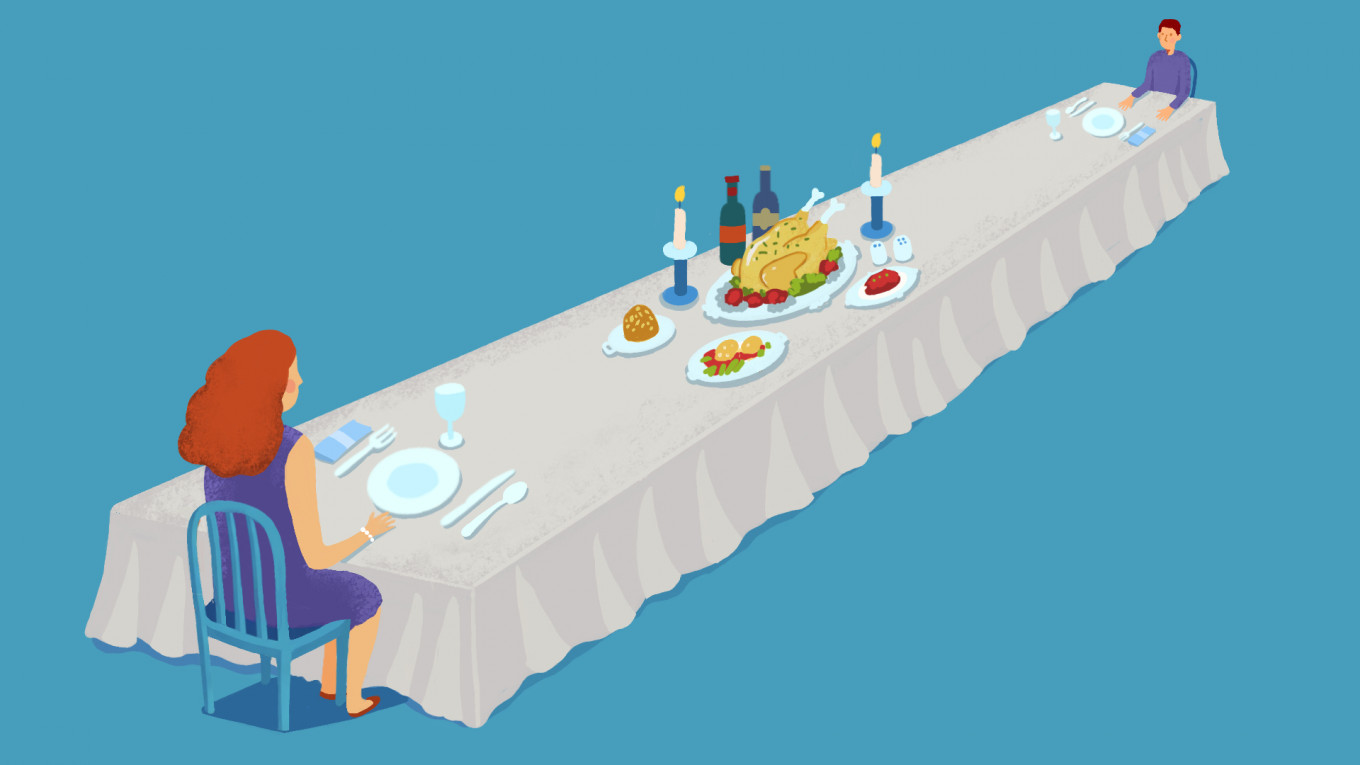
 (B/NDL Studios/Budhi Button)
Sometimes it sounds like an impossibly high standard, but every time I spoke with women, single or married, these requirements seemed like common sense.
“I don't need somebody who agrees with me all the time. Women nowadays aren’t expecting to be taken care of 100 percent,” said Erika, a 31-year-old project manager.
“I’m just hoping for someone who understands and respects each other's point of view. A companion.”
For Erika, that someone, at one point, was her high school friend. Like some friendships that turn romantic, the relationship wasn’t all fireworks and rainbows. It was very laid back, “and easy,” she said.
In many ways, he showed her what a good relationship could look like. He tended to her needs when she was busy, showing her attention through small acts of service.
But issues remained unresolved for months, including how they each valued leisure time. Those small differences eventually revealed a larger incompatibility in values, and led to a breakup.
“It’s neither of our faults. It just didn't work,” said Erika. “I’m more comfortable with myself now, enough to let things go.”
It’s a theme that keeps recurring every time I talk to women about dating: a desire to maintain their personal principles and still be treated as an equal. The task seems equal to finding a unicorn.
The gap we weren’t prepared for
The problem is that many men were never given the tools to be what women are describing. And that’s not entirely any one individual’s fault. The issue is structural.
“Many millennial and Gen Z women were socialized since childhood by their parents to chase a career, to be like men. But the same generation of men were not taught to do chores, or to be self-reflective and vulnerable,” said Mayang. “So there’s an obvious gap.”
Growing up with a mother who’s an entrepreneur, I never felt having a career was a masculine choice. But that also means I grew up in the minority, in a society where, as Mayang pointed out, the question still being asked is: “Who’s going to do the chores?”
In her research on masculinity, Mayang has met men who were willing to do the extra mile, but were strongly discouraged by their parents.
“Many men are stuck having to balance the traditional views of their parents and the new expectations from women,” said Putti.
It’s a competition, in other words, between the world they were raised in and the one their partners are asking them to build.
Some women aren’t even getting to that question yet.
For 24-year-old Nana, finding a boyfriend still involves vetting through endless messages implying sex.
“It’s frustrating,” she said. “ I’m surprised by how often we find men who just want to sleep around.
Nana already feels pressure from her parents to get married, but looking at how many relationships fail, she fears that marriage is still far down the road. “I just want a good person. But where are all the good men?”
Adjusting to new social standards isn’t impossible, but it is often easier when men have a role model, especially a father.
“Men who grew up with a healthy relationship with their father and who witness a good, not–so-patriarchal relationship between their parents tend to be more adaptive to the new standards,” said Mayang.
It’s worth reminding that Indonesia’s fatherless rate stands at 21 percent.
Yasher Fadhli knows exactly how this plays out. His parents divorced when he was in fifth grade. Growing up with a wonderful but dominant mother, he often wondered what it means to be a man. Without a clear father figure, he looked up to fictional characters like Uncle Iroh from Avatar: The Last Airbender, and to public figures like BJ Habibie and Gus Dur.
“They’ve lived long enough to gain wisdom about life, unlike many young influencers who are still too young to understand it,” said Yasher, the cofounder and CEO of Ranum, a matchmaking and coaching platform.
Even then, when he was in college, Yasher thought that being a man meant taking on a dominant, superior role in a relationship.
“That certainly didn’t end up well with women,” he laughed.
He learned, he picked up books and looked up to better role models. That process, he said, saved him from being drawn into women-hating groups online.
What stepping up actually looks like
Yasher is now clear on what he believes is at the center of any good relationship: emotional availability. Not grand gestures or financial provision, but the willingness to actually show up, and to keep showing up even when it’s uncomfortable.
“It takes both resilience and surrendering the ego,” he said. “Without this realization, many men can recede into a more extremist point of view.”
The path there, he insists, is learning. Not a seminar or a self-help algorithm, but a genuine willingness to fail, adjust and try again.
“Fail, fail better and learn more. That’s how you cultivate your self-worth,” he said.
“If men stop learning, they’ll stuck in a certain mindset.”
And as for broadcasting frustration about dating on social media? “That’s just spreading an unhealthy mindset.”
In the meantime, women like us will hold to what my grandmother told me a year before she passed, “Take your time!”
Erika, who has been single for three years, knows that life without the right partner isn’t as terrifying as she once thought. “I'm not against marriage, but I’m also not forcing myself. I don’t want it to be a one-step-forward, three-step-backward situation.”
Nana, meanwhile, is pursuing a postgraduate degree in policy analysis and is more careful now about where she spends her energy. She still scrolls, she said, but only meets people “if it’s worthwhile”.
None of us are waiting to be rescued, but we’re also not asking for the extraordinary. What we want is a partner who can share the mental and emotional load, respect our individuality and stay curious about who we are. That’s the bar.
And for too many men, it’s still out of reach, not because they lack the capacity, but because no one ever taught them it was their job to clear it.
Closing that gap starts with men choosing to learn, and then actually doing it. It means being vulnerable, self-reflective and willing to change. Not for the sake of dating, but because the alternative—remaining emotionally closed off, defensive and frozen in an outdated script—doesn’t serve anyone. Least of all, themselves.
Michelle Anindya is a writer and journalist. From her home in Bali, she writes about anything from coffee to tech.