(Shutterstock)
In the corner of my mother’s kitchen, there is a refrigerator that has survived five presidents, the Great Recession, and several graduations in the family. If you lean in close and look at the upper right corner, you will see a big, faded scrawl in black permanent marker: “7 DES ‘00”.
This is my mother’s ritual. Every time a major appliance entered our home, a washing machine, a television, even newly painted walls, she would perform a quiet, almost sacred inauguration. She would uncap a marker and date the object.
But why?
She’d always say, “Let’s see how long it lasts.”
For her, those dates weren’t notes; they were a challenge. Things didn’t lose value once you brought them home; they earned value by surviving. A fridge that hums for 20 years or a cabinet older than me wasn’t outdated. It was a veteran.
My late father had his own quiet form of rebellion. He kept riding the same early ‘90s motorcycle, lovingly maintained through sheer patience and skill. While everyone else upgraded to modern bikes, he stuck with his old one without a hint of insecurity. Things were tools, not status symbols. He bought new clothes only when the old ones truly gave up, repaired whatever he could and carried a sense of enough that I still struggle to match.

Thank you!
For signing up to our newsletter.
Please check your email for your newsletter subscription.
And then there’s me. I work in an energy and climate think tank, armed with degrees and data. I spend my days analyzing energy transitions and climate policy. I know exactly how much carbon sits inside a polyester shirt versus an organic cotton one.
And that, ironically, is where the problem starts.
The expert’s dilemma
There’s a specific kind of burden that comes with knowing too much. It’s that feeling of guilt and overthinking when it comes to lifestyle.
My parents, whom I consider "natural simplifiers", don't reduce their consumption out of concern for the 1.5-degree Celsius warming limit. Instead, their actions stem from a long-standing, traditional respect for resources. Their approach to sustainability is instinctually rooted in innocence.
I, on the other hand, have lost that innocence.
When I visit a shiny mall, what I consider our city’s real cathedrals of consumption, or browse online shopping sites, I don’t just see clothes or shoes on display. I picture the entire supply chain. I see the liters of water used to dye the fabric in a factory in Bangladesh, or closer, in West Java and Central Java, the bunker fuel burned by the ship that brought them to Tanjung Priok and the microplastics that will eventually shed from them into our oceans.
Yet, despite this knowledge, I am not immune to the 9.9 flash sale or the dopamine hit of a new purchase. This creates an agonizing internal friction. I am someone who understands the carbon footprints of everything and still feels the lure of the new. I am the one who writes policy briefs on decarbonization while carrying a shopping bag that feels heavier than it actually is.
The four anticonsumption tribes
In his thought-provoking book, The Day the World Stops Shopping, J.B. MacKinnon not only presents an intriguing scenario but also holds up a mirror to our contemporary anxieties.
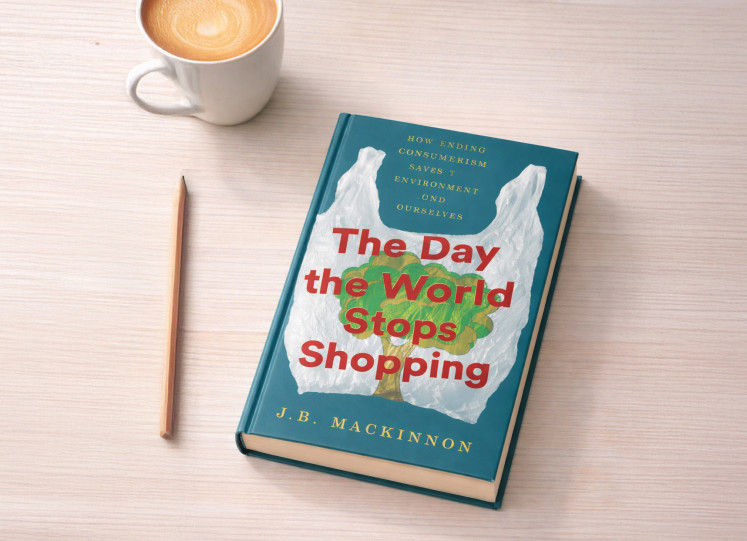 (J.B. MacKinnon)
He references research by Maren Kropfeld, a specialist in sufficiency-based models, who divides people trying to reduce their consumption into four distinct "tribes". As I read his analysis, it felt as if he was offering a clinical assessment of my own habits, helping me see myself and my family less by our possessions and more by how our choices impact the world around us.
There is the Eco-conscious, a tribe I belong to. It’s arguably the most deceptive tribe. We buy bamboo toothbrushes, organic linen and anything with a sustainable label. But MacKinnon is blunt: this is often just another form of consumption. We are attempting to shop our way out of a crisis caused by shopping. By choosing green products, we often give ourselves a moral license to buy more, effectively canceling out the benefit.
Second, the Tightwads. These are the people who simply hate spending money. Their motivation is the psychological pain of the transaction, not the health of the biosphere. Interestingly, Kropfeld’s research suggests that despite their motivation, Tightwads actually have one of the lowest environmental impacts. By minimizing transactions across the board, they inadvertently lower their footprint more effectively than those buying green alternatives.
The Frugals are the masters of the "fix-it" culture. A frugal consumer finds joy in maintenance, in a sense, ensuring that the energy already embedded in an object, its carbon footprint, is utilized to its absolute maximum. They ensure that nothing goes to waste, but their impact can sometimes be offset if the pleasure of saving money eventually leads to a larger purchase later.
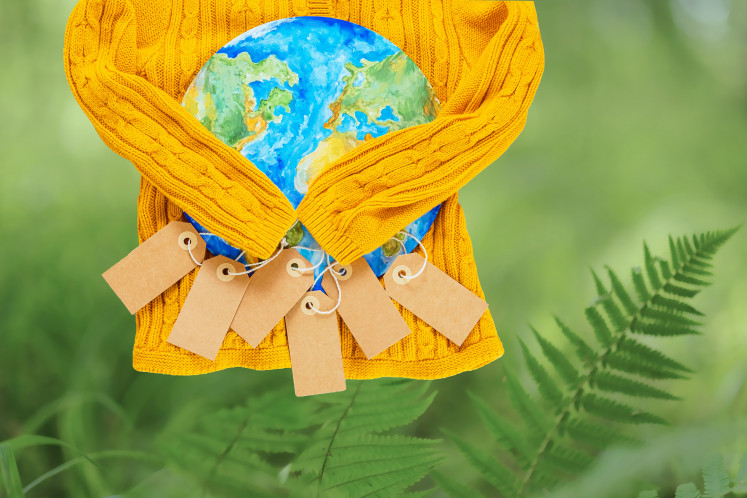 (Shutterstock)
My parents are a hybrid of Frugals (of their maintenance obsession) and the Simplifiers. The latter practice voluntary simplicity, reducing spending to cultivate non-materialistic values. According to Kropfeld, Simplifiers join Tightwads at the top of the sustainability ladder. By acquiring only the minimum and living modestly to make room for what really matters, be that time, community and peace, they address the root of the problem: the volume of consumption itself.
The uncomfortable truth revealed in MacKinnon’s research, and echoed in Daniel Susskind’s recent book, Growth: A Reckoning, is that while the eco-conscious gets the marketing budget, the real environmental heavy-lifting is done by the Simplifiers and the Tightwads. These anti-consumption lifestyles lead to lower overall consumption, even though they operate on different psychological gears.
The eco-conscious (like me) are often just rearranging the deck chairs on the Titanic. The most sustainable product isn't the one with the green leaf logo, it’s the one my mother wrote a date on 20 years ago and refused to replace.
Susskind and the gospel of growth
Why is it so hard for us to just stop?
In Growth: A Reckoning, Susskind discusses how economic growth became a kind of secular faith. For two centuries, it was seen as the solution to nearly every human problem: lifting billions from poverty but also transforming us into constant consumers.
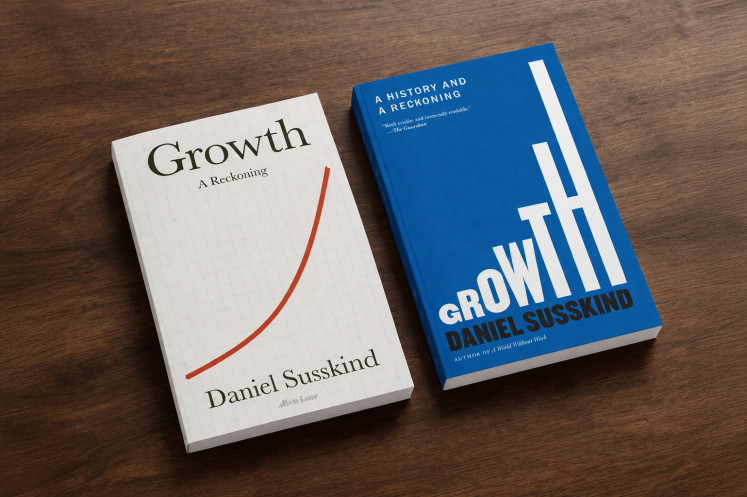 (Daniel Susskind)
The narrative taught us that our civic duty was to keep buying and discarding, fueling the GDP's relentless climb.
But Susskind argues that we have reached a point of diminishing returns. The pursuit of growth is now creating more problems than it solves, most notably the climate crisis. We are like a runner who has already crossed the finish line but is afraid to stop sprinting because we’ve forgotten how to walk.
My parents, the Simplifiers, stopped sprinting a long time ago.
They understand instinctively what Susskind argues intellectually: that we must decouple human flourishing from the upward curve of a graph. By refusing to buy a new motorcycle or a new fridge, they are effectively “degrowing” their own footprint, contributing to the well-being of the planet by simply being content.
Yet, for those immersed in the bustle of urban consumerism or accustomed to shopping online, slowing down feels daunting. Everywhere we turn, we're told that one more purchase will make us better. If we give in, the thrill of buying is swiftly replaced by a sense of environmental guilt, the so-called carbon hangover. We understand the consequences, yet feel uneasy if we abstain from participating.
Being content
So, how do I live with this heavy bag at the check-out counter?
The answer, I think, lies in becoming a mindful consumer.
Tactically, it means moving from eco-consciousness to simplicity. It means moving past the performance of sustainability and into the discipline of it. It means admitting that I am not innocent, but I am responsible.
 (Shutterstock)
Happiness, I’ve realized, isn't found in the act of acquisition, nor in the paralyzing fear of buying anything at all. It is found in intentionality: the quiet, sturdy rebellion of maintenance. It’s about being content.
I want to reach a point where my shopping bag only contains things that are worthy of my mother’s permanent marker. I want to buy things that I intend to honor for a decade, not a season. I want to be like my father, brave enough to be outdated in a world that is obsessed with the new and the trendy.
We don't need a world that stops shopping entirely; that would be an economic catastrophe. But we do need a world that stops shopping as a hobby, as therapy or as an identity. We need to move from being consumers back to being stewards.
The next time I’m tempted by a midnight flash sale, I’m going to think of the date on the door of my mother’s fridge. I’m going to look at my father’s old motorcycle. And I’m going to remind myself that the most revolutionary thing I can do in a world that wants me to buy everything is to be perfectly content with what I already have.
And oh, my smartphone turned five this year. I don’t think I need a new one until this one finally quits on me.
Marlistya Citraningrum is a sustainable energy analyst, a self-professed slow reader, and an aspiring columnist.
This piece was written by a fellow Weekender reader.
Is there a book, show, song or oddly specific deep dive you can’t shut up about? We’d love to hear about it. Pitch your idea to theweekender@thejakartapost.com.