(Klikfilm)
I’ll admit it: Most of what I watch is Hollywood. It’s my default simply because it’s everywhere, or because the streaming algorithms just feed me more of the things I usually like.
So when I watched these five Asian titles, I was pleasantly surprised to find they were easier to connect with than I expected.
Legendary screenwriter Robert McKee once said that entertainment is when you sit in a darkened room filled with strangers and completely relate to people you’ve never met before on screen. Elaborating on this in his book, Story: Substance, Structure, and Style, he says this connection is possible because stories tap into shared human experiences.
I’d forgotten that this sense of relatability can be easier to find when we watch films that are closer to us: geographically, culturally and emotionally.
None of these five titles are similar to the Hollywood shows I usually watch, and yet all of them somehow feel more familiar.
1. For those who commute every day: My Liberation Notes (2022)

Thank you!
For signing up to our newsletter.
Please check your email for your newsletter subscription.
Released on Netflix, the Korean drama My Liberation Notes captures the isolation experienced by three siblings living in a suburban area with their parents. They frequently travel to the city for work or simply to spend time outside their quiet, repetitive routines.
We first meet them at night, sharing a cab ride home, their exhaustion palpable. In the morning, we see them commuting again, this time by train, reinforcing the monotony of their daily lives. The siblings are portrayed as working-class individuals who feel stuck, frustrated and quietly desperate for change, longing to be liberated from the cycles they find themselves trapped in.
This resonates with Indonesian audiences. Growing up, we were often exposed to Western narratives that frame adulthood as moving out and living independently. In contrast, Korean dramas often depict adults still living with their parents or even grandparents.
This cultural proximity feels familiar. Many single people in Jakarta still live with their parents due to the high cost of housing. Even those who manage to become homeowners often have to move farther away from the city center, settling in areas like Tangerang, Depok, Bekasi, or Bogor, turning long commutes into a daily reality that mirrors what we see on screen.
2. For those who feel isolated in the city: All We Imagine as Light (2024)
If you’re a Jakarta resident, there’s rarely been a film that captures the overwhelming complexity of living in a crowded city like Mumbai as vividly as All We Imagine as Light, an Indian independent film that won the Grand Prize at the 2024 Cannes Film Festival.
 (Klikfilm)
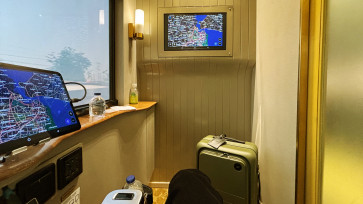
The story centers on Prabha, a nurse living far from home, trying to navigate the overstimulating rhythms of Mumbai. She is often seen sitting still on trains, watching films alone, or walking through spaces that feel both crowded and strangely isolating—moments that quietly underline her sense of displacement.
Director Payal Kapadia delicately captures this paradox, exploring not just loneliness, but the fragile relationship between a person and the city they inhabit, how a place can feel alive, overwhelming, and yet deeply indifferent at the same time.
For many Jakartans, that feeling might hit especially close to home. We wake up chasing dreams, or simply trying to make a living, moving from one space to another, often without realizing how easily loneliness can settle in, even in the middle of a crowd.
This film is available on Klikfilm.
3. For those who feel like an outsider: Fruits Basket (2021)
Feeling like an outsider doesn't go away just because you grow up. If anything, it gets more complicated. The Japanese series Fruits Basket understands this better than most.
Honda Tohru, a high school student whose mother just passed away, lives alone in a tent in a forest. One day, she encounters the Sohma family, who mysteriously transform into zodiac animals when they are embraced by someone of the opposite sex.
Throughout the series, Tohru gradually opens herself up to new friendships, building genuine connections while also confronting heavier themes like grief and discrimination. While it may be packaged as a story for high school students, Fruits Basket ultimately explores far more mature emotional territory, which makes it especially resonant for adult viewers who understand the weight of loss, loneliness and the complexity of human relationships.
What sets it apart from Western drama is its relationship with sadness. Fruits Basket doesn't build toward victory or resolution, it finds beauty in sitting with pain, a sensibility that runs deep in Japanese storytelling. You can feel it in films like Departures (2008), which won the Academy Award for Best Foreign Language Film, and Hirokazu Kore-eda's Shoplifters (2018), winner of the Palme d'Or at Cannes.
Available on Disney+ and Netflix, this TV series was adapted from a best-selling Manga by Natsuki Takaya, which ran from 1998 and 2006.
4. For those with loved ones who have already passed: A Useful Ghost (2025)
Thai cinema has long delivered powerful dramas about loss. In 2023, How to Make Millions Before Grandma Dies stood out as a poignant example.
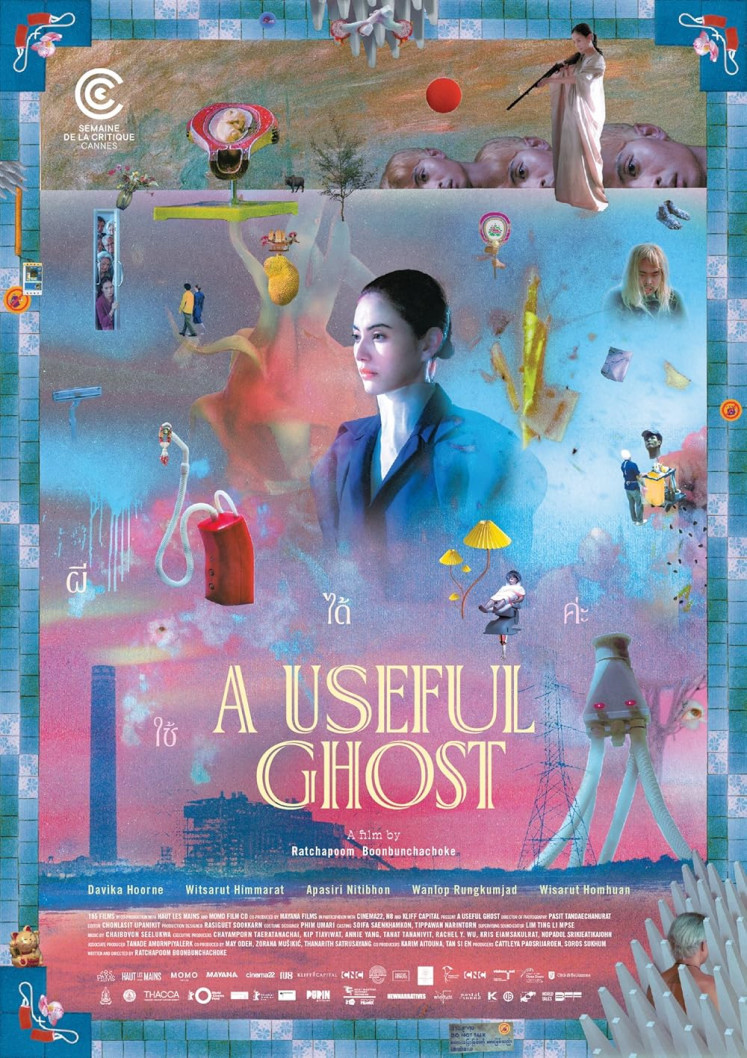
But Thai cinema has also always had a sharp comic instinct, and A Useful Ghost, which won Critics' Week at Cannes, is proof of both.
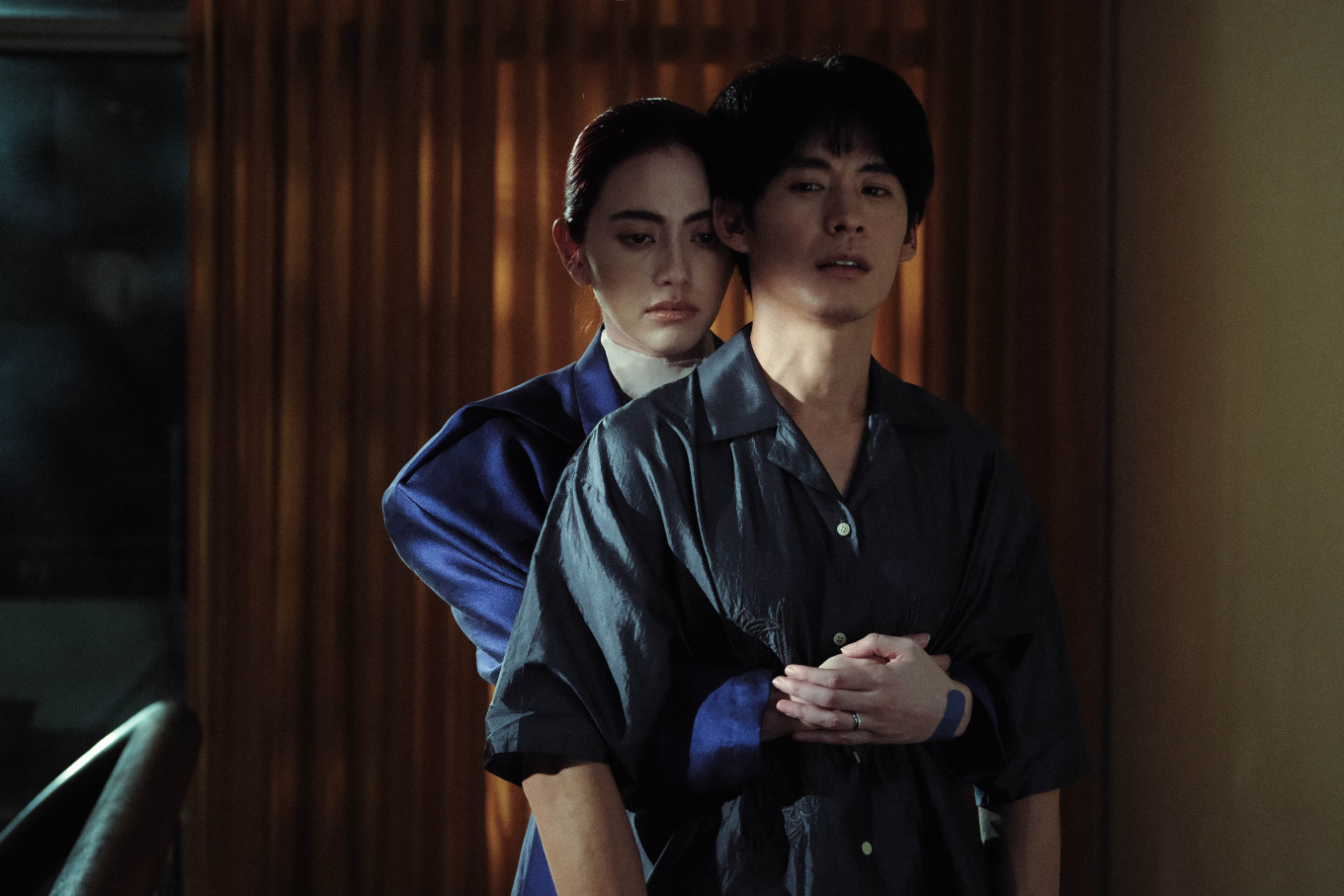
The film centers on a ghostly wife who transforms into a vacuum cleaner because she worries that her husband's dust allergy might put him at risk. Although it gradually shifts into something more political, its core idea, confronting grief and the lingering presence of those we have lost, remains deeply relatable, especially in moments when we find ourselves reminiscing about loved ones.
 (Klikfilm)
This blend of horror and comedy is something Thai cinema has long done better than almost anyone else. Pee Mak (2013) is perhaps the most beloved example, a ghost story so funny it became one of the highest-grossing Thai films of all time.
What makes this tradition resonate across Southeast Asia, including in Indonesia, is how closely it mirrors the way many Asian cultures actually process grief: not through open mourning, but through humor, ritual and the belief that the dead don't always leave.
It is also available on KlikFilm.
5. For those who celebrate their roots: Ne Zha 2 (2025)
I recently got back from my mom’s hometown in North Sumatra, and I was surprised by how distant I felt from her roots, or from any Indonesian roots at all. The animated feature Ne Zha 2 made me think about why that distance exists, and what it might cost us.
Chinese cinema doesn’t let its people forget where they come from. Drawing from Chinese mythology, Ne Zha 2 tells the legend of the deity Ne Zha as told in classic works like Journey to the West, stories that Chinese audiences have grown up with.
The film became the highest-grossing animated feature in the world, driven by the China market alone. Imagine having Pixar-level production quality with fighting sequences akin to The Avengers but visuals that feel distinctly local, that’s what draws people into the cinema, that’s why Chinese audiences connect with it deeply.
But its deepest strength is also its most relatable one. While packaged as action and comedy, the story is ultimately about family, which is why it also resonated strongly when it was released in Indonesia back in 2025.
It’s also a sequel you can follow through without watching the prequel.
The film is available on Netflix and Max.
Reza Mardian is a winner of the Best Film Critic award at the Festival Film Indonesia 2024 and a “pawrent” to two rescued cats. He writes screenplays every time he finishes rewatching La La Land or Lady Bird.