(Shutterstock)
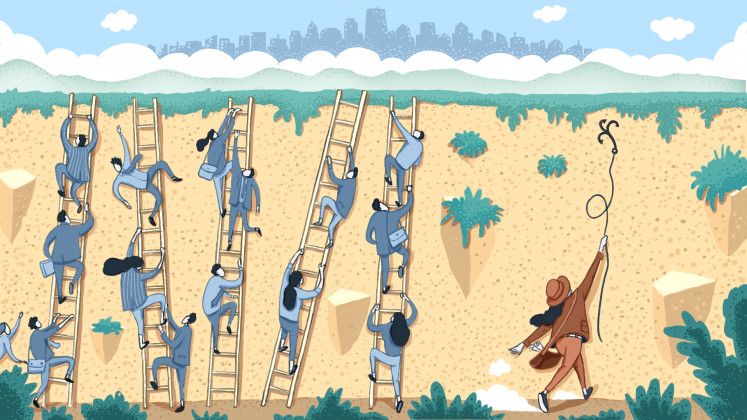
There's a running joke that millennials are turning from party animals into amateur athletes. Our midlife crisis is no longer about piercings — it's spent on a reformer, a padel court or a running track. The budget (and energy) for questionable nights out now goes into coaching fees and weekend competitions. Same impulse, completely different receipt. Call it a midlife crisis if you want. It just happens to come with better cardiovascular health.
Most of us stop there: a Pilates membership, a regular weekend run club, something to post and something to ache about on Monday. Some, however, take it further.
They don't just show up to a class — they register for the competition, then the next one, then the one after that. They build their lives around these competitions. They become, for reasons I have yet to comprehend, recreational athletes: people with day jobs and rent to pay who nonetheless find themselves training for side quests like it's their actual job.
I have so many questions: the how and how much, the what it takes and maybe most fundamentally, the why. In this economy, where many are struggling to get by, all of this sounds exhausting, nonessential and, to be honest, expensive.
As I went looking for what it actually costs, I found that even for the highly motivated, money is just the smallest cost they pay.
The who, the what and the why

Thank you!
For signing up to our newsletter.
Please check your email for your newsletter subscription.
I've interviewed runners, Pilates coaches and other sports enthusiasts. They talked about challenging themselves, finding joy in the process, the fun of it, and sometimes extra income too - all things I can relate to. But across all of them, I kept finding something new yet very human: once you start, you crave more, do more, achieve more.
That's how I met these three.
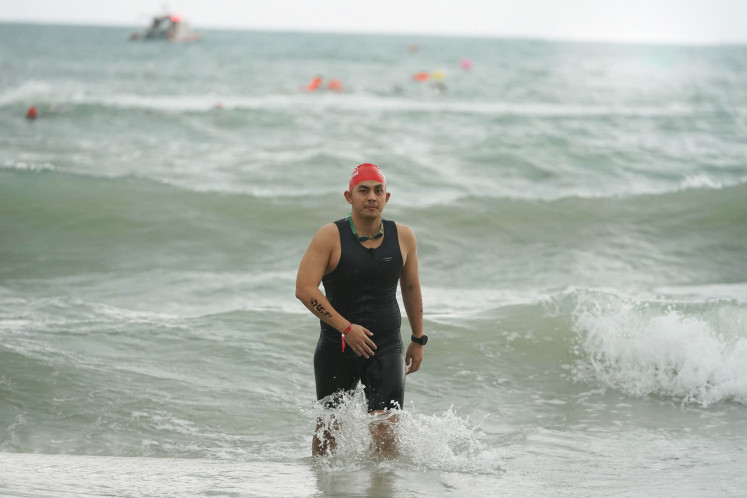
Zaki, 32, has always been a runner. After a few marathons, he wanted something more challenging, so he set his sights on triathlons, where athletes run, swim and cycle in one long race.
Why? "Simply for the experience of having done it all," he laughs. "After all, I'm not starting from zero."
Running was already routine for him, and he swims well enough, so the real homework was cycling. "It took me a year to be mentally ready, but only six months to physically prepare for the Olympic distance triathlon," he says.
One thing led to another, and he's now finished both the Bali and Sungailiat triathlons.
Zaki isn't the only one expanding his reach.
Amri, 38, also competes across multiple disciplines. A consultant in social tech, he watched his industry go quiet during the pandemic and the tech winter that followed, bringing fewer projects, shorter hours and more free time than he knew what to do with. Instead of sitting with that restlessness, he decided it was time to do things he'd never done before.
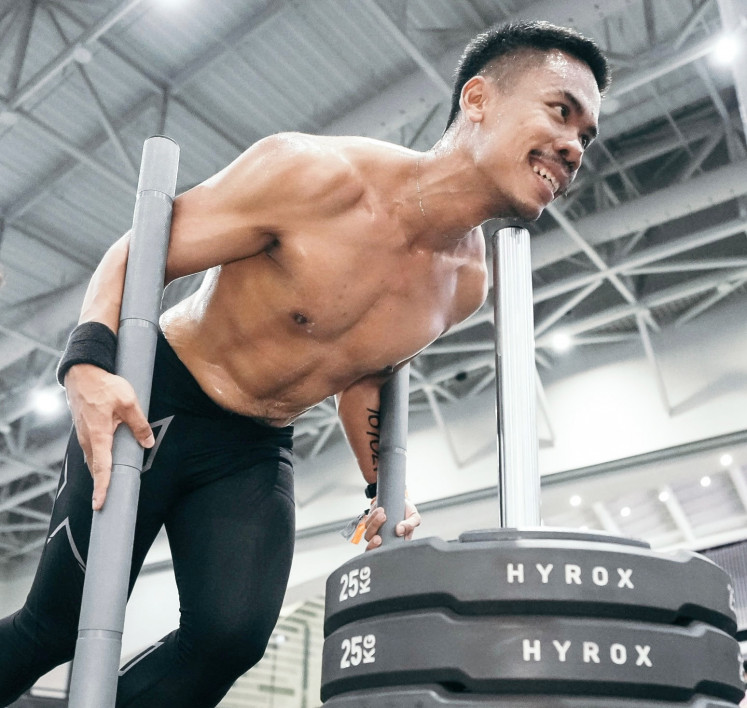
He started trekking in Sentul, which led him to trail running races - unusual, since most people start with road races first. From there, he moved into marathons, fell in love with tennis and padel and began competing in both, and then discovered Hyrox, which became his primary focus in the first half of 2026. He completed Hyrox Incheon in May and Hyrox Jakarta in June.
"I found a purpose," he says. "Success doesn't have to mean work or school. Hobbies count too. And as I approach 40, I know fitness only gets harder to maintain, so this is the right time to take it seriously, with real training blocks and discipline."
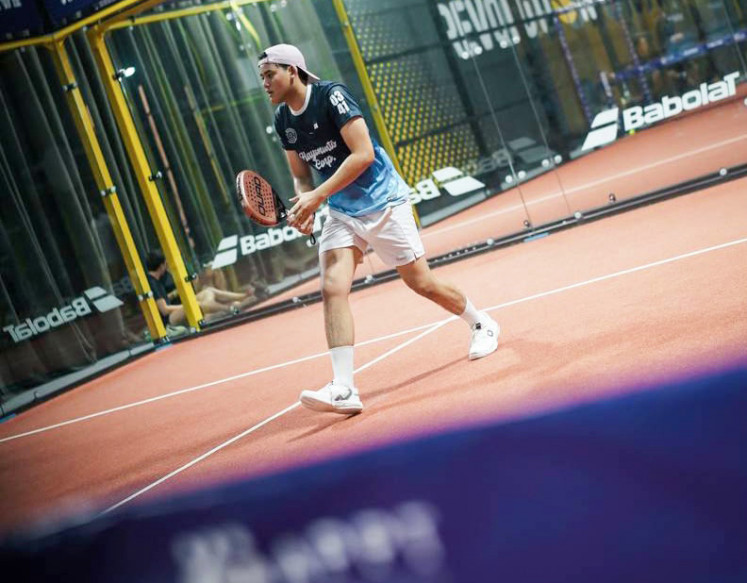
Assadel, 21, is not a fellow millennial, but I talked to him anyway because he’s near the furthest end of the "once you start, you crave more" spectrum. After playing tennis for five years, he shifted to padel and quickly got good. From recreational play, new opportunities opened up: he now coaches beginners between university classes, competes in tournaments and is quietly building a path toward going pro.
 (Courtesy of Zaki)
What it costs
Simple: "A lot," Zaki laughs. "The gear alone includes bikes that cost at least Rp 50-75 million (US$3,000-4,600) for a proper one, wetsuits for swimming at around Rp 4-5 million and then the shoes. Training costs money too: coaches, meals, physiotherapy, a nutritionist, orthopedic specialists, sports massage." He's listing off the top of his head, and we haven't even gotten to race entry fees and travel yet.
When he raced at the Sungailiat Triathlon in Bangka, he found ways to cut costs, though he admits it wasn't ideal. Instead of bringing his own bike, he rented one there. "It's not ideal because you're not familiar with the setup, but it's fine for those who do this for fun," he says. In Bali, he adds, there are more options: for Rp 500,000 to Rp1.5 million, you can try out different bikes.
Amri hasn't tallied his total spend, though he estimates the sport takes up around 10 to 15 percent of his monthly income. Hyrox entry fees vary by location: in Jakarta, it's around Rp 2.5 million per person. Travel abroad adds more – Rp 8 million just to fly to South Korea in Amri's case, before accommodations. Then there's training: programs, classes, fuel, food, supplements. And then the extras: event photography, the backpack to display your finisher patches and more.
This is why Assadel is working to make the sport pay for itself. He coaches at Padel Garden in Malang, after starting out hosting games through Reclub and coaching freelance. His home club provides a head coach who trains the club coaches and prepares them for competition. Court time is free, and it sometimes comes with brand sponsorships: rackets, clothing, shoes. Otherwise, he pays his own way. Court time in Malang runs around Rp 125,000 to Rp 200,000 per hour; the rackets and shoes run into the millions - and we all know you never stop at one pair. In Jakarta, where court time starts at Rp 300,000 per hour, it adds up fast for a student.
 (Courtesy of Assadel)
What it takes
How much it costs is one thing. How much it takes is a whole different conversation.
To become a triathlete, Zaki explains, you don't just train in one sport - you train in three, simultaneously. A runner has to commit to running at least four times a week and hit the gym twice, with one day of rest. Add cycling, and the whole schedule has to be rebuilt. Add swimming, and rebuilt again. "You need to get creative about how you switch up the days, combine two sports so you know how to transition between them," he says. There's even a term for it: brick training, where you complete two disciplines back-to-back with no rest in between, because that's what race day actually feels like.
With a job, ongoing projects and a family, finding the time is never easy. "But we've already paid for the race, so there's no option," he jokes.
He makes it work wherever he can. He blocks time in his calendar for early morning sessions, aiming for the window after the Fajr prayer, around 4:30 to 7:30am. "But if I cannot wake up or am too exhausted, I try to get to the gym after work or fit in an hour's run around the neighborhood," he says. He saves brick training for weekends, when the schedule loosens. He gets creative: running from home to a sports club where he can swim, or heading to GBK to run laps and then use its aquatic center.
The rest of the struggle, he says, is internal: pushing hard while still listening to your body, holding the commitment without breaking it. "My coach tells me there's no cheat code to training," he says. "You can always try, and you might be able to finish, but without the right preparation, you're only going to hurt yourself."
You can even die, I checked.
Hyrox is no less demanding, even if it happens indoors.
While most recreational athletes train around their existing schedules, Amri cleared his entirely. "I decided to take a sabbatical - no client projects for six months - so I could organize my life around my training blocks," he says. Not everyone can afford that kind of time, but Amri built toward it deliberately.
He trains six days a week. He's cut back on socializing. He tracks his macros carefully, balancing carbs, fat and protein. He's enrolled in a structured training program with expert coaches and logs everything through artificial intelligence. A typical day: up at 5 am, out to GBK for a morning run, then clean carbs for breakfast logged in ChatGPT, then strength training at the gym before picking up hosting gigs on the weekend.
Even during Ramadan, he didn't ease up. Off from client work, he restructured his days around the fast. He'd run at 3 or 4pm, then head to his gym in Blok M. Break fast, Maghrib prayers, shower, Tarawih, then back to the gym for another hour and a half before catching the last MRT home to Cipete. Stay awake for sahur (the pre-dawn meal). Fajr prayers. Rest. Repeat.
"I can't imagine what it's like for actual athletes," Amri says.
 (Courtesy of Amri)
Is it worth it?
I went into these interviews expecting to find ego at the center of it all - the need to prove something to themselves and to the world. And honestly, some of that is there; I won't pretend otherwise. But what really gets these people out of bed early, running when they could sleep, lifting when they could rest, is mostly internal: the fact that they keep going at all, that they keep beating their own expectations, and everything they pick up along the way.
Zaki has finished two Olympic-distance triathlons, which span a total distance of 51.5 km or 32 miles, and is already eyeing bigger races: A 70.3-mile half-Ironman or even a full 140.6-mile Ironman in Malaysia or Australia.
What keeps him going, beyond the discipline, is the people around him. The community, he says, is remarkably welcoming for a sport this demanding. "I love how communal it all is," he tells me. "It's not easy to get here, so you need people who can help. You need a good support system, and we're lucky to have that."
"It's also a chance to meet people who inspire you," he adds. "Take the Ironman athletes - I don't know how they got the money, the body, the lifestyle. They have the capital and the commitment. To get to that point, you have to be somebody."
Amri has just completed Hyrox Jakarta, returned to work, and is already targeting Kuala Lumpur in December, with a padel tournament to win in July.
"What makes me proudest now isn't the medals. It's the resilience I found in myself. I couldn't imagine showing up for myself the way I show up for my clients and my bosses,” he says. “I want to see how much my body can take, how disciplined my mind can be. It's no longer just about the races. It's about the process."
Assadel is playing the longest game of the three. A recent runner-up at the East Java Provincial Sports Week and quarterfinalist at the Asia Pacific Tournament in Jakarta, he's currently competing in the Silver class with his eye on Gold, and pro somewhere further down a road he's still building as he walks it.
He's young, he's got time. "I'm nearing the end of my university days and I'm still finding my way, still thinking about what kind of work I want to do after I graduate. I want to move back to Jakarta, find a day job and still find a way to compete internationally, professionally," he says.
For now, he's content with what being a recreational athlete has given him so far. "It has shaped my pattern of life. Since I started training, I wake up earlier, I'm more disciplined, I stopped staying up all night and I've made all the good habits routine," he says. Something that will serve him well, whatever comes next.
In the end, Amri brought it back to the question I started with.
"Many friends ask me why I started," he says. "I think people need purpose and challenges. Goals can be added or changed. Our identity is always evolving and it will keep changing with the seasons, so let's just enjoy the moment and the journey."
I think about this somewhere between my yoga teacher training and a stack of work deadlines, running on insufficient sleep with bruises I acquired entirely by choice. I've spent more than I'd like to admit on grip mats searching for the perfect one, on sets of workout clothes that actually fit right, on a 200-hour training course that is simultaneously the most physically humbling and most thrilling thing I've signed up for. Somewhere in this hyperfixation season of mine, I started to understand what these three were actually talking about.
Yes, some of it is about validation. But more of it is about finding out how far you can actually go when you stop second-guessing yourself - and beating yourself, in the best possible sense.
As it turns out, I got a taste of that. And now I'm already thinking about what's next. Life would be so boring if we stopped finding our side quests.
Adelia Anjani Putri, a communications consultant and former reporter, has found herself writing again. She’s also exploring a career shift that would let her pursue her passions for cooking and catsitting—ideally with a paycheck.