(Courtesy of Daun Karya/Avani Breeze)
When I think of my dream home, I imagine a cozy little place filled with my favorite things, close enough to public transport but far from the noise. Not a sprawling estate, just a space that fits.
But dreams cost money, and in Jakarta, that’s the first deal breaker.
A 2024 survey by Inventure found that 65 percent of Gen Z respondents are not sure they can buy a home within the next three years. Their doubt is within reason: A modest house of 50 square meters under Rp 1 billion (US$60,500) is nearly impossible to find. For anything larger than 100 square meters, prices can soar to Rp 5-10 billion.
So, the next step is to look outward, to Tangerang, Bogor or Karawang, where price tags shrink but ambition doesn’t. So how are developers making homes more attainable for this emerging generation of buyers?
Smaller homes, bigger intentions
It turns out I’m not alone in wanting something smaller and smarter.

Thank you!
For signing up to our newsletter.
Please check your email for your newsletter subscription.
Compactness, says Dwi Novita Yani, vice president of market research and product strategy at Sinarmas Land, isn’t a drawback for young buyers. Instead, they’re drawn to homes that support a more active, flexible lifestyle.
“What we find is that this demographic values houses that can fulfill their lifestyle needs,” Yani says.
“They appreciate having a home office space and place more importance on what’s outside the house, like the environment and nearby facilities.”
Those surroundings include exercise areas, basketball courts and jogging tracks. Proximity to public transport and essential services also matters.
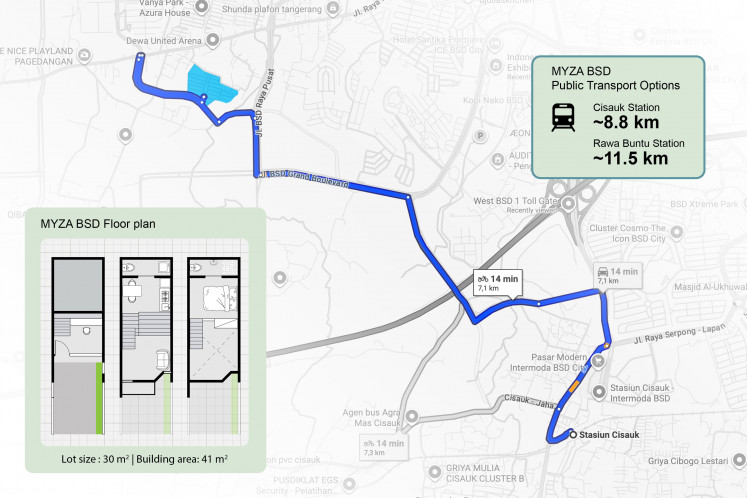
Sinarmas Land’s Myza Flat House project in BSD City is one example. Priced at just Rp 910 million when it was first launched, each unit measures just 3x10 or 3x12 meters but uses clever split-level layouts to fit a work area, dining room, living room and bedroom.
 (B/NDL Studios/)
“A lot of our clients in this segment frequent BSD’s Mozia Loop to bike and jog,” Yani says.
“It’s a more health-conscious crowd, so we focus on accommodating that interest.”
Other developers are noticing similar trends.
“When we talk to our younger clients, the first thing they usually ask is whether there’s a mall nearby,” says Kharolina Lesli, commissioner of Daun Karya.
“If not, they ask how easy it is to renovate the house.”
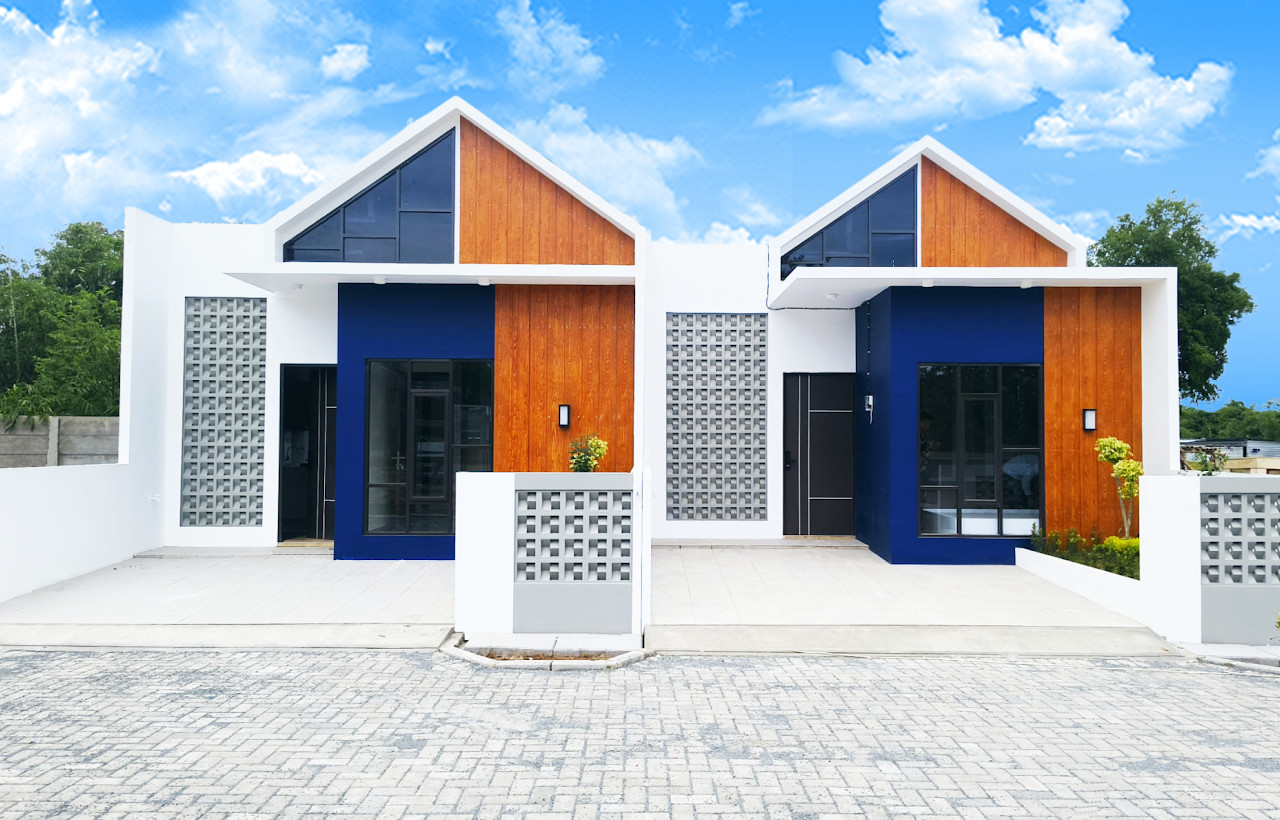
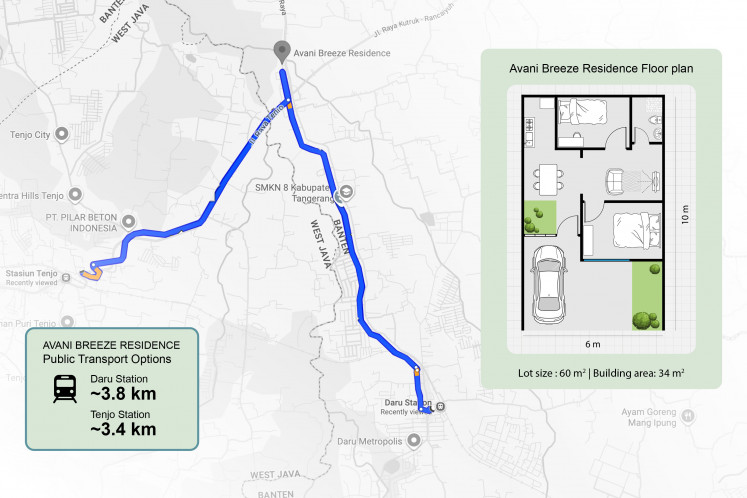
Daun Karya’s Avani Breeze Residence in Tangerang caters to buyers looking for small but flexible homes, offering 60 to 78-square-meter units that can be customized with mezzanines or modified layouts, priced between Rp 395 and 450 million depending on the size. Future MRT access and new highway exits will make the area even more attractive.
 (B/NDL Studios/)
Across emerging housing clusters from Ciputat to Parung Panjang, developers like Aksara Homes and Park Serpong’s XYZ Livin are pairing compact layouts with lifestyle-driven amenities: jogging tracks, EV charging stations and green spaces. Smart-home systems and high-speed internet are no longer luxuries but expectations.
These new homes are being designed for the way the next generation actually lives.
New ways to buy
Still, good design means little if the math doesn’t add up. The real revolution, it seems, is in how people pay for homes.
Sinarmas Land now offers subsidized down payment schemes to ease first-time buyers’ entry.
“This is one of our strategies to accelerate home ownership,” Yani says. “
We recognize that the upfront fee is a huge hurdle. Instead of a 15 percent down payment, it’s only 10 percent.”
In some cases, the down payment is even waived entirely, allowing buyers to go straight to installments. For example, the Myza property can be paid in monthly installments of Rp 4.9 million.
Daun Karya is experimenting with rent-to-own schemes that allow up to four people to co-purchase a single property, with each co-purchaser contributing around Rp 3 million a month to pay off the house within three years.
“We understand that owning a house isn’t as much of an urgent milestone for this new generation,” Kharolina says.
“You invest together with your friends, and within three years of collectively paying installments, you could sell it for profit.”
It’s a model that treats property like a hybrid financial instrument, part investment, part home base. And in a gig economy where income is fluid, such flexibility might be the only way forward.
The future of home
Despite rising costs and shrinking purchasing power, the desire for home ownership hasn’t disappeared. But it has evolved.
From compact, flexible designs to community-centered clusters, developers are shifting toward a more personalized approach that emphasizes lifestyle over luxury.
“Interest towards owning houses is still high,” Yani says.
“Ultimately, it's part of the three needs: clothing, food and shelter. It's just that this new demographic is more critical in their decision making. We’re shifting from a product-centric market to a customer-centric one.”
That critical lens also reflects a broader shift in geography.
Developers and economists alike see new economic clusters forming outside Jakarta, BSD, Karawang, Tangerang, where infrastructure and corporate headquarters follow the housing boom.
“Its undeniable that new houses are drifting away from Jakarta. But economic clusters will pop up eventually where these new homes are,” says Kharolina.
“Take BSD. Big companies like Unilever, BCA, Traveloka are based there. So, future opportunities aren’t just in Jakarta.”
In other words, distance no longer means detachment.
For me, I wouldn’t mind sacrificing distance to have my own personal space. But perhaps that trade-off won’t last long, as these emerging hubs may soon become the middle ground between city and suburb. As long as they’re near transportation links and surrounded by everything we need, it sounds like the best of both worlds.
So maybe my generation can still afford to dream of owning a home. We’re just moving, evolving and getting smarter about what “home” really means.
If the price is right, and the future close enough, would you move there?
Aqraa Sagir is a writer for The Jakarta Post's Creative Desk. He’s chronically online in the hope it would be a useful asset for the job.