(Shutterstock)
Sufjan Stevens’ Carrie & Lowell enters the heart much like grief does: not with a crash, but like a tide. A subtle pull, a slow rising, a soft but certain insistence that something within you must be felt.
From the first trembling notes, the song moves like water touching forgotten coastlines: childhood memories, unfinished love, unhealed wounds. Listening to it, I felt the familiar tug of my own tides, the ones I had ignored for years, pulling me back toward moments I thought I had outgrown.
My story is not Sufjan’s, yet the emotional terrain echoes.
I grew up as the eldest of six, anchored early to responsibility. My father swept streets for a living; my mother took care of the home. Childhood was layered with duty and survival, and a maturity I did not ask for. Dreams were luxuries, so I learned to tuck them away, so my siblings could move forward.
In Carrie & Lowell, Sufjan revisits the blurred edges of childhood: love threaded with ache, tenderness shadowed by absence. I know those blurred edges well.
What the tide leaves behind
Thank you!
For signing up to our newsletter.
Please check your email for your newsletter subscription.
Grief did not swell the day my father died. It came weeks later, in the stillness of an ordinary evening, a tide I had not anticipated. Like the song’s soft confessions, my sorrow crept in through the silence. It arrived in a rush I could not stop. Waves of anger, guilt, tenderness and exhaustion, all the emotions I had shelved for years, finally spilled over.
For a long time, I resented my father. I resented his limits, our poverty, the weight that was heavier than what my childhood shoulders should bear. It was easier to hold onto anger than to see him clearly.
But tides reveal what they once hid.
Beneath my frustration were years of unseen gestures: dawn departures, tired hands, sacrifices so small they disappeared into routine. Like Sufjan’s murmured lines about wanting to be carried, wanting to be forgiven, I recognized the contradiction of loving someone who shaped you through imperfection.
When illness took my father’s strength, I was far from home. News of his passing reached me before Ashar (the late afternoon prayer), and I crossed islands, water, distance and time, knowing I would not make it.
My goodbye happened on a boat, somewhere between two shores, with grief still shapeless inside me. It felt unfair then, but now I understand: some goodbyes are tidal. They unfold slowly, painfully, unimaginably and later than we expect.
Back in the city, the wave finally broke.
I cried not only for his death but for the life we shared: our misunderstandings, our silences, the affection I could never articulate. I cried for the boy who didn’t know how to ask for help, and for the man who didn’t know how to give more than he had.
Learning to live with tide
Carrie & Lowell speaks to this kind of loss: the fragile space where love continues even when the person is gone, where understanding arrives too late, but still arrives.
As the days passed, I began to see memories differently.
Following him on errands, watching him sweep the streets, hearing his pride when I achieved something, these fragments formed a new map of who he was.
What once looked like failure now looks like effort. What once felt like a burden now feels like an inheritance, the kind that shapes rather than confines. Helping my family from afar now feels like a continuation of his story: imperfect, human, enduring.
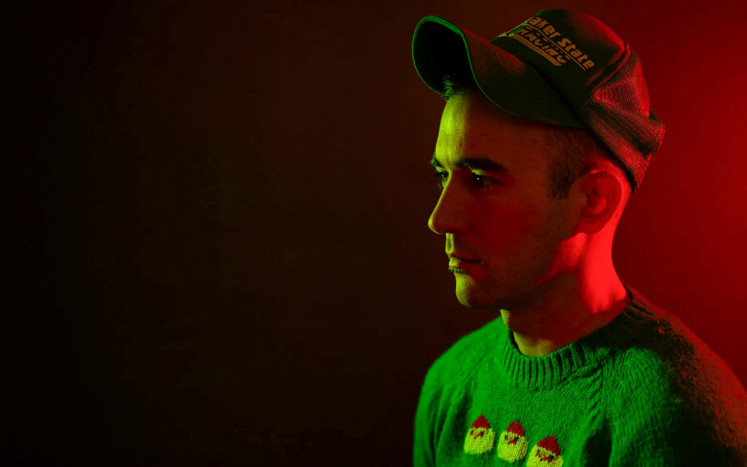 (Sufjan Stevens)
Loss has a way of rewiring the heart, teaching us that love is often made of small, consistent gestures rather than grand ones. In the gentle echoes of Sufjan’s voice, in the tide of my own memory, I’ve learned that grief can carry gratitude, and that both can coexist without canceling the other.
The tide still rises sometimes. But now, instead of resisting, I let it come.
Every wave carries a lesson. Every pull reveals another piece of who he was, and who I am still becoming.
Khusuf Komarhana practices law by day and café-hops by night, trying to find meaning in the people, moments and cats he meets along the way.