(Shutterstock)
When I was young, I couldn’t express many of my problems to my parents.
They didn’t really ask, but even if they had, I wouldn’t have known how to answer. I kept many insecurities to myself and cried often. I didn’t know what anxiety was, and no one thought children, too, could experience emotional upheavals.
That awareness, and tools to address it, I realize now, belongs to a newer generation. So when I first heard about play therapy, I was intrigued.
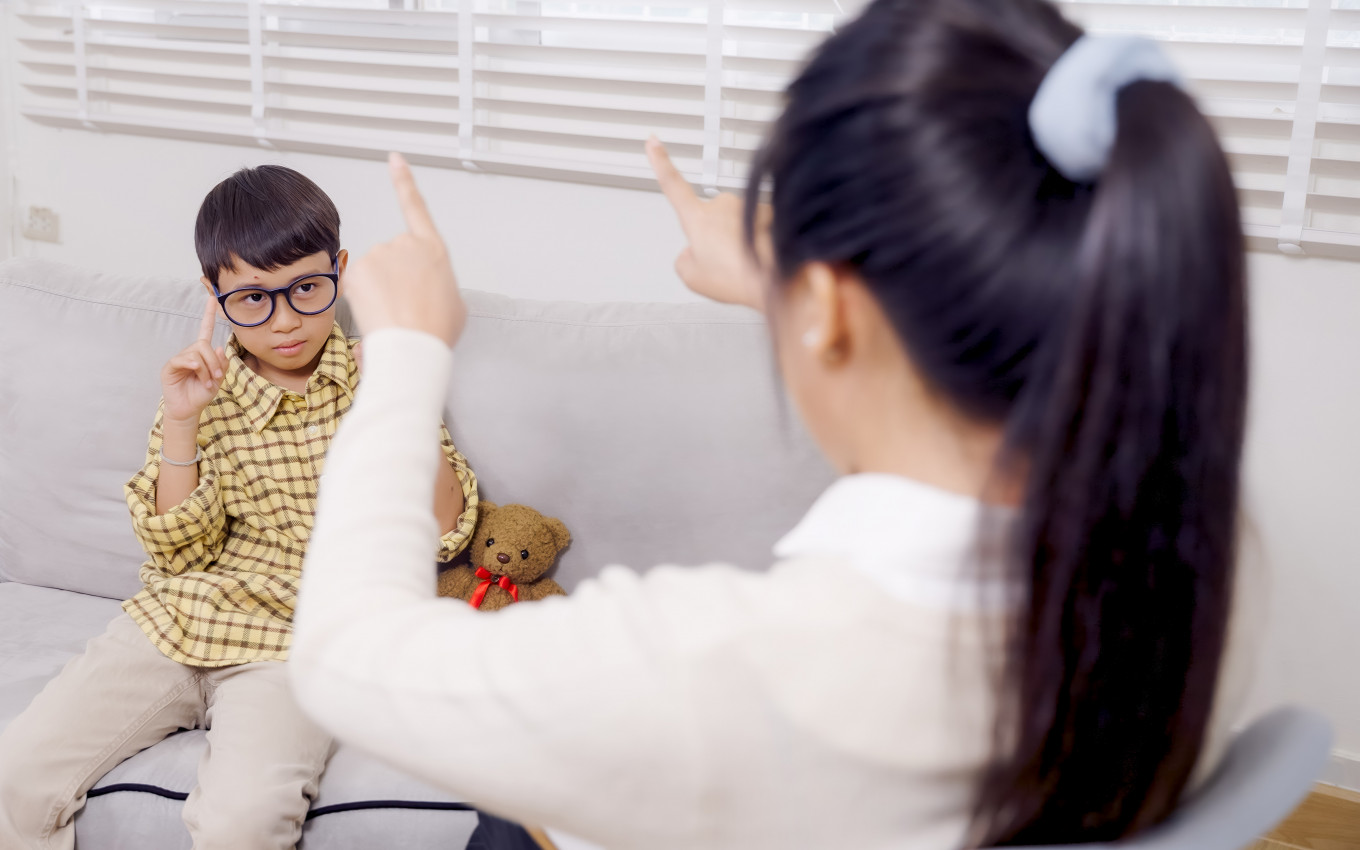
Play therapy is a relatively new way to address children’s behavioral and emotional challenges through play rather than words.
Some children carry silent trauma they don’t have language for. It shows up instead as tears, withdrawal or anger. Play therapy offers another way in, allowing them to express and release feelings they can’t articulate.
How could a child, guided by a therapist, begin to understand their inner world through toys, drawing or stories?

Thank you!
For signing up to our newsletter.
Please check your email for your newsletter subscription.
Playing to heal
Alice Arianto, Psy. D.CGP, is one of the people helping make that possible in Indonesia. A certified play therapist, she is the founder of Cipta Aliansi Edukasi, a training center, and Perkumpulan Terapis Bermain Indonesia (PTBI), which is affiliated with Play Therapy Indonesia and Play Therapy UK.
"I opened the training center so that I can advocate, create and educate Indonesian children,” she says.
Children today, she explains, face difficulties with social connection and emotional regulation. Many struggle to express their needs. Family disruptions, such as divorce or financial crisis, often leave children carrying emotions that adults themselves struggle to process.
The result is that parents, too, also have difficulty handling their children’s feelings.
“We use a holistic approach,” Alice says. “We see the child as a whole person.”
That philosophy is echoed by Yudi Hartanto, program manager at Cipta Aliansi Edukasi. Founded in 2010, the organization has conducted workshops in 50 cities across 19 provinces, training therapists to work with tools ranging from graphic art, puppets and storytelling to music, sand play and movement. The goal is to create a safe environment so children can regulate their emotions and begin self-healing through a non-directive approach.
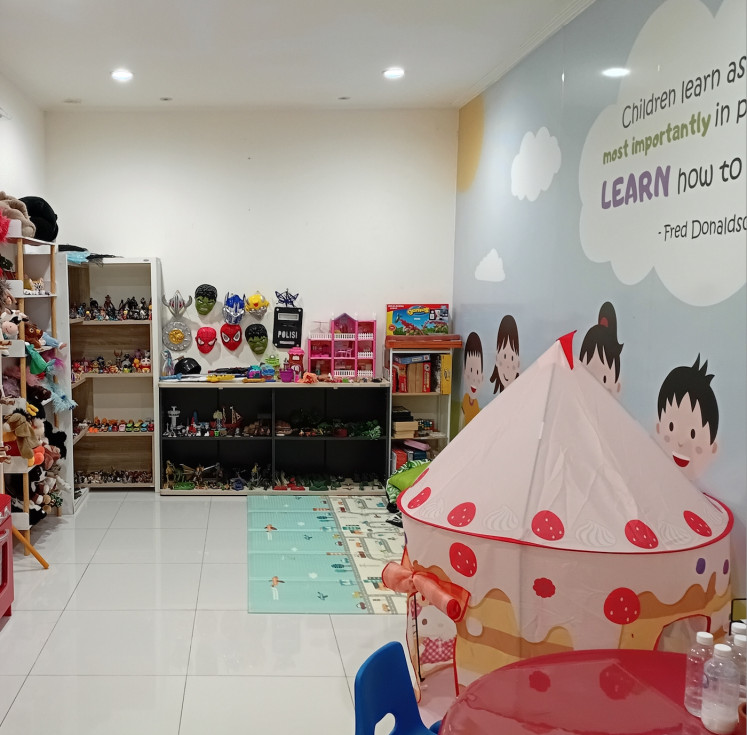 (Cipta Aliansi Edukasi/Yudi Hartanto)
“Most of the children that come to us are emotionally disturbed, often because they feel unloved and insecure,” Yudi explains.
“A play therapist helps the child release their emotions. Each child has a different program and chooses which medium to use. Each child uses their own imagination to heal.”
Therapy fees vary by region, ranging from Rp 200,000 to Rp 300,000 (US$12.00 - $18.00) per session.
Inside the therapy room
Before therapy begins, Alice explains that both parents and children are carefully assessed.
“We conduct an initial interview with the parents and have the child take the Strengths and Difficulties Questionnaire (SDQ) to determine whether therapy is required,” she explains.
If the score is mild to moderate, they suggest a therapeutic play skills practitioner for 12 sessions. For more severe cases, they offer play and creative art therapy for 18 sessions.
“But for a normal score, we just advise the parents to spend more time with their child,” she adds.
Another practitioner, Dubai-based play therapist Karishma Nankani, works with a similar philosophy with her own method of emotional “check-ups”. Before starting therapy, she asks children to draw four simple objects, a projective test she uses to analyze their emotional and mental state.
“Many parents come to me during a divorce, often when fights affect their children,” Nankani says.
“Some children respond with aggression. Some bite. Others hit. They’re reacting to the tense atmosphere at home.”
Parents are asked to take the same test. By comparing both results, Nankani tailors her approach.
“Sometimes I use toys and create a story around the children. That’s where I find out what the child is thinking,” she says.
“For example, I once asked an eight-year-old child to draw a person. When I asked how old the figure was, he replied: four. That detail revealed the age at which his trauma began.”
Through gentle questions and storytelling, Nankani discovered his anger stemmed from the arrival of a younger sibling.
Then, she asked him to draw his family home. His little brother wasn’t in it.
“That’s where I understood his insecurity. Maybe there was a lack of attention,” she says.
“I used the child’s interest in sports cars as a theme to help him express himself. Then, I used some mindfulness tools so he felt safe opening up.”
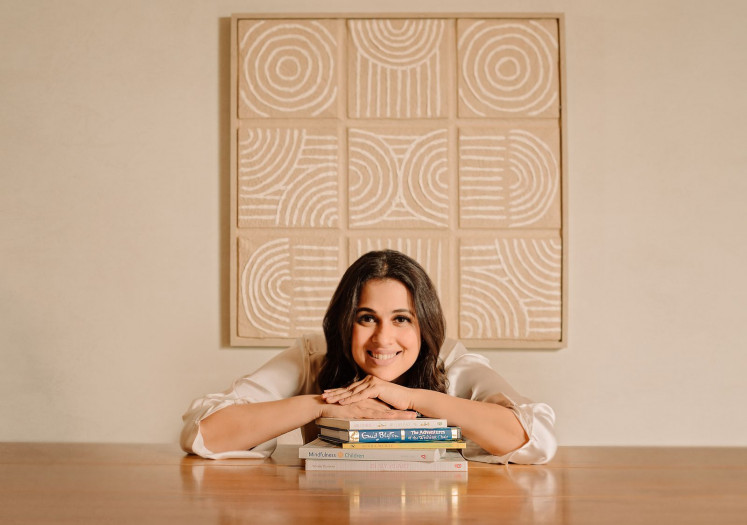 (Karishma Nankani)
Beyond working with the child, Nankani also asked his parents to spend dedicated one-on-one time with the child, both separately and together, without the sibling.
Is it just for kids?
Listening to these stories, I began to wonder if play therapy is only for children.
Curious, I tried a version of it myself, drawing a woman. The assessment described someone resilient, emotionally grounded and deeply committed to her family, yet still a work in progress.
Many adults, myself included, are still learning how to name feelings we were never taught to recognize.
Perhaps that’s the promise of play therapy: a future generation who grows up emotionally literate, supported and heard, unlike many of us were.
Aruna Harjani is a freelance journalist who writes features, profiles and film reviews. She is the author of Mrs. India Ohio and is currently working on her second book, C U in Bali. She is also the cofounder BE THAT WOMAN, a platform aiming to elevate women’s lives.