(B/NDL Studios/Budhi Button)
It used to be simpler: The ideal was thin.
You knew exactly what you were chasing and exactly how to fail at it. Then somewhere between the pandemic and the wellness boom, the target shifted. The gym became the new social plan.
Maybe it was facing mortality during those years and realizing we had to try to stay alive and live better. Maybe it’s because my millennial generation is getting older and simply doesn’t have the energy for nights out anymore. Maybe it’s all of it.
The result, either way, is that we are trying, or at least trying to look like we’re trying, to take better care of our bodies.
Progress, right? Maybe.
Spend enough time in a reformer class, a yoga studio or the fitness corner of Instagram, and a more complicated question surfaces: Are we actually building healthier bodies and minds, or have we just found a more expensive, more virtuous-sounding way to be vain?

Thank you!
For signing up to our newsletter.
Please check your email for your newsletter subscription.
Because the two “ideal” bodies involve different kinds of investment. You can technically buy thinness with Ozempic and its cousins, liposuction methods or even insurance-covered bariatric surgery. But toned arms and visible abs have to be earned.
That makes all the difference.
Having a strong body is now an investment, an achievement and a status signal. It says you have the will, the means, the time, the discipline and the access. Strength comes across less like beauty and more like proof.
The cost of looking like you try
Trying has never been more visible, or more expensive.
Bogar, 34, a tech employee in Jakarta, splits his fitness life between calisthenics, yoga and swimming. He arrived at that combination after trying everything when he started working out in 2020, having never exercised in the previous 30 years of his life.
He spends around Rp 4 million (US$237) a month on fitness.
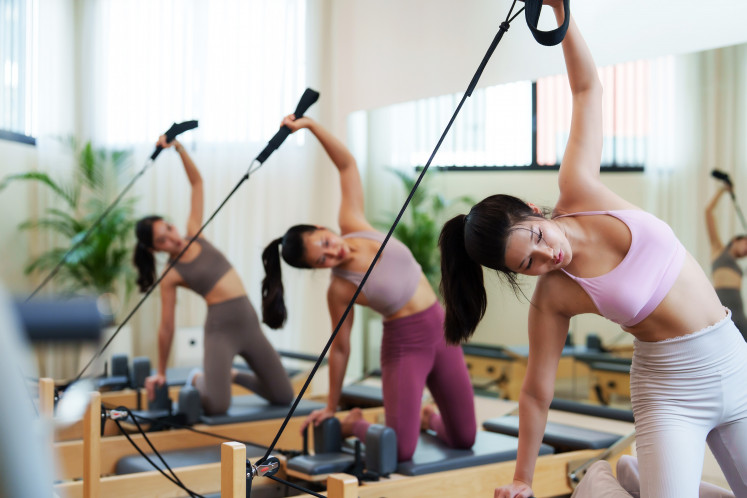
Florence, 36, a legal professional, does Pilates for her posture and because she dislikes the gym.
“Most of my friends already have kids, so now I have no one to hang out with after office hours like I did when I was younger. That’s how I end up exercising,” she says.
 (Shutterstock)
She now goes regularly, switching between group classes and mostly private sessions. Private sessions in the Gunawarman area range from Rp 500,000 to Rp 750,000, while group classes run between Rp 250,000 and Rp 400,000, meaning twice-weekly sessions can easily reach Rp 4 to 5 million a month, not including outfits and transportation.
Regardless of your motivation, being someone who shows up at 6 a.m. on a weekday and pays for it has become a flex. The new status symbol is not just looking fit, it’s looking disciplined.
But problems start when showing off becomes the only reason for showing up.
Why we really show up
I often find myself in a yoga shala surrounded by bodies that are strong, capable and extremely Instagrammable. Yoga is supposed to be calming and all namaste, yet sometimes there is tension you can feel in the room.
We’re told to focus on our own asanas, but surrounded by incredible bodies, I feel pressure creeping in. I know I’m there because my back pain returns if I stay away too long. Now that I’m in teacher training, I also need to improve my poses and build sequences.
Still, when I see cameras quietly recording every transition, I can’t help but ask: Why are we really here?
Edwin, 37, has been going to the gym five times a week since before it was trendy. His goal is simple and long-term: to remain functional as he ages. Over time, he has watched gym culture shift toward what he calls “ego-lifting”, pushing heavy weights without proper form, often leading to injury.
“I’d rather focus on my own process. I don’t care how many kilos others are trying to lift,” he says.
At this age, he knows better than to let his ego win.
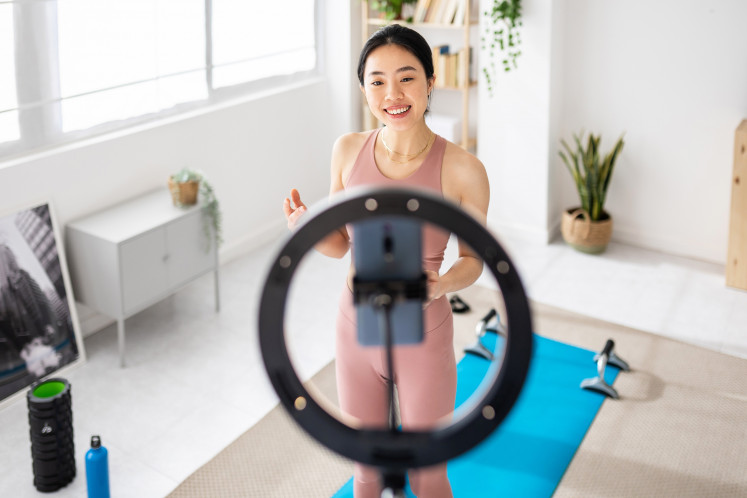
The risks of ego-driven chasing are just as present in yoga and Pilates. Some chase progress, others chase the ’gram. For those of us who still struggle with chaturanga and need support in a headstand, that’s fine. But for more gifted and ambitious yogis, the temptation to push too far is real.
 (Shutterstock)
My trainer keeps reminding us, and our future students, to listen to our bodies. It’s not yoga that causes injuries. It’s our ego.
I’ve fallen into that trap too, like the time I pushed deeper into a side split because my ex’s mistress was doing one on the mat next to me. I felt the stretch for two days. But at that moment, I didn’t want to look lesser.
The external pressure
Performance pressure does not only come from our own ego. Sometimes, it’s built into the ecosystem.
Azalia, 33, started Pilates in 2017 and admits she once chased fancy poses too. Now, as a certified instructor at Forte Pilates in South Jakarta, she sees the performance problem more clearly.
As Pilates becomes more and more popular, she sees clients walk in and immediately ask to use the Cadillac apparatus even before mastering reformer basics.
“But the more we know, the less we do the flashy stuff,” she says.
Instructors are not always innocent either.
“Some instructors keep throwing difficult poses at clients because it looks cool. It hits their ego too, not just the client’s,” she says.
“That’s why your equipment matters, and your instructor’s education matters, including where they trained. As Pilates gets more popular, improper in-house training leads to safety issues. This is about your body.”
Sometimes the pressure is atmospheric.
“In some studios, you can feel the intimidation. Everyone in branded gear, men taking their shirts off, people doing showy things. I didn’t feel comfortable,” Bogar says.
He kept looking until he found places where the competitive energy was toned down.
“The teacher’s personality shapes the room. Studio branding does too. I finally found a few spaces that signal this isn’t a place to perform.”
Forte Pilates addresses the boom differently. By filtering through price, intent and location, the studio aims to attract clients who are serious about learning rather than pose-hunting.
Instead of saying no outright, Azalia designs sequences that quietly reveal whether someone is ready for peak poses. Most are not. By the time the advanced moves arrive, they are often too tired to insist.
Online pressure
Performance does not stop at the studio door. Sometimes, it follows us online.
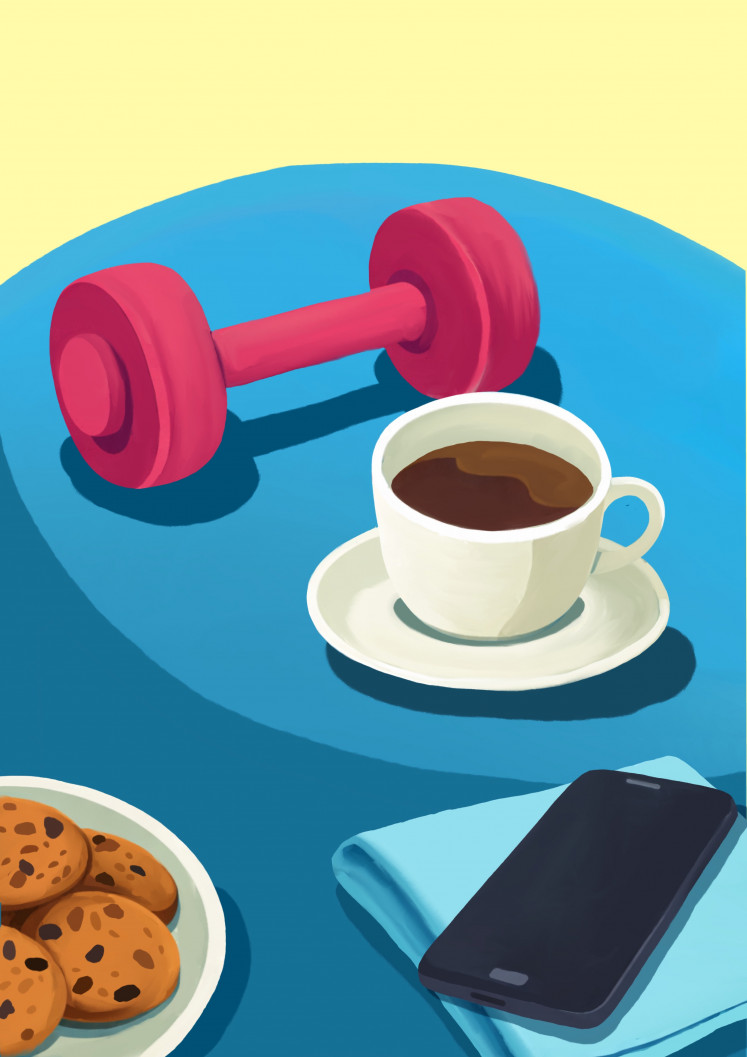
There's no shortage of evidence. TikTok has an entire genre of people falling off their reformers mid-pose. Some groaning, some laughing it off, but I’m willing to bet most of them were in more pain than they let on.
 (B/NDL Studios/Budhi Button)
From this side of the screen, the causes seem familiar: a body not yet ready for the movement, equipment that isn’t properly set, someone pushing too hard, or attention split between the exercise and the camera. In a format built for spectacle, control, the very principle Pilates depends on, can easily take a back seat.
This is not to say people shouldn’t be posting their workouts; it’s a question of intention.
Bogar, for example, posts his workouts, but he’s clear about his why.
“Everyone already knows I’m not a muscular guy, so you know I’m not doing thirst traps. I want to show my process and that anyone can do this,” he says.
“Fit influencers have to show their bodies. That’s literally their job. Different perspective entirely.”
Florence, on the other hand, used to post more. “At first it was to exist, to try new places, to be seen,” she says.
Now she barely does, but she still records herself in class to track progress.
“I post it, archive it and save it to my highlights for my own reference. It also helps with phone storage.”
This way, the camera is less about validation and more about documentation.
Showing up for yourself
Often, the ones no longer chasing aesthetics are those who have already been hurt chasing them elsewhere.
“You can tell immediately by how seriously they take the movement. The FOMO ones are fewer now, and they reveal themselves quickly,” Azalia says.
Bogar fits that description.
“I’m not chasing looks. I’m chasing skill unlocks,” he says.
His current goal is a handstand. To get there, he trains upper body strength and balance through calisthenics and yoga.
“But in the end, I want something to pursue that keeps life exciting and keeps me healthy into my 60s.”
He has also made peace with reality.
“Being mid-30s, it’s almost impossible to get a six-pack unless you don’t work and train every day. I have a job and a life,” he laughs.
Florence echoes that realism.
“To be honest, I’d rather be skinny than strong,” she admits.
“But at our age, it’s hard. So I’ve made peace with what makes sense and doesn’t stress me out.”
But does it really matter why you start?
The honest answer is yes and no.
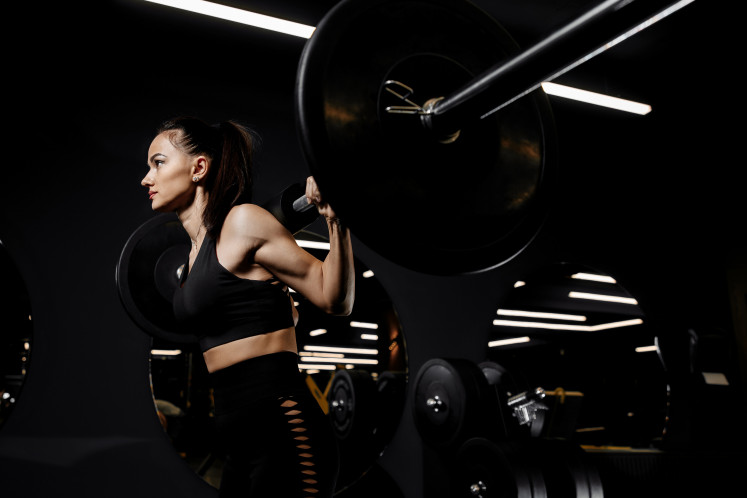
“Strong” is arguably a more honest body goal than “skinny”. It requires effort and builds something long-term. But let’s not pretend we have transcended vanity.
 (Shutterstock)
Strong is also the latest status symbol. It still gets posted. It still attracts compliments we secretly enjoy. Being in a studio at 10:30 on a Wednesday morning is still something people might envy.
Above all, moving is better than not moving.
What matters more is why and how we stay.
We can step back and check our intentions before stepping onto the mat or picking up the barbell. A little self-awareness goes a long way. It may even protect the body we are working so hard to build.
Ego, vanity and external pressure will always be in the room. They may even push us a little further.
The question is not whether they exist. The question is whether you are running the session, or they are.
Adelia Anjani Putri, a communications consultant and former reporter, has found herself writing again. She’s also exploring a career shift that would let her pursue her passions for cooking and catsitting—ideally with a paycheck.