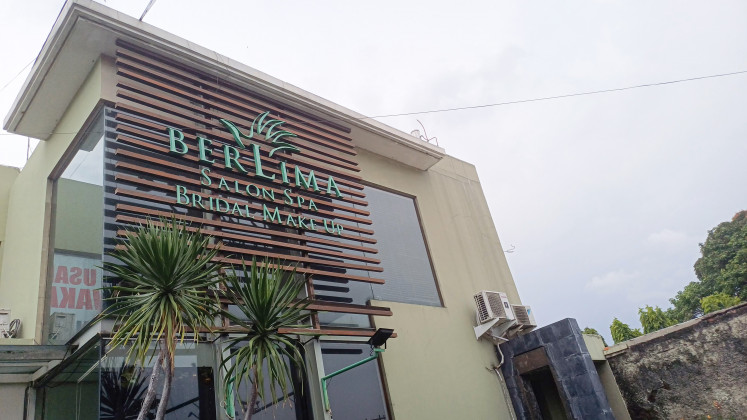
On a warm Tuesday afternoon, I walked into Berlima Salon not for a haircut, but for a story. I had heard they were doing something unusual, turning hair waste into wigs for cancer patients.
What I found was less about hair, and more about how women care for each other, simply yet powerfully.
The salon in the Lebak Bulus area of South Jakarta looks like any other place where you might drop in for a quick trim or post-breakup bob. The interior isn’t particularly fancy, but it’s warm. There’s something about the way people greet each other here that feels sincere.
But what makes Berlima different is what happens after the haircut. Here, hair isn’t seen as waste. It’s seen for its worth.
Since late 2022, Berlima has partnered with Donasi Rambut, which means "hair donation", a community initiative that collects bundles of cut hair and turns them into medical wigs for cancer patients across Indonesia. These wigs aren’t mass-produced or synthetic; they’re hand-sewn from real human hair, one tie at a time.
I came to the salon out of curiosity, but what I witnessed that afternoon taught me something profound.

Thank you!
For signing up to our newsletter.
Please check your email for your newsletter subscription.
‘I grew it just to give it away’
Yoanna Darwin, 47, sat in the salon chair with the kind of calm that comes from intention.
“I decided to lengthen my hair intentionally to donate it,” she said, her voice soft but steady.
“It took me a year to reach the minimum length.”
That requirement is at least 25 centimeters, about the length from your shoulder to mid-back. Just enough to make a difference.
As the stylist, Nurul Huda, prepared Yoanna’s washed and dried hair, tying it before cutting it, I felt the weight of what the moment meant. To part with something you’ve nurtured for a whole year, to do it not for style, but for someone else’s sense of self.
When Nurul Huda made the cut, Yoanna smiled.
“After all, growing your hair takes a lot of effort, too. I feel relieved,” she said.
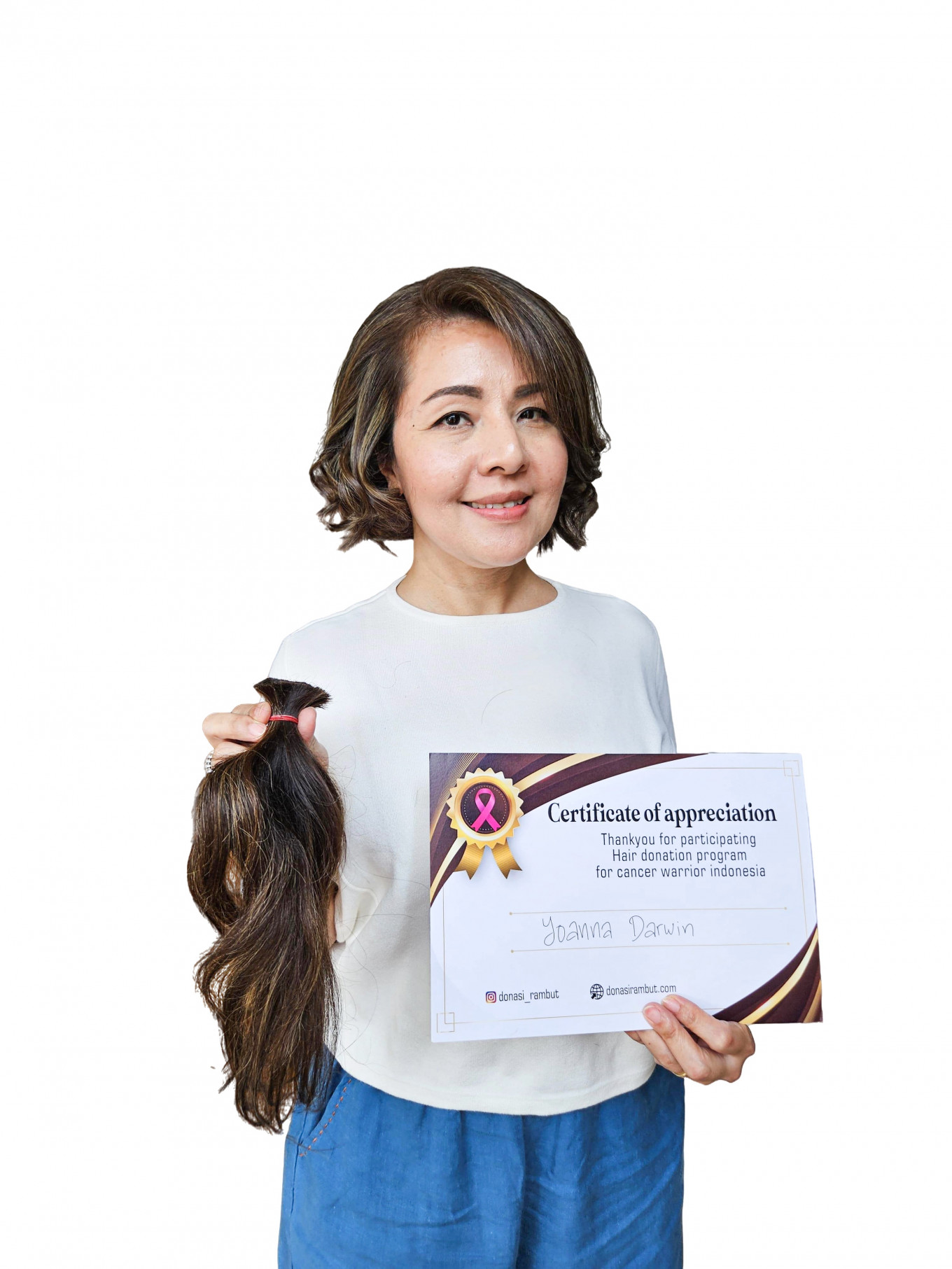
She held up the plastic-wrapped bundle of hair and the certificate of appreciation that came with it. She didn’t need the acknowledgment, but it was nice to have something tangible. A reminder of a quiet act of kindness.
What hair means to those who lose it
The salon’s owner, Grace Sibarani, 47, knows exactly why that moment matters.
“I lost my hair too,” she told me.
Grace was diagnosed with ovarian cancer at just 17, while still a high school student in Melbourne, Australia. She remembered the discomfort, the way people stared, the endless search for a wig that felt like her.
“I covered my head with a scarf and felt uncomfortable with my look,” she recounted.
Years later, when a friend approached her about donating hair, Grace didn’t hesitate. She researched until she found donasirambut.com, and soon, Berlima became a hub for others wanting to donate.
 (Courtesy of Handewi Pramesti)
“Since then, our salon has often been tagged on Instagram by Donasi Rambut, and we’ve had contributors come in from all over Jakarta and even nearby cities,” she said.
Every step, from tying the hair to labeling the plastic bag with the donor’s name, is done with care.
Grace doesn’t charge extra for the donation process and even covers the cost of sending the hair to Donasi Rambut’s office in Sunter, North Jakarta. Clearly, it’s a personal mission.
The woman behind the wigs
Stephanie Febrina, 37, is the founder of Donasi Rambut. A businesswoman with a background in wig manufacturing, she started the initiative in July 2020 as part of her company’s corporate social responsibility program.
“It depends on your view of life,” she told me during a separate interview. “Either you need self-validation to live, or to be of assistance, for others. I choose the latter.”
She explained that synthetic wigs, machine-made and cheaper, don’t always feel or look right.
“Wigs made from human hair are more natural, more breathable, and more comfortable for everyday wear,” she said.
But they’re expensive. One meticulously sewn, handmade wig can cost up to Rp 5 million (US$299.17), and each one requires hair from 15 different donors.
For cancer patients from underprivileged backgrounds, especially in remote areas, that cost is insurmountable.
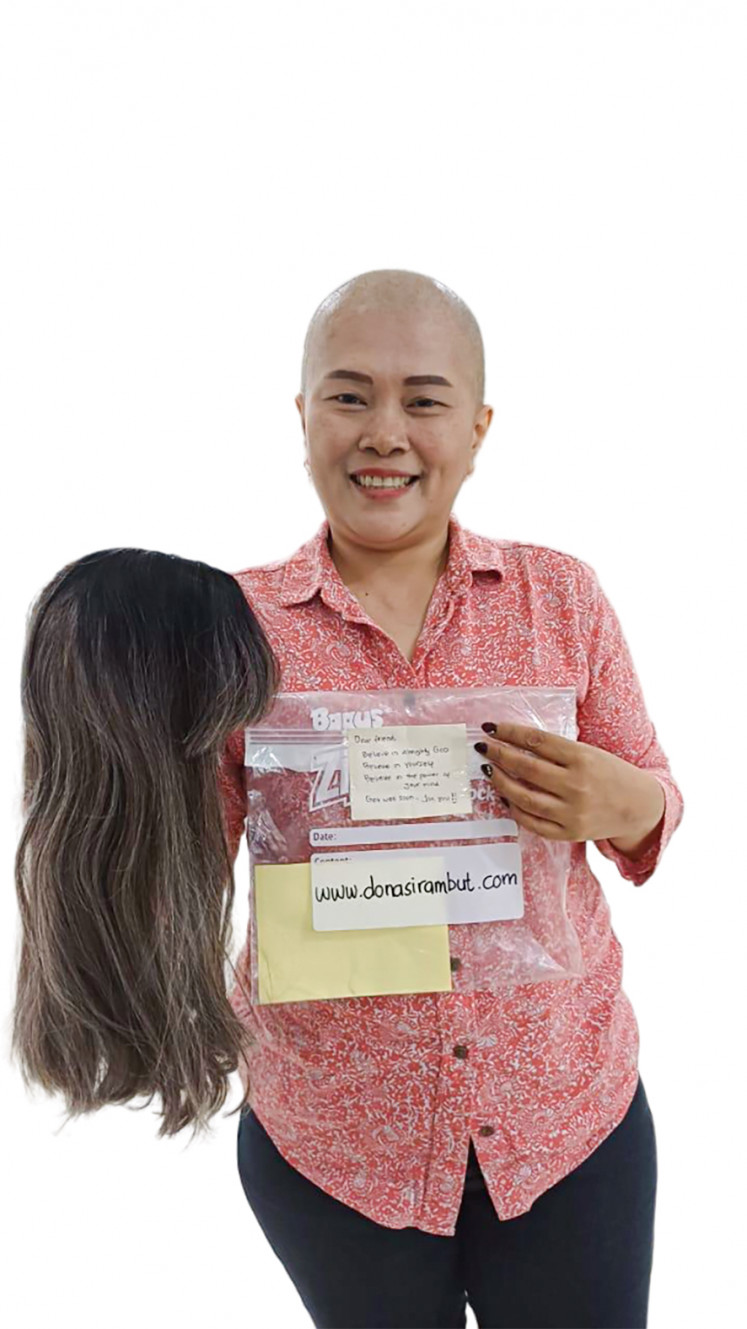
So Stephanie decided to bridge the gap. She receives hair donations directly from individuals or through more than 20 salons like Berlima, then produces and distributes the wigs, at no cost, to those who need them most.
 (Courtesy of Donasi Rambut)
“There’s no restriction on hair type. It can be curly, wavy, straight, gray-haired, highlighted or dyed, as long as it meets the minimum length requirement, is clean and lice-free,” she added.
Kindness travels far
While the initiative is based in Jakarta, the wigs travel far. Kupang in East Nusa Tenggara, Manado in North Sulawesi, the outskirts of Papua, Stephanie either ships the wigs via local distributors or brings them herself in suitcases during personal trips.
One of those distributors is Imelda Mella, a policewoman and cancer survivor in Kupang.
“I knew Stephanie from Instagram in 2022,” she said.
When Imelda went through chemotherapy, she received one of the wigs herself. Now she helps distribute them through Prof. Dr. W.Z. Johannes Public Hospital, the main cancer referral center in the region.
“In Kupang, one synthetic wig can cost around Rp 200,000,” Imelda said. “But that’s already expensive by local standards. A human hair wig? Unthinkable.”
Most donated wigs are kept short, easier to wear, more practical in Indonesia’s tropical heat, especially for women who work outdoors or don’t have air conditioning. But Stephanie takes special requests, too.
“Even if it’s for charity, the process and quality are exactly the same as our commercial products,” she emphasized.
Ordinary acts of care
I left the salon that day without getting a trim, but something stuck with me. Watching Yoanna cut her hair with such ease, knowing it had taken her a full year to grow out, made me reflect on how easy it is to hold on to things out of habit, even when letting go could mean something more.
I haven’t donated my own hair. Maybe I will someday, maybe not. But I saw what it meant to someone else.
There was no applause, no grand reveal. Just a woman, her bundle of hair tied up in a plastic bag, and a smile that said: “This might help someone feel like themselves again.”
And that’s what stayed with me. That something as ordinary as a haircut could be an act of care.
Sometimes we forget that help doesn’t always look big. Sometimes it’s just about showing up, asking the right questions, or making sure someone else feels seen.
Handewi Pramesti is a freelance print and TV journalist based in Jakarta. She's an avid traveler and outdoor enthusiast.