(MD Entertainment)
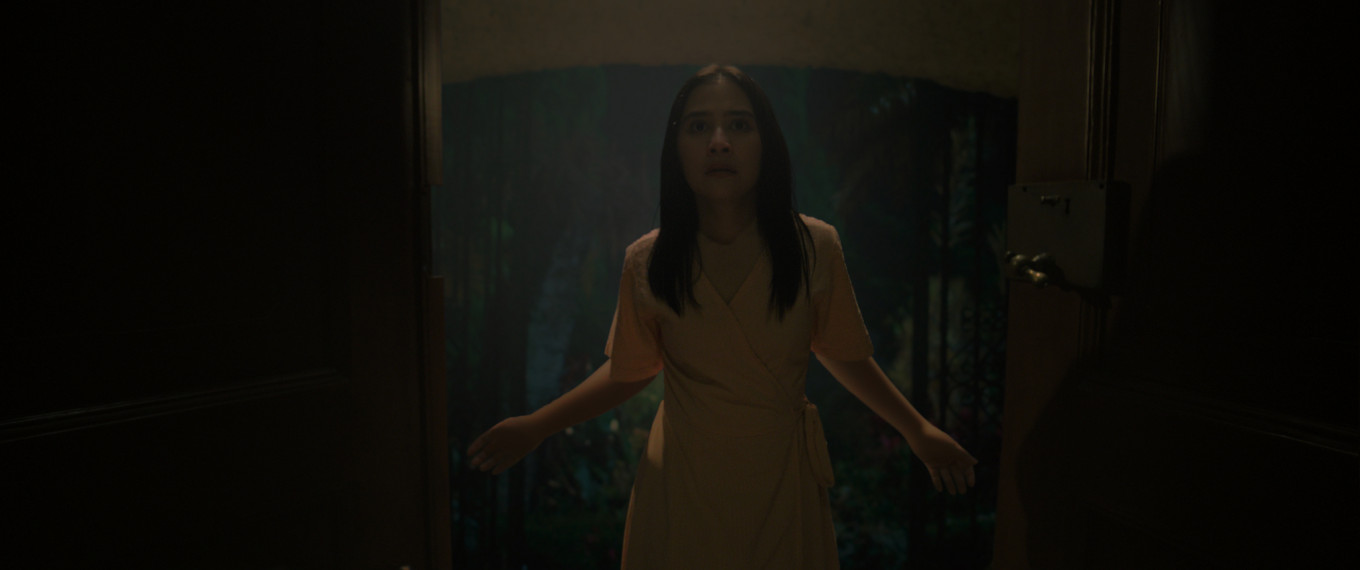
For 10 years, Prilly Latuconsina turned down every horror role that wasn't Risa Saraswati.
That's not a small thing. In an industry where momentum matters and visibility is currency, a decade of saying no to roles in arguably the country’s most popular genre is either an act of deep conviction or professional stubbornness.
For Prilly, it was both.
"I wanted to protect Risa's character," she says simply, when asked about it.
When pressed on whether starring in another horror film with different values would feel like a betrayal, she nods.
"I will feel more comfortable taking on other horror films once my journey with Risa is complete."

Thank you!
For signing up to our newsletter.
Please check your email for your newsletter subscription.
That journey ends this Idul Fitri holiday, when Danur: The Last Chapter arrives in IMAX, the fourth and final installment of a franchise that has not only sold millions of tickets but reshaped what Indonesian horror can be.
The script that made her cry
Prilly was still primarily known as a television star when the producers of Danur approached her in 2016 to play Risa Saraswati.
At the time, she was best known for playing a werewolf in the wildly popular soap opera Ganteng Ganteng Serigala (Handsome Werewolf), and a move to the big screen was a significant opportunity. But horror films carried a reputation she wasn't sure she wanted to inherit.
Back then, Indonesian horror was still largely associated with sexualized gimmicks rather than serious storytelling. For an actress hoping to transition to cinema, the genre didn't offer an obvious path forward.
Then she read the screenplay.
"I cried reading a horror story," she recalls.
The script for Danur: I Can See Ghosts wasn't just trying to scare audiences. It was asking them to empathize with the dead.
Adapted from a best-selling book inspired by the author's real-life experiences, the film tells the story of Risa, a girl who can see ghosts and befriends them. As an indigo (a person believed to possess supernatural sensitivity), she communicates with spirits and uncovers the sad stories behind their frightening figures.
That was how Risa Saraswati became a character worth protecting.
Growing with Risa
To prepare for her first big screen role, Prilly communicated directly with the real Risa Saraswati to better understand her experiences.
"Portraying her is clear but hard," Prilly says. "Unlike me, she is very introverted."
To play Risa convincingly, Prilly had to restrain her natural expressiveness. Risa's emotional world is inward and observant, the opposite of Prilly's energetic presence. It was a kind of discipline that, it turns out, would define the next decade of her career.
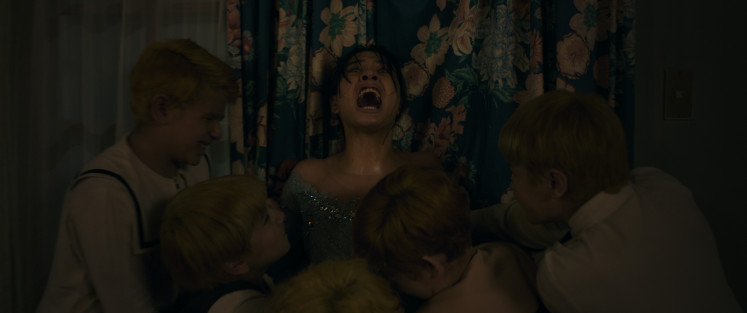
Each film follows a different stage of Risa's life, alongside the five ghost children who accompany her, Peter and his companions, known collectively as Peter CS (from the Latin cum suis, meaning "with associates").
 (MD Entertainment)
After the first film's box-office success, Prilly returned for the sequel and the third installment before the franchise paused in 2019.
Through all of it, she kept saying no to other horror projects.
What Danur changed
When the first film was released in 2017, it sold more than 2.7 million tickets, becoming the first Indonesian horror film to surpass the 2 million mark. At the time, almost no Indonesian horror film had surpassed 1 million ticket sales.
More than the numbers, though, was what the film signaled: that Indonesian audiences were ready for a well-crafted horror movie built on emotion and story, rather than provocation.
That shift has since gathered momentum. In 2022, KKN di Desa Penari (KKN: Curse of the Dancing Village) became the highest-grossing Indonesian film of all time. More recently, Joko Anwar's Ghost in the Cell and Edwin's Sleep No More are set to premiere at the Berlinale, one of the world's most prestigious film festivals.
Indonesian horror is no longer just a local genre. It's becoming a global conversation.
Danur didn't do all of that alone, but it helped open the door.
The smallest gestures on the biggest screen
It is perhaps fitting that Danur’s final instalment is released on IMAX, a treatment only a handful of Indonesian productions have received, such as Awi Suryadi's Pabrik Gula (Sugar Mill), Kimo Stamboel's Badarawuhi di Desa Penari (Dancing Village: The Curse Begins) and Joko Anwar's Pengabdi Setan 2: Communion (Satan's Slaves 2: Communion).
Screenwriter Lele Laila says she had already imagined the story on a larger canvas while writing it.
"I knew producer Manoj Punjabi was going to create a film that could be experienced, not just seen," she says.
 (MD Entertainment)
Most moviegoers think IMAX is just about scale, but it’s also about immersion. What IMAX does, more than anything, is capture what might otherwise go unnoticed: the micro-expressions, the small emotional shifts that a standard screen might absorb.
For a final chapter built around loss and farewell, that intimacy is the point.
In Danur: The Last Chapter, Risa faces the deaths of her ghost companions, the friends she has carried with her since childhood. It is, by design, an ending that asks everything of its lead actress.
Prilly understands both the privilege and the demands. "IMAX is very selective," she says.
For Danur, IMAX offers a larger-than-ever way to close the franchise.
For Prilly, however, the ending is more personal.
After 10 years, saying goodbye to Risa Saraswati means letting go of a character who grew alongside her, who she chose to protect for a long time. What began as a risky decision for a young television actress eventually became one of Indonesia’s defining horror stories.
So this Idul Fitri holiday, if you go to an IMAX cinema to meet Risa and her ghosts for the last time, expect it to be both grander and more intimate, a fitting farewell.
Reza Mardian is a winner of the Best Film Critic award at the Festival Film Indonesia 2024 and a “pawrent” to two rescued cats. He writes screenplays every time he finishes rewatching La La Land or Lady Bird.